
The Role of Culturally Responsive Teaching in Early Education
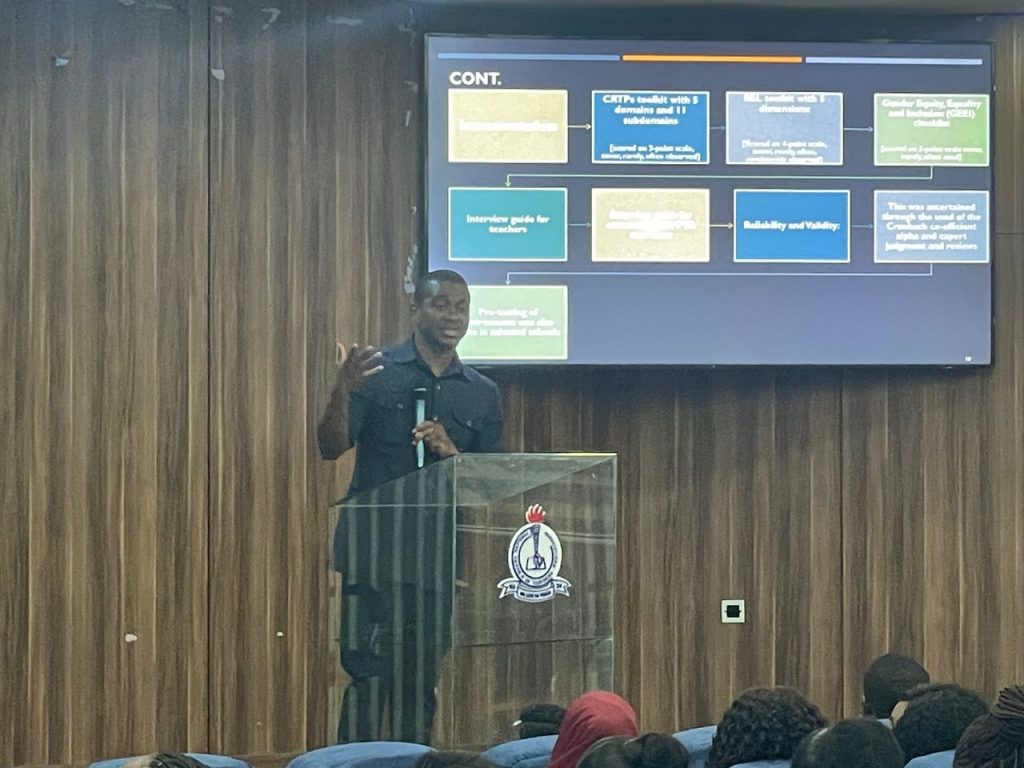
Professor Wiston Kwame Abroampa, from the Faculty of Educational Studies at Kwame Nkrumah University of Science and Technology (KNUST), emphasized the importance of integrating culturally responsive teaching methods into early grade education curricula. According to him, these approaches can significantly enhance students’ understanding of educational content by aligning it with their familiar cultural and linguistic backgrounds.
Culturally responsive teaching involves using instructional strategies that reflect the diverse backgrounds of young learners. This method not only makes learning more relatable but also helps students grasp complex concepts more effectively. Prof. Abroampa highlighted that such practices are crucial for creating an inclusive learning environment where all students feel valued and understood.
The professor made these recommendations during a stakeholder engagement session discussing a collaborative research project conducted in the Greater Accra and Ashanti Regions. The study aimed to explore how culturally responsive education approaches can improve learning outcomes among early learners.
The research project, titled “The Impact of Culturally Responsive Pedagogies on the Social and Emotional Development of Early Learners in Ghana,” is supported by the Global Partnership for Education Knowledge and Innovation Exchange and the International Development Research Centre, Canada. It is implemented by KNUST-Institute for Rural Development and Innovation Studies.
Prof. Abroampa pointed out that developing a curriculum with culturally responsive elements requires careful planning and intentional content selection. He stressed the need for stakeholders to ensure that teachers have the necessary resources and training to implement these methods effectively.
During the research, the team observed that some teachers struggled to teach in the local languages of their students, particularly in cosmopolitan areas like Accra, where multiple languages are spoken. Prof. Abroampa noted that some educators used a single local language to teach students from diverse linguistic backgrounds, which could hinder effective communication and learning.
He emphasized the importance of building the capacity of teachers to conduct culturally appropriate teaching practices. This includes providing them with the tools and knowledge needed to create an inclusive classroom environment that respects and leverages the cultural diversity of their students.
Dr. William Kwame Amankra Appiah, the Ashanti Regional Director of Education, shared similar sentiments. He stated that culturally responsive education promotes punctuality and boosts the confidence of learners in the classroom. Students, he explained, are better able to express themselves in ways that are familiar and comfortable for them.
In the Ashanti region, the implementation of the mother tongue (L1) teaching policy at the lower levels has contributed to improved student performance and learning outcomes. Dr. Appiah highlighted that this approach has helped students connect more deeply with the material being taught, leading to better academic results.
The findings from this research underscore the potential benefits of culturally responsive teaching in early education. By recognizing and valuing the diverse backgrounds of students, educators can create more effective and engaging learning experiences. This, in turn, can lead to improved social and emotional development, as well as better academic achievement.
As the education sector continues to evolve, the integration of culturally responsive methods will play a vital role in ensuring that all students have the opportunity to succeed. It is clear that a one-size-fits-all approach to education is no longer sufficient. Instead, a more personalized and inclusive strategy is needed to meet the unique needs of every learner.