
The Question of What History Is Fit to Write
Over the past decade, there has been a lot of discussion about what history should be written. This conversation has often revolved around the Mughal era, with some voices calling for its complete erasure or at least its portrayal as a time of tyranny. A teacher recently shared a story about how she was concerned that taking her students to an exhibition on the Taj Mahal might cause controversy.
This debate raises deeper questions: why does certain history receive more attention than others? Why have right-wing groups focused so much on the Mughals since LK Advani’s Rath Yatra? And why does the left feel compelled to defend them? The political reasons are clear and straightforward. The right often uses the narrative of foreign Muslim rulers invading India to justify its current attacks on Muslims, while the left typically responds with moral protection of the vulnerable. However, these explanations can sometimes feel insufficient.
A Personal Reflection on Aurangzeb
Earlier this year, a friend from Nagpur expressed frustration with the lack of media coverage on the aftermath of riots in his city, which were sparked by threats to desecrate Aurangzeb’s grave. He remarked, “Everyone is talking about Aurangzeb, but nobody is talking about Nagpur.” This made me reflect on my own focus on Aurangzeb and whether I had fallen into a trap where history became a distraction rather than a tool for understanding real issues.
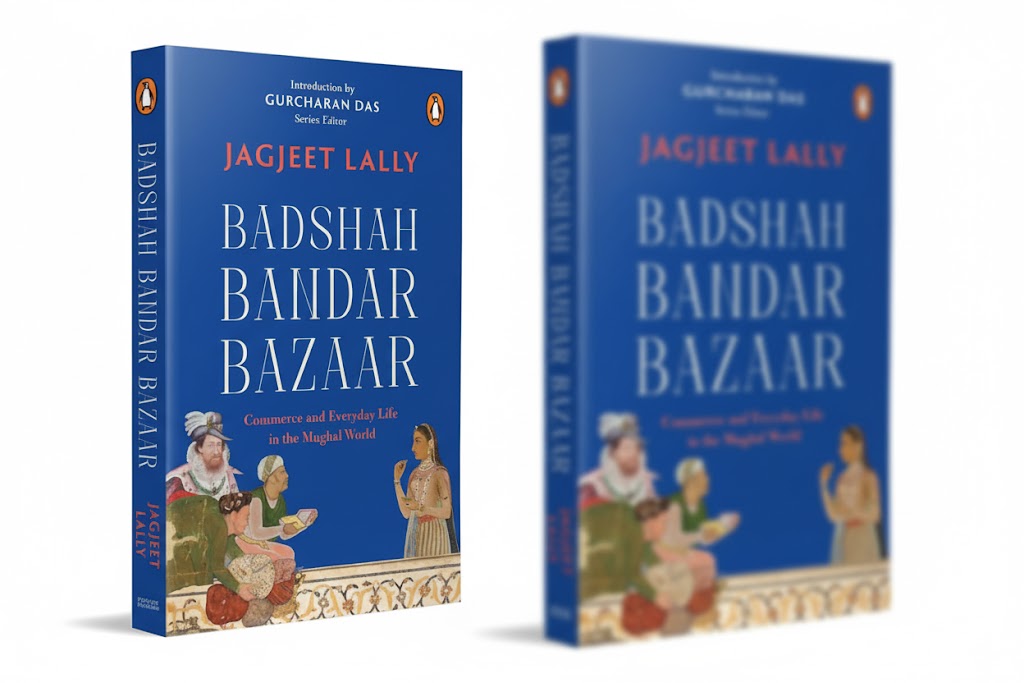
In such times, it’s refreshing to see Jagjeet Lally’sBadshah, Bandar, Bazaar, published under Penguin’s ‘business’ imprint. This book offers a unique perspective on history by focusing on commerce and everyday life during the Mughal era. It suggests that the most fitting history to write is one that teaches us about how business was conducted, as economic prosperity and stability are essential for any state’s legitimacy.
The Legal System of the Mughal Empire
Lally’s approach to the Mughal legal system is particularly insightful. Instead of focusing on Aurangzeb’s personality, he examines theFatwa-i-Alamgiri, a significant legal document that helped formalize laws. This process involved negotiations between the state’s court and various other legal forums, including those of Hindu and later British origin. Litigants could choose their preferred forum, which reflected the Mughal court’s attention to local customs and its broader predictability.
Lally argues that the Mughal state’s power stemmed from its engagement with local authorities, creating a system that remained effective even during its decline. This bottom-up approach allowed the Mughal state to remain relevant and functional.
Vignettes of Everyday Life
Badshah, Bandar, Bazaaris structured through vignettes that provide a rich tapestry of the Mughal world. For instance, we follow the journeys of trading caravans that moved along the silk routes, often more regularly than armies. These merchants formed alliances with pastoralists for protection, sometimes enhanced by the spiritual guidance of Sufis and yogis.
The book also includes a fictional Aggarwal boy whose life is reconstructed from various sources. His education spans from family accounting to courtly Persian, and his career takes him across the Hindu Kush, highlighting the complexities of managing family businesses and expanding trade networks.
Commerce Beyond the Banias
Commerce in the Mughal era was not limited to the Banias, a term that encompasses various Indian traders. Mughal princes needed the support of the nobility, who relied on revenue from their jagirs. The Mughal state’s requirement for cash taxes created a system where the warrior-nobility and financiers worked together.
Mughal queens and princesses also played a role in commerce, either by running ships or building markets. Their participation was driven by both spiritual and political motivations, showing that the Mughal elite were deeply involved in commercial activities.
The Pax Mughalica
Several factors contributed to the prosperity of the Mughal era. A reliable legal system, monetization of the economy, and the development of banking and finance created a “Pax Mughalica” that was widely recognized. A colonial officer even lamented the decline of the Mughals after Nadir Shah’s attack, noting how the Mughal system had facilitated economic growth.
EH Carr once said that great history is written when the historian’s insights into the past illuminate present problems. In a time when history is often used as a weapon,Badshah, Bandar, Bazaaroffers a compelling alternative. Lally’s work, aimed at a lay audience, embraces complexity and storytelling, providing a fresh perspective on the Mughal world.
Published in special arrangement with TheWire.in
Badshah, Bandar, Bazaar
Author:Jagjeet Lally
Publisher:Penguin India
Year:2025