
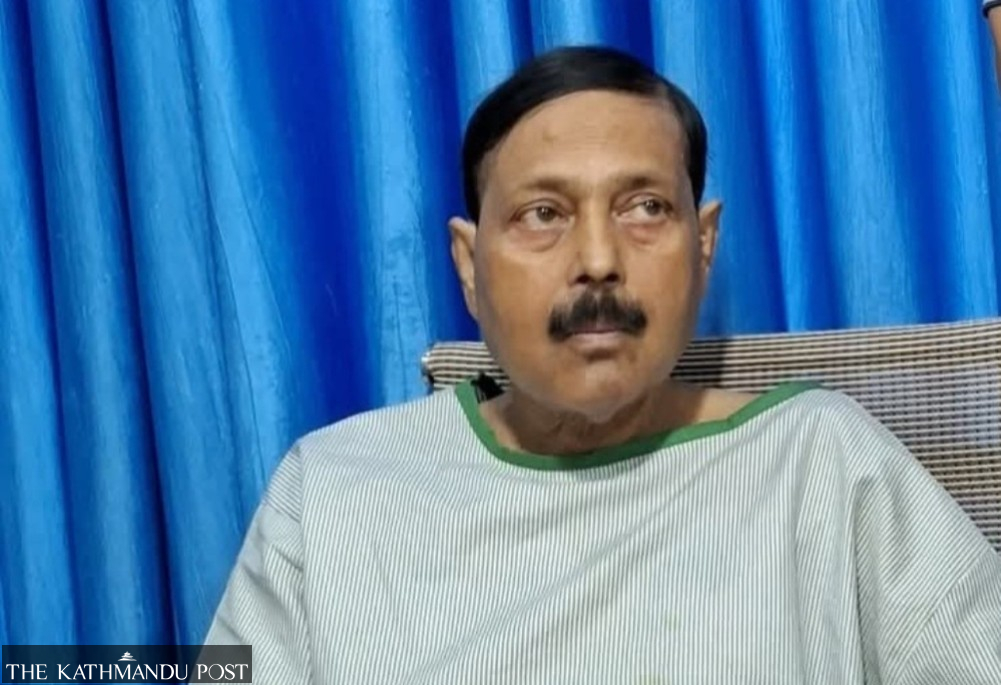
Tragic Passing of a Political Figure
On Friday, the Nepali Congress leader and former minister Mohammad Aftab Alam passed away at the age of 63 while receiving treatment at Kathmandu Medical College in Sinamangal, Kathmandu. His death marked the end of a life deeply intertwined with politics and public service.
Dev Prasad Timilsina, a former Congress lawmaker who was close to Alam, shared that the former minister had been in critical condition for some time and was on a ventilator during his final days. “He passed away during treatment,” Timilsina said, highlighting the severity of his illness.
Alam had been admitted to the hospital a month prior due to complications from high blood pressure and diabetes. His son, Dr. Rajik Alam, revealed that the former minister had previously undergone treatment at Medanta Hospital in New Delhi about six weeks before his latest hospitalization. “His condition improved temporarily, but it deteriorated again after some time,” he explained.
A Life of Struggles and Resilience
After being acquitted by the Janakpur High Court in the 2008 Rautahat blast and brick kiln murder case, Alam faced further health challenges. He suffered a stroke and was admitted to Annapurna Neuro Hospital in Maitighar. Following a week in intensive care, he was discharged and later taken to India for further treatment before being readmitted to Kathmandu Medical College.
Alam’s political career spanned nearly five decades, beginning with his involvement in the Nepal Students’ Union in 1979. Inspired by his uncle Sheikh Idris, a prominent Congress leader in the district, he quickly rose through the ranks. Over the years, he held several key positions, including labour state minister, forest state minister, local development state minister, and later as minister for land reforms, labour, and transport management under various governments.
Political Influence and Legacy
Elected to Parliament four times from Rautahat Constituency-2, a Congress stronghold shaped by Idris’s influence, Alam remained a significant figure in the region. In 2017, he reclaimed the constituency from his nephew, Mustaq Raja, who had defeated him in the second Constituent Assembly elections.
Despite his political achievements, Alam faced legal challenges. He spent nearly six years in prison after being convicted by the Rautahat District Court in April 2024 for his alleged role in the 2008 Rajpur brick kiln killings. The district court convicted him, along with his brother Mohammad Mahatab Alam and two others—Shekh Saraj and Badri Sahani—of orchestrating a deadly explosion and then killing injured survivors by throwing them into a brick kiln in Rajpur of Rautahat on April 9, 2008.
In May 2025, the Janakpur High Court acquitted him, overturning a life sentence handed down by the district court. This decision marked a turning point in his life, though it did not spare him from the health struggles that ultimately led to his passing.
A Family Left Behind
Alam is survived by his wife, two sons, and a daughter. His legacy, both as a politician and a family man, will be remembered by those who knew him. His journey through the highs and lows of public life reflects the complexities of leadership and the enduring impact of personal resilience.