
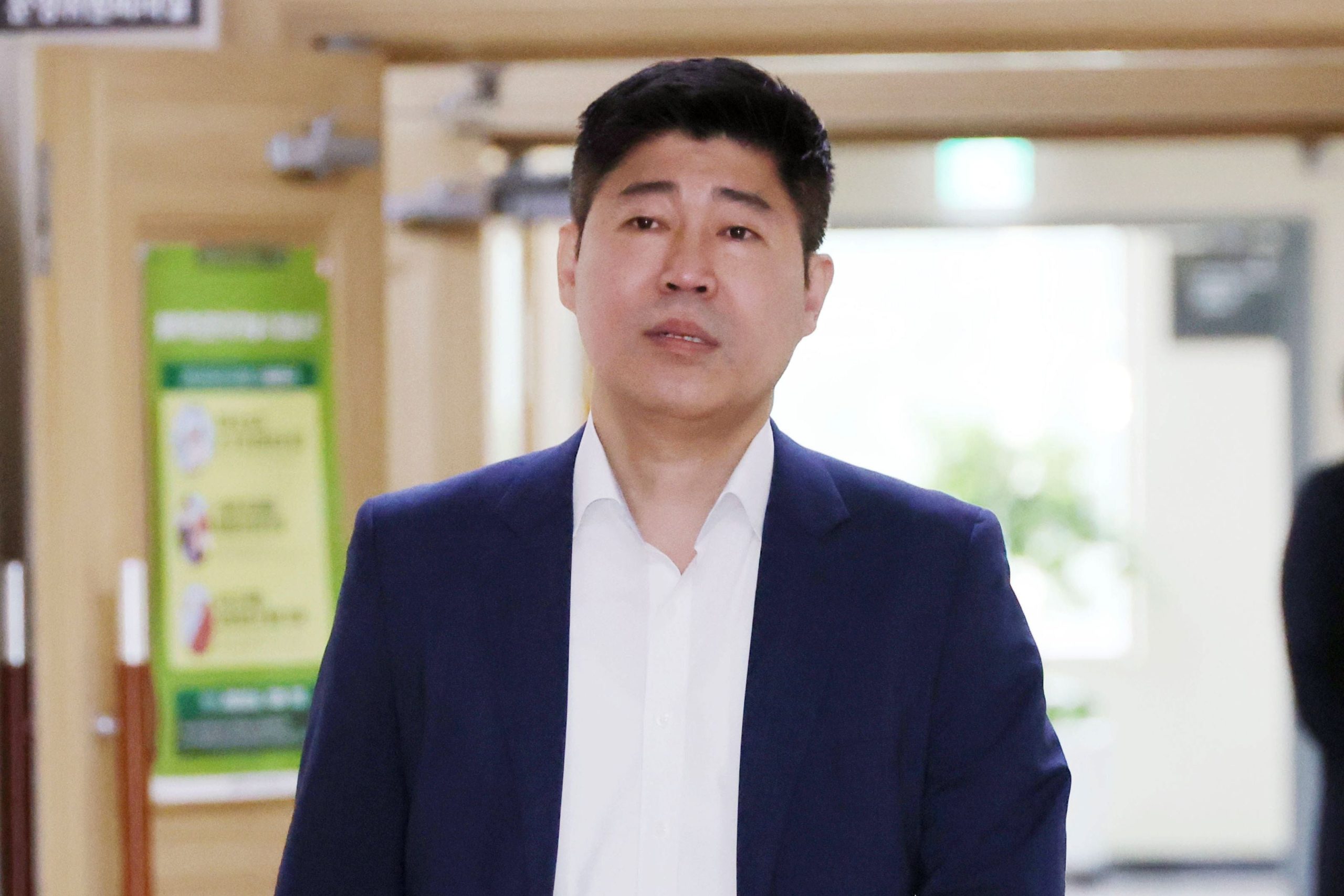
Legal Proceedings and Expulsion of Former Seoul Council Member
In a recent legal development, former Seoul Metropolitan Council member Jeong Jin-sool has lost his appeal in the second trial regarding his expulsion from the council. This decision followed his initial defeat in the first trial, marking a significant moment in the ongoing legal battle surrounding allegations of sexual misconduct against him.
The 3rd Administrative Division of the Seoul High Court, presided over by Judge Yoon Kang-yeol, dismissed Jeong’s appeal on the 6th. The court emphasized that the disciplinary grounds for his expulsion constituted a violation of dignity that is difficult to tolerate for an elected public official. Additionally, the court noted that it was challenging to view the Seoul Metropolitan Council’s expulsion resolution as an abuse of discretionary power.
Jeong, who previously served as a secretary to Democratic Party of Korea Representative Jung Chung-rae, was elected to the Seoul Metropolitan Council in both 2018 and 2022. He stepped down from his position as the Democratic Party of Korea’s floor leader in the council in April 2023, citing health reasons. However, allegations of sexual misconduct emerged after it became known that he had been expelled from the Democratic Party for “damaging dignity.”
Background and Allegations
The Seoul Metropolitan Council’s Ethics Special Committee passed a motion to expel Jeong in August of that year, with the expulsion disciplinary action finalized during the plenary session. This marked the first instance of a Seoul Metropolitan Council member being expelled in history.
Jeong filed a lawsuit seeking the cancellation of the expulsion, but he lost in the first trial in November of last year and again in the second trial on the same day. The court pointed out that although the Seoul Metropolitan Council attempted to uncover the truth regarding the allegations of sexual misconduct through the Ethics Special Committee, Jeong did not cooperate sincerely with the investigation. This in itself was considered a serious violation of the duty to maintain dignity.
Court’s Rationale
The court ruled that Jeong failed to submit the content of the decision document, which stated the reasons for his expulsion from the Democratic Party, to the council’s Ethics Special Committee. This omission inevitably exacerbated the allegations of sexual misconduct. As a result, the council’s dignity, prestige, and credibility were damaged. The court further stated that despite the need to clarify the allegations himself and allow the council to impose appropriate disciplinary measures, Jeong did not thoroughly clarify them.
Implications and Reactions
This case has sparked discussions about the responsibilities of public officials and the importance of maintaining ethical standards. The court’s decision highlights the seriousness of the allegations and the consequences of failing to cooperate with investigations into misconduct.
As the legal proceedings conclude, the case serves as a reminder of the expectations placed on public figures and the necessity of upholding the integrity of democratic institutions. The outcome also underscores the role of ethics committees in ensuring accountability and transparency within governmental bodies.
The implications of this ruling extend beyond Jeong’s personal situation, influencing how similar cases may be handled in the future. It sets a precedent for the handling of disciplinary actions against public officials, emphasizing the need for cooperation and transparency in such processes.