
South Korea’s Dilemma: Balancing Climate Goals with Economic Realities
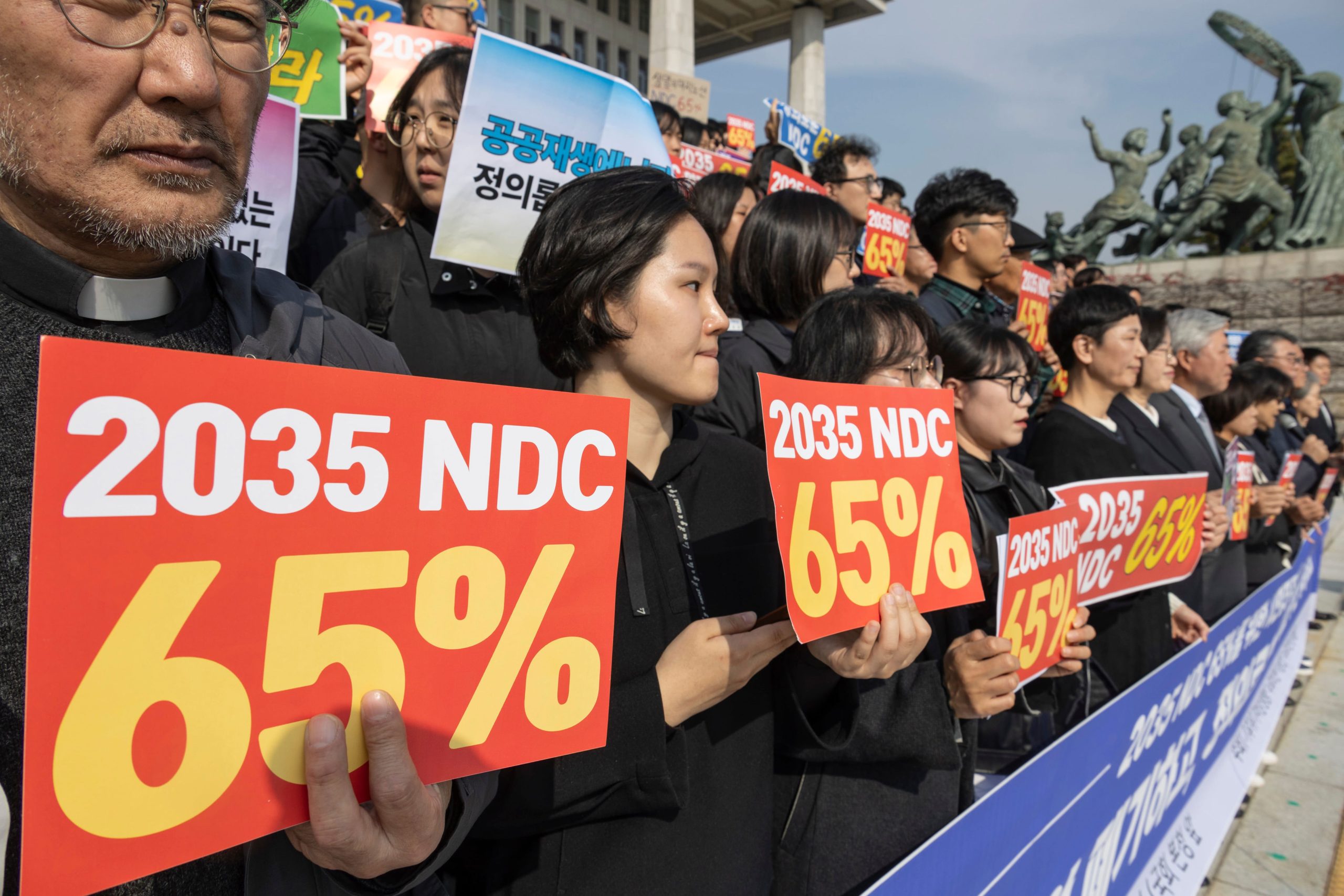
South Korea is currently evaluating two options for its new greenhouse gas reduction target (NDC) for 2035. The proposed targets range from a 50–60% to a 53–60% reduction compared to 2018 levels. However, industry leaders are expressing concerns that even a 48% reduction would be unattainable, as it could significantly increase production costs in key sectors such as steel and petrochemicals, potentially weakening the country’s global competitiveness.
According to an industry analysis, the four major sectors—steel, oil refining, cement, and petrochemicals—are expected to face additional carbon emission costs of approximately 5 trillion Korean won between 2026 and 2030. This financial burden raises questions about the feasibility of these ambitious targets and their long-term impact on the economy.
Climate Change: A Global Challenge with Local Impacts
Addressing climate change is undeniably crucial. The Korean Peninsula has already experienced rising average temperatures, more frequent heatwaves, and an increase in tropical nights, all of which are clear indicators of climate change. However, the approach to tackling this issue must be carefully balanced. Excessive measures can sometimes be more harmful than insufficient ones.
South Korea contributes only 1.4% of global greenhouse gas emissions, meaning its direct impact on the global scale is relatively small. This raises the question of whether the country should bear the brunt of climate action when larger emitters, such as China and the United States, have not committed to similar reductions.
China, the world’s largest emitter, accounts for 28% of global emissions and recently announced a target to reduce emissions by 7–10% by 2035 compared to peak levels. This effectively means that China is not making significant commitments to curb its emissions. Similarly, the U.S., the second-largest emitter at 12%, withdrew from the Paris Agreement under former President Donald Trump, who dismissed climate change as a “complete hoax.” With these two countries responsible for 40% of global emissions showing little interest in meaningful action, it begs the question: why should South Korea take the lead and risk undermining its own industries?
The Role of Energy and Technology in Climate Policy
Jensen Huang, CEO of NVIDIA, has warned that China could surpass the U.S. in AI competition, citing one reason as the availability of “practically free” electricity in the country. If South Korea increases its greenhouse gas reduction targets, it may force the state-owned utility company KEPCO to raise electricity rates, further increasing operational costs for businesses.
The current government is also applying strict ideological standards to nuclear power, which emits no greenhouse gases. This stance could hinder South Korea’s ability to compete in the rapidly evolving field of artificial intelligence, where access to affordable energy is critical.
Government Statements and Public Concerns
Despite these concerns, Climate Minister Kim Sung-whan recently stated that “all coal power plants will be phased out by 2040” and that “a decision to halt internal combustion engine vehicle sales by 2035 or 2040 is necessary.” These statements have sparked debate over whether they are based on meticulous calculations or driven by political motivations.
Some critics have described the government’s approach as resembling “climate Taliban,” implying that the policies are overly rigid and not grounded in practical considerations. Reports suggest that the current administration is prioritizing international recognition for its climate efforts, rather than focusing on sustainable and realistic strategies.
During the Moon Jae-in administration, reduction targets were raised to 40% without proper feasibility checks, leading to ongoing challenges for businesses. Under the Paris Agreement’s “no backsliding” clause, once targets are set, they cannot be lowered. This creates a dilemma for South Korea, where industries vital to the economy and everyday life cannot be sacrificed for the interests of a radical environmental minority.
Conclusion
As South Korea navigates its path forward on climate policy, it must find a balance between global responsibilities and domestic economic realities. While reducing greenhouse gas emissions is essential, the methods and pace of implementation must be carefully considered to avoid unintended consequences. The challenge lies in crafting policies that are both environmentally sound and economically viable, ensuring that the country remains competitive while contributing to the global fight against climate change.