
Trump’s Claims About Pakistan-India Conflict Draw Attention
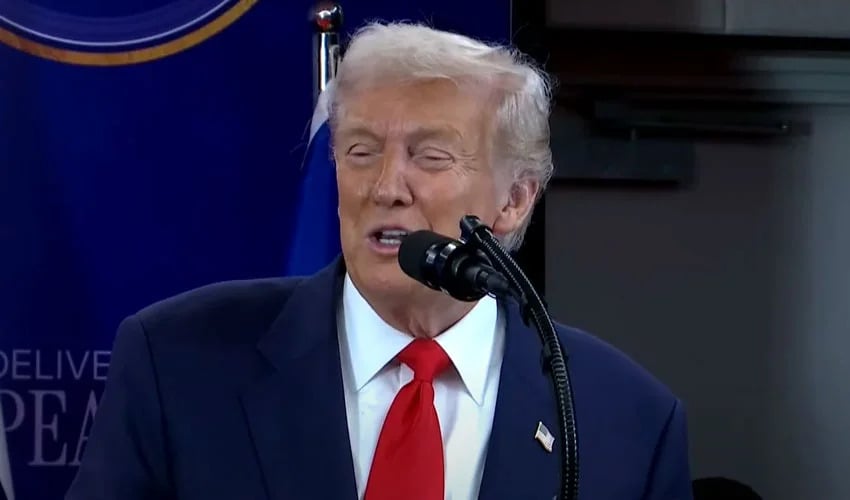
US President Donald Trump has once again made headlines with his comments on the military conflict between Pakistan and India earlier this year. During a speech at the American Business Forum in Miami, Trump claimed that “eight planes were essentially shot down” during the confrontation. His remarks have sparked renewed interest in the events of May 2019, when tensions between the two nations escalated following an attack on Hindu tourists in occupied Kashmir.
Trump emphasized his role in ending the hostilities, stating that he had “ended eight wars, including Kosovo and Serbia, the Congo and Rwanda… Pakistan and India.” He mentioned that while working on trade deals with both countries, he received reports that they were “going to war.” According to Trump, the situation was resolved after he warned both sides that he would suspend trade deals unless peace was restored.
“I said, ‘I’m not trading with you if you’re at war with each other.’ A day later, I got a call – ‘We made peace.’ They stopped. Tariffs did that,” Trump added. This statement highlights his belief that economic pressure played a key role in de-escalating the conflict.
However, the details of the conflict remain contested. Trump’s claims about the number of aircraft shot down have varied in previous speeches, ranging from five to seven. The exact number of planes involved in the confrontation is still unclear, with conflicting reports from both Pakistan and India.
Discrepancies in Reporting
India has publicly rejected Trump’s version of events, emphasizing that there is no evidence to support his claims of direct intervention in brokering peace. The May conflict began after an attack on Hindu pilgrims in Indian-administered Kashmir, which New Delhi attributed to Pakistan without providing proof. The incident led to a series of airstrikes, missile exchanges, and drone operations over four days, resulting in dozens of casualties on both sides.
Pakistan reported that it had shot down six Indian fighter jets, including Rafale aircraft, while India acknowledged “some losses” but denied the specific numbers. Later, Prime Minister Shehbaz Sharif addressed the United Nations General Assembly, claiming that the Pakistan Air Force had turned “seven of the Indian jets into scrap and dust.”
Despite these conflicting accounts, the situation eventually cooled, and diplomatic relations between the two nations resumed. However, the question of how much influence Trump actually had in ending the conflict remains a topic of debate among analysts and experts.
Impact of Trade Policies
Trump’s emphasis on trade policies as a tool for resolving conflicts raises broader questions about the role of economic leverage in international diplomacy. By threatening to suspend trade agreements, he may have influenced the decision-making processes of both Pakistan and India. However, the extent of his impact is still uncertain, given the complex nature of regional politics and the involvement of multiple stakeholders.
The incident also underscores the ongoing tensions between Pakistan and India, which have historically been marked by border disputes, cross-border terrorism, and periodic military clashes. While the May 2019 conflict was relatively short-lived, it highlighted the fragile state of their relationship and the need for continued dialogue and cooperation.
Conclusion
As the world continues to watch the evolving dynamics between Pakistan and India, Trump’s comments serve as a reminder of the significant role that external actors can play in shaping regional stability. Whether through economic pressure or diplomatic engagement, the actions of global leaders can have far-reaching consequences. The events of May 2019, and the subsequent statements from Trump, illustrate the complexities of modern international relations and the challenges of achieving lasting peace in conflict-prone regions.