
A New Era of Indian American Influence in Global Politics
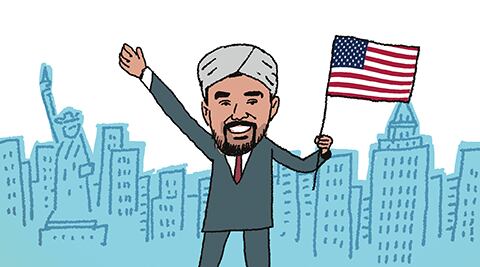
Zohran Mamdani, a 34-year-old man of Indian descent, has been elected as the mayor of New York City, often referred to as the “heart of capitalism.” His election marks another milestone in the growing political presence of Indian Americans, who have steadily moved into the core of U.S. politics. From Dalip Singh Saund, the first Asian American elected to the U.S. House of Representatives in the 1950s, to Bobby Jindal, the first Indian-American governor in the 2000s, Indian Americans have continued to make significant strides. Their influence can now be seen at the highest levels of government, including Vice President Kamala Harris and Republican presidential candidate Nikki Haley, a former U.N. ambassador. Additionally, Usha, the wife of U.S. Vice President J.D. Vance, is also of Indian descent, highlighting the deep roots of this community.
Silicon Valley: The Launching Pad for Political Power
The foundation of this political ascent can be traced back to Silicon Valley, where Indian Americans have played a pivotal role. Leaders such as Sundar Pichai of Google and Satya Nadella of Microsoft have shaped the tech industry, with one in three engineers in Silicon Valley being of Indian descent. This region, often called “IC Valley” (India-China Valley), is known for its strong representation of Indian Americans in leadership positions. These individuals, once labeled as NRI (Non-Resident Indians), have become “Never Returning Indians,” leveraging their economic power to gain political influence.
Expanding Influence Beyond the United States
This trend is not limited to the U.S. In the UK, which once colonized India, Rishi Sunak became prime minister, while in Ireland, Leo Varadkar held the same position. Indian Americans have secured key posts across the Commonwealth, including Singapore’s President Tharman, Canada’s Defense Minister Anita Anand, and even Portugal’s former prime minister. Within the United Nations, Indian nationals consistently hold top positions, excluding the P5 Security Council members. Even today, roles like the Under-Secretary-General overseeing logistics and finances for global peacekeeping operations are held by Indian Americans. Indian diplomats are known for their assertiveness and strong presence in multilateral forums.
What Sets Indian Americans Apart?
Indian Americans stand out in politics compared to other Asian groups due to their unique combination of traits. While many Asian communities focus on professions such as medicine or law, Indian Americans are more inclined to pursue ambitious goals like becoming CEOs or politicians. With English as a common language among Asian groups, combined with India’s rich tradition of debate and self-advocacy, they possess a tenacity that often borders on audacity—qualities that serve them well in Western societies.
The Global Reach of Indian American Influence
Mamdani’s election as mayor of New York reflects the growing influence of the 32 million NRIs spread worldwide. This powerful group rivals the 16 million Jewish communities and the 60 million overseas Chinese. Equipped with education, capital, and political clout, their impact on 21st-century global politics is just beginning.