
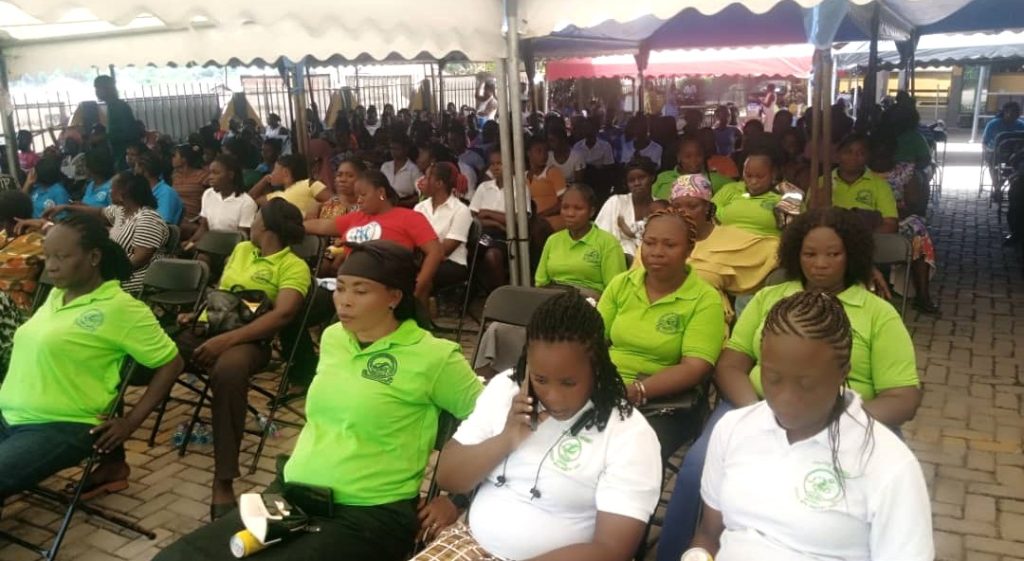
Financial Literacy Initiative in Asamankese
As part of the celebrations for the 60th anniversary of the Ghana Cedi, the Bank of Ghana (BoG) has launched a financial literacy program in Asamankese. The initiative aims to educate artisans and market women on the importance of financial inclusion and responsible money management. The event took place on Wednesday in the West Akim Municipality and drew a significant number of participants from the informal sector who were eager to enhance their understanding of financial planning, savings, and borrowing practices.
Mr. Augustine Amoako Donkor, Head of the Credit Reporting and Financial Literacy Office at BoG, spoke about practical financial tools and consumer protection. He highlighted that the central bank’s mandate under the Banks and Specialised Deposit-Taking Institutions Act, 2016 (Act 930), includes ensuring consumer protection through regulatory oversight. According to Mr. Donkor, the BoG’s framework comprises rules and directives designed to safeguard customers.
Financial literacy rates have historically been low, but ongoing education has significantly improved public understanding of financial products and rights. However, he warned that fraud remains a persistent threat, with some fraudsters collaborating with insiders to exploit customers. Mr. Donkor urged the public to verify whether institutions are licensed by BoG or other regulators before engaging in any transactions.
He advised customers to look for visible licenses bearing the BoG logo and the signatures of the three governors. Additionally, he encouraged reporting suspicious operators. Mr. Donkor cautioned that unlicensed entities often promise unrealistic returns and vanish before detection, leaving victims without recourse.
The session also focused on mobile money safety, responsible borrowing, and fraud prevention. Mr. Donkor emphasized that financial literacy empowers individuals to make informed decisions and build a good credit history. He encouraged informal sector workers to protect their finances through continuous education, verification, and responsible financial behavior.
“We want to empower you with the knowledge to make informed decisions about your finances,” he said, adding that, “by understanding how to manage your finances effectively, you can improve your economic wellbeing and contribute to the growth of our economy.”
Madam Mercy Fant, a facilitator, further cautioned participants against engaging with unlicensed financial institutions. She advised, “Doing business with unlicensed entities puts your savings and investments at serious risk. Always verify that institutions are licensed by the Bank of Ghana.”
The program covered key topics such as savings culture, financial planning, responsible borrowing, and credit reporting. Facilitators shared tips on building personal savings habits and outlined steps to ensure that borrowing leads to financial growth.
Mr. Godfred Mireku, another facilitator, explained the importance of understanding one’s credit status and resolving loan-related disputes. “Knowing your credit profile helps you make better financial choices and protects you from exploitation,” he said.
Madam Minam Akwesi encouraged participants to register their businesses to access formal financial services. “Registration opens doors to financial tools that can help grow your enterprise,” she noted.
Many participants admitted to having limited knowledge of financial planning prior to the program and commended the central bank for its financial literacy engagement. Among the dignitaries present was the Beposo Jamestown Pentinpa Chief, Baffour Kwadwo Baah Appiah I, who commended the Bank of Ghana for extending financial education to grassroots communities.
The central bank’s initiative is part of its broader commitment to bridging the financial inclusion gap and empowering citizens with the tools to navigate Ghana’s evolving financial ecosystem. As the Ghana Cedi celebrates six decades of existence, the Bank of Ghana’s outreach in Asamankese reflects its dedication to building a financially literate and economically resilient population.