
The Last Chance for Malaysia’s Football Association
The Football Association of Malaysia (FAM) is facing a critical moment as it prepares to take its case to the Court of Arbitration for Sport (CAS). This appeal represents the final opportunity to overturn sanctions imposed by FIFA, but the odds are not in their favor. According to data from 2020 to 2024, only 12.8% of plaintiffs managed to secure a favorable outcome against FIFA at CAS.
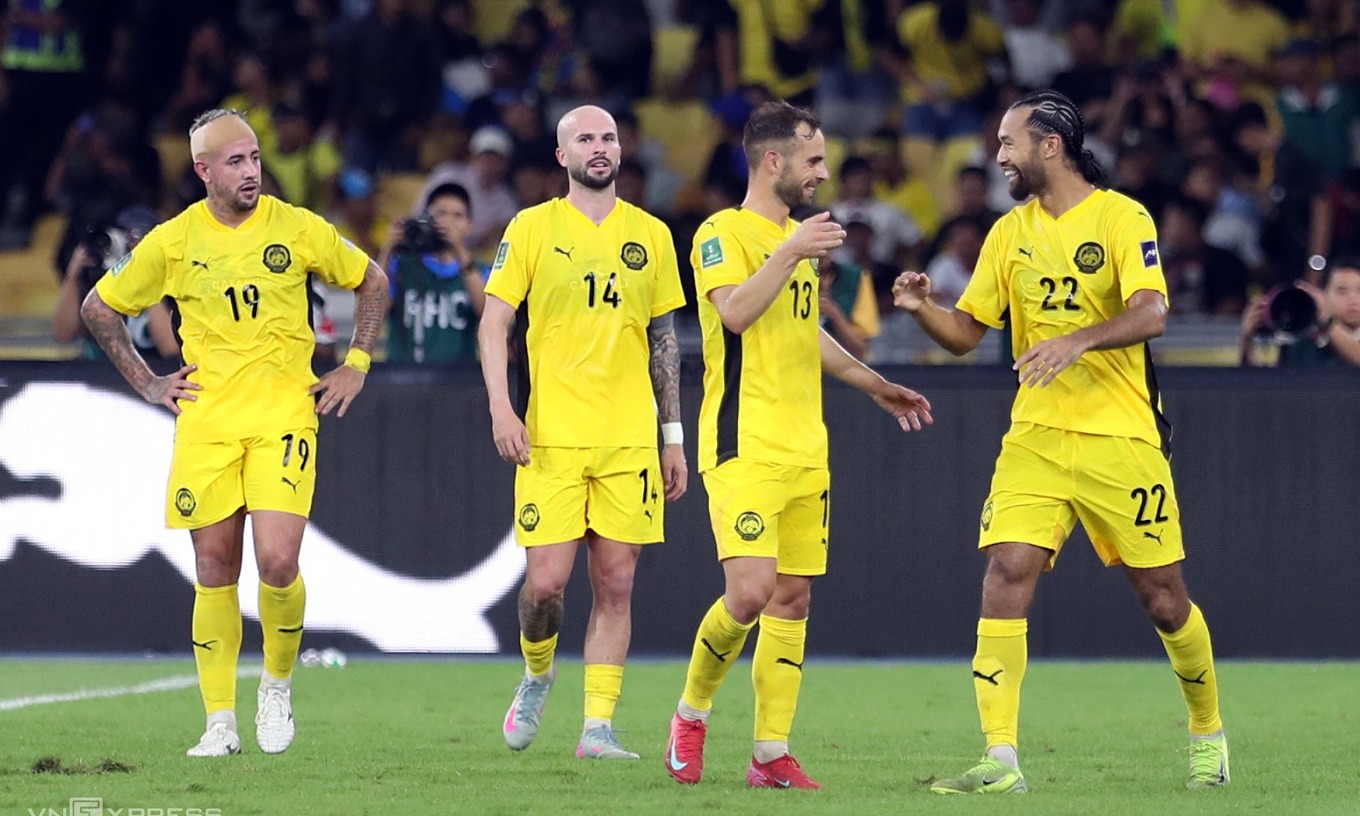
FAM’s case stems from an issue involving seven naturalized players who were accused of using falsified documents to represent Malaysia in the 2027 Asian Cup qualifiers. After failing in two previous hearings before the FIFA Disciplinary Committee (FDC) and the FIFA Appeal Committee (FAC), FAM has now turned to CAS for a resolution. The players involved were banned from football activities for 12 months, while FAM was fined 350,000 Swiss francs (US$435,000).
Legal Challenges and Evidence Requirements
Sports lawyer Nik Erman Nik Roseli emphasized that FAM’s chances of success at CAS depend heavily on presenting new and specific evidence. This is a high bar, given that FIFA has reportedly confirmed the authenticity of the original birth certificates of the players’ grandparents, which show they were not in Malaysia.
FAM had submitted versions of birth certificates listing the birthplaces in Malaysia, which would have been crucial for the players’ naturalization based on bloodline. However, according to Nik Erman, FAM must provide evidence to prove that the “original” certificates are either incorrect or do not belong to the players’ grandparents. He stated that while FAM has blamed the National Registration Department (NRD) for issuing the “new” certificates, the association remains responsible for ensuring the players’ eligibility.
Public Opinion and Financial Pressures
Despite the legal challenges, many experts, former players, and fans believe that FAM should consider stopping the appeals to avoid further financial and time losses. However, FAM has expressed its determination to pursue the case to the end, citing the need to protect the players’ rights and the country’s standing.
This decision places FAM in a difficult position. If they choose not to appeal, it could be interpreted as an admission that the documents were indeed falsified. At the same time, the financial burden of the CAS proceedings could be significant. However, this pressure was somewhat alleviated when Tunku Ismail Idris, the Regent and Crown Prince of Johor, announced that he would cover all costs for FAM’s appeal to CAS.
Timeline and Process for the Appeal
FAM has 10 days from the decision on November 3 to request a detailed appeal report from FAC. They then have 21 days to submit an appeal to CAS. The court requires both the plaintiff (FAM) and defendant (FIFA) to agree to proceed. FIFA will then have 20 days to submit its response.
Football cases dominate CAS proceedings, with 82% of its cases in 2023 and 72% in 2024 involving football-related disputes. Most of these are appeals, with FIFA frequently appearing as a party.

Sports Lawyer Nik Erman Nik Roseli. Photo by Facebook/Nik Erman Nik Roseli
In 2024, 326 out of 476 football appeals to CAS involved FIFA. These were categorized into three types: cases where the federation was called as a party (117), cases where the federation was not involved (183), and cases where the federation requested exclusion (26). Most decisions involved contract disputes between clubs, players, and agents, with FIFA acting as the decision maker.
CAS decisions are divided into four categories: the nature of the case (right or wrong), costs during the legal process, contract termination orders, and consent (voluntary agreement by the parties involved). The FAM and FIFA case falls under the “nature” category, focusing on core evidence and legal reasoning.
As a defendant, FIFA received 78 verdicts in the “nature” category from CAS in 2024. Of these, 58 (74%) upheld FIFA’s sanction, rejecting the plaintiff’s appeal. Only 15 judgments (19%) annulled the sanction or referred it back to FIFA. The 74% win rate is considered FIFA’s lowest in the 2020–2024 period, where it previously ranged between 80–82%.
Historical Precedents and FIFA’s Track Record
Historically, FIFA has never had to withdraw sanctions against member associations whose national teams used ineligible players, in cases similar to Malaysia’s. For example, in 2012, the Gabonese Football Federation was sanctioned for using a beach football player who had played for Cameroon. In 2018, the Football Federation of Timor-Leste faced disqualification from the 2019 Asian Cup qualifiers after using nine illegally naturalized Brazilian players. More recently, in 2024, the Equatoguinean Football Federation was punished with 0-3 forfeit defeats for using a player who had previously represented the Spain youth team.
These precedents highlight the difficulty FAM faces in overturning FIFA’s sanctions. Despite the long odds, FAM continues to push forward, determined to fight for the rights of its players and the integrity of Malaysian football.
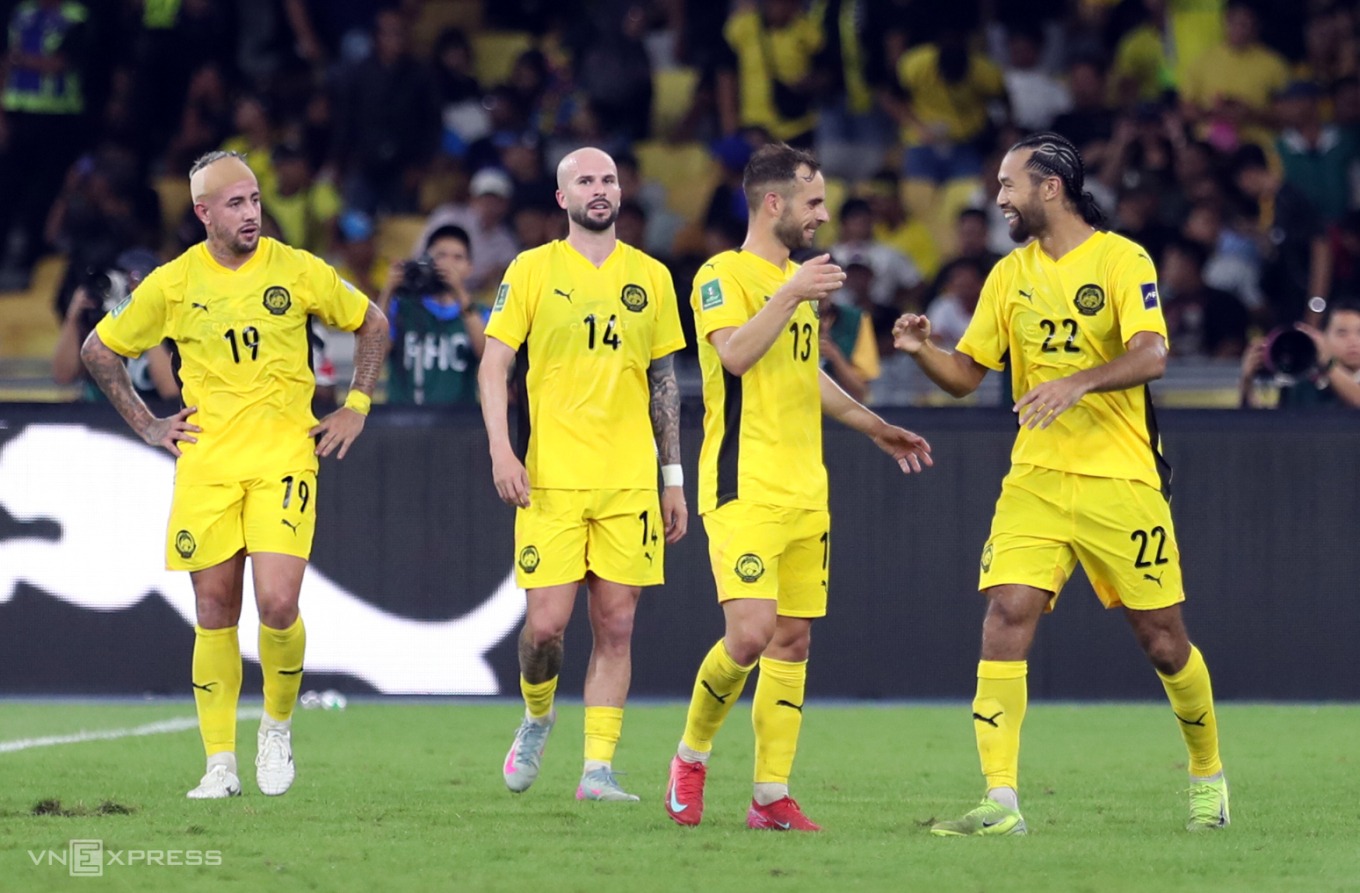
Players Suspended by FIFA. Photo by VnExpress/Hai Tu
Rodrigo Holgado (number 19), Joao Figueireido (14), and Hector Hevel (13), three of the seven Malaysia players suspended by FIFA, play in the 4-0 win over Vietnam in the 2027 Asian Cup qualifiers at Bukit Jalil Stadium, Malaysia on June 10, 2025. Photo by VnExpress/Hai Tu