
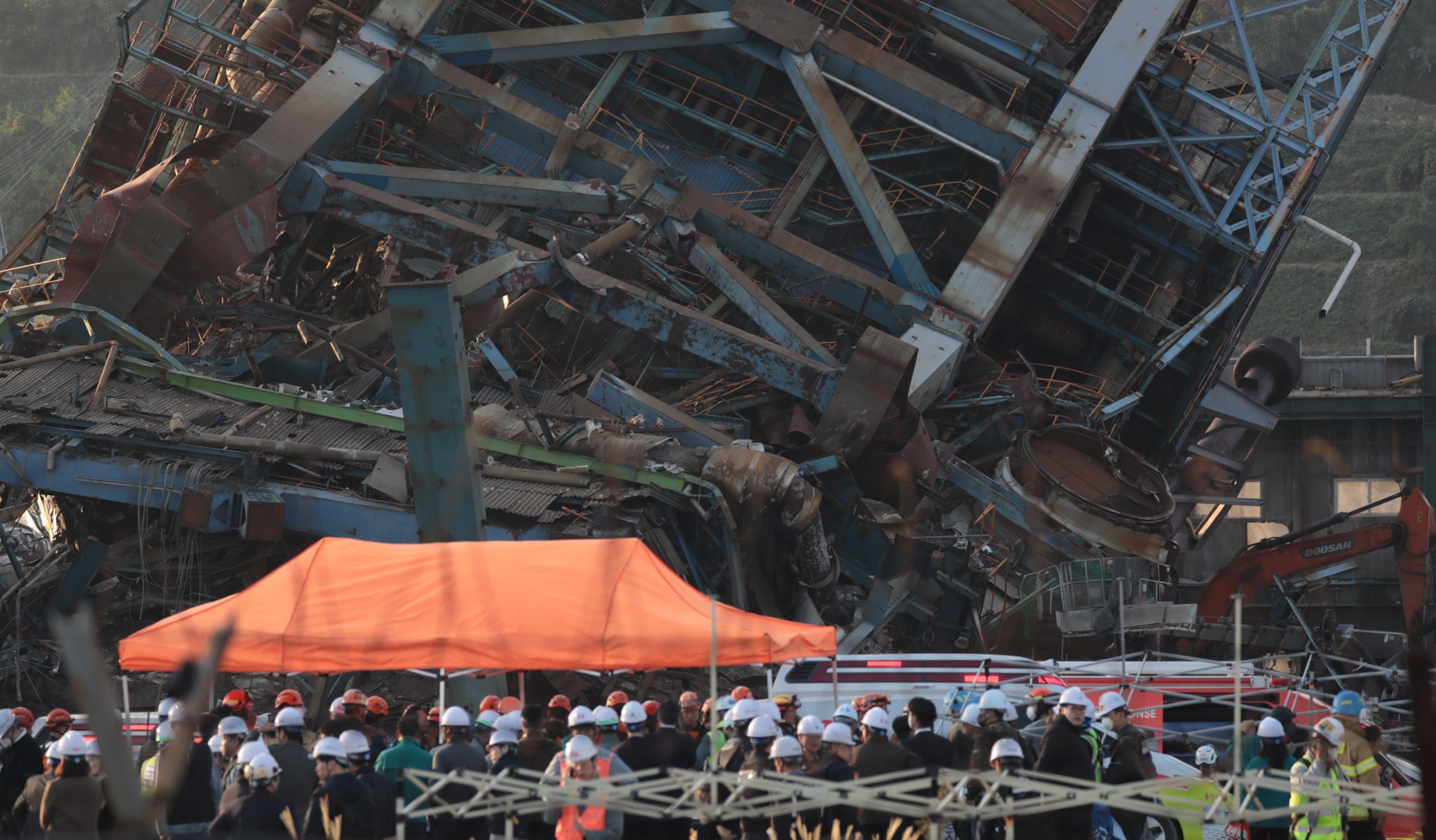
Emergency Response and Investigation into Power Plant Collapse
The Central Accident Control Headquarters has been established in response to a recent incident at the Ulsan Power Headquarters of Dongseo Power. The headquarters, led by Minister Kim Sung-whan, is tasked with coordinating efforts to manage the aftermath of the accident caused by the collapse of a boiler structure during the dismantling process.
Immediate Actions Taken by Authorities
Following the incident, Minister Kim emphasized the importance of cooperation between the power company and the National Fire Agency in conducting rescue operations. He also mandated emergency safety inspections at similar work sites to prevent further accidents. The Ministry of Climate, Energy and Environment has confirmed that Minister Kim will visit the site in Ulsan to oversee and direct the ongoing rescue efforts.
Details of the Collapsed Structure
The structure that collapsed was one of three 60-meter-high boiler towers constructed in 1981. These towers were used to generate electricity by producing steam from bunker C oil, which drove turbines. However, the facility had been inactive since 2021 and was scheduled for demolition via explosion on the 16th of this month.
Information from the First Briefing
According to the initial briefing provided by the Ulsan Nambu Fire Station, nine workers were engaged in weakening work at a height of 25 meters when the collapse occurred. Weakening work involves pre-cutting columns and other structural components to ensure that the structure collapses safely during explosive demolition. This step is crucial in minimizing risks during the controlled destruction of such large-scale facilities.
Ongoing Investigations and Safety Measures
As the investigation into the cause of the collapse continues, authorities are focusing on several key areas:
- Review of Safety Protocols: Experts are examining whether all necessary safety measures were followed during the weakening work. This includes checking if the structural integrity of the tower was properly assessed before the operation began.
- Worker Training and Compliance: The qualifications and training of the workers involved in the operation are being reviewed to ensure they met industry standards.
- Equipment and Tools Used: Inspectors are assessing the condition and appropriateness of the equipment used during the dismantling process to determine if any malfunctions or improper use contributed to the incident.
Future Steps and Preventive Measures
In addition to the immediate response, officials are considering long-term preventive measures to avoid similar incidents in the future. These may include:
- Enhanced Safety Regulations: Revising existing guidelines for the dismantling of aging infrastructure to ensure stricter compliance with safety standards.
- Regular Inspections: Implementing more frequent inspections of decommissioned facilities to identify potential hazards before they become critical.
- Training Programs: Expanding training programs for workers involved in high-risk tasks to improve their understanding of safety procedures and emergency protocols.
Community and Worker Impact
The incident has raised concerns among local communities and workers involved in similar projects. Many are calling for greater transparency from both the government and private companies regarding the safety of such operations. The affected families are receiving support from local authorities, while the broader community is awaiting updates on the progress of the investigation.
Conclusion
The collapse of the boiler structure serves as a reminder of the importance of rigorous safety practices in industrial operations. As the Central Accident Control Headquarters continues its efforts, the focus remains on ensuring the well-being of workers, preventing future incidents, and maintaining public trust in the management of such critical infrastructure.