
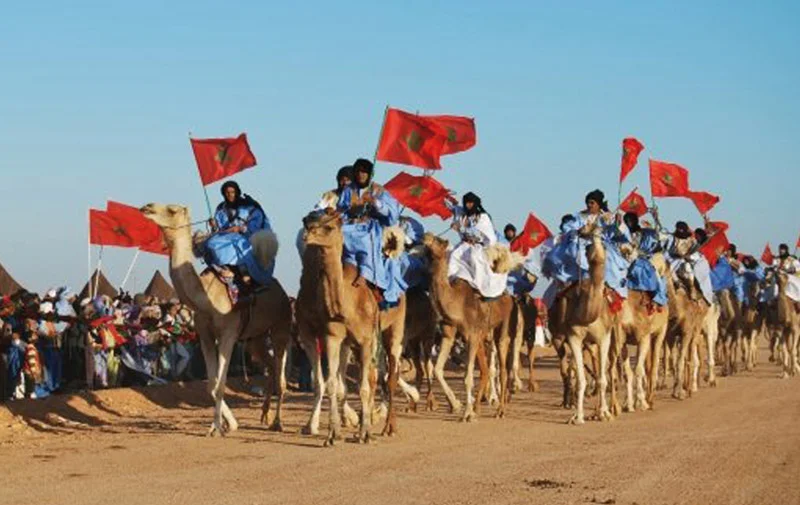
The Sahrawi Tribes of Morocco: Pillars of Governance and Social Cohesion
The Sahrawi tribes of Morocco, including the powerful Reguibat confederation, the Tekna, and the Ouled Dlim, are more than just a cultural heritage; they form the backbone of governance, social cohesion, and alliances in the southern provinces. Their influence extends far beyond local boundaries, offering insights into the strategies of the Moroccan state in the Sahara and the regional and international stakes tied to the stability and sovereignty of this strategically important territory.
These tribes are deeply embedded in the fabric of life in regions such as Laâyoune, Smara, Boujdour, Dakhla, Aousserd, Guelmim, and Tan-Tan. Their histories are intertwined with a rich tapestry of Arab, Berber, and Moorish ancestries. Tribal structures often rely on age-old alliances, whether religious or military, shaping the social and political landscape of the region.
Key Tribes and Their Influence
1. The Reguibat (or Rgueibat)
As the largest Sahrawi tribal confederation, the Reguibat have traditionally been nomadic, spanning across Morocco, Mauritania, Algeria, and the Sahara. They hold significant influence in areas like Smara, Aousserd, and Dakhla. The Reguibat are composed of several factions, including:
- Reguibat Sahel(Atlantic coast, Dakhla)
- Reguibat Chorfa(of religious descent)
- Reguibat Lebouihat
- Reguibat Soueid
- Reguibat Ahel Laachram
- Reguibat Chark(East)
- Reguibat Oulad Moussa
2. The Tekna
This Arab-Berber confederation is located between Guelmim, Tan-Tan, and Tarfaya. They serve as a vital link between the Souss region and the Sahara. Renowned for their caravan trade and political influence since the 18th century, the Tekna include main factions such as:
- Aït Lahcen
- Aït Yassin
- Aït Oussa
- Aït Baamrane(historically tied to the Tekna, though further north)
- Azouafit
3. The Oulad Dlim
An Arab tribe of Maquil descent, the Oulad Dlim are prominently found in Laâyoune and Boujdour. They are deeply integrated into the social and religious fabric of the Sahara, with many notable figures and leaders among the Moroccan Sahrawis hailing from this tribe.
4. The Ouled Tidrarine
An Arab tribe from the Atlantic Sahara, predominantly around Dakhla, the Ouled Tidrarine have historically allied with the Reguibat and the Oulad Dlim.
5. The Aroussiyine (or Aaroussiyine)
Descendants of a Chorfa lineage (descendants of the Prophet), the Aroussiyine have played a historically significant role in religious and social domains. They are present in the regions of Smara, Laâyoune, and Guelmim.
6. The Izarguien
Though smaller in number, the Izarguien have historically been important in the area between Tan-Tan and Tarfaya. Believed to be of Berber origin, they are integrated into the Sahrawi tribal network.
7. Other Notable Tribes and Groups
Other tribes and groups include:
- Aït Lahcen
- Aït Moussa Ou Ali
- Ouled Bou Sbaâ
- Ouled Bouhya
- Ouled Taleb
- Ouled Tidrarine
- Ouled Jerir
- Ouled Delim
- Aït Hmad
Certain families or religious (maraboutic) factions have played roles in mediation or Islamic education, especially around the zawiyas of Smara and Tiznit.
Conclusion: The Core Confederations
In conclusion, the primary confederations shaping the Moroccan Sahara are the Reguibat, Tekna, and Ouled Dlim, around which religious (Aroussiyine), commercial, or warrior tribes revolve. Beyond traditions and lineages, the Sahrawi tribes are instrumental in structuring governance and social life in the Moroccan Sahara, showcasing how heritage and local organization bolster Morocco’s stability and presence in its southern provinces.