
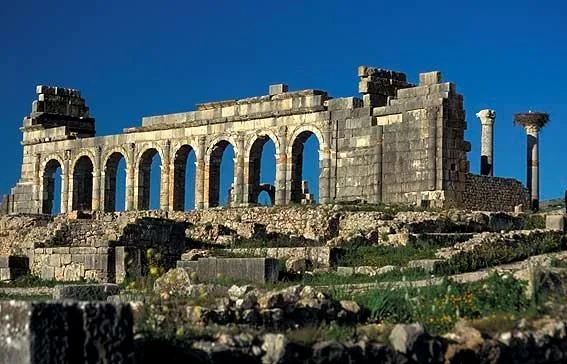
New Discovery in Roman-Era Military Architecture
The National Institute of Archaeology and Heritage has made a significant breakthrough near Volubilis, revealing new insights into Roman-era military architecture in Morocco. This discovery, based on newly unearthed architectural remains, provides a deeper understanding of ancient defense systems.
The findings are the result of ongoing fieldwork conducted by the Moroccan-Polish archaeological mission in the area surrounding Volubilis. The mission concluded its activities on October 30, 2025. This project is a collaborative effort between the National Institute of Archaeology and Heritage and the Polish Centre of Mediterranean Archaeology at the University of Warsaw (PCMA UW). The Polish team was led by researcher Radosław Karasiewicz-Szczypiorski, while Fadwa Benjafar from the institute led the Moroccan team.
Benjafar highlighted that the mission successfully uncovered two watchtowers, which were part of the surveillance and defense system along the borders of the province of Mauretania Tingitana, dating back to the first through third centuries AD. These structures provide valuable information about how the Romans fortified their territories in this region.
In addition to the two watchtowers, the team discovered traces of a third watchtower. Near this site, they found the remains of a funerary monument classified as a “tumulus.” This monument features an earthen mound topped with small stones and encircled by a circular ditch approximately 40 meters in diameter.
Benjafar explained that similar monuments are present at various archaeological sites across Morocco, typically dating to the Mauretanian period. However, she emphasized that definitive dating of the site awaits the completion of ceramic analysis. This analysis will help determine the exact time period to which the monument belongs.
The discovery of these watchtowers and the tumulus offers a glimpse into the strategic importance of the region during the Roman era. It also highlights the complex network of defense systems that were established to protect the borders of the province.
The collaboration between the Moroccan and Polish teams has proven to be highly effective, combining local expertise with international research methods. This partnership not only enhances the quality of the archaeological work but also promotes cultural exchange and knowledge sharing.
The findings from this mission contribute to a broader understanding of the historical and cultural landscape of Morocco. They also underscore the significance of continued archaeological efforts in uncovering the past and preserving heritage for future generations.
As the analysis of the artifacts and structures continues, more details about the daily life, military strategies, and social structures of the people who lived in this region during the Roman period are expected to emerge. These insights will further enrich our knowledge of ancient civilizations and their interactions.
The discovery near Volubilis serves as a reminder of the rich history that lies beneath the surface of modern-day Morocco. It encourages further exploration and research to uncover more stories from the past and to better understand the legacy of those who came before us.