
Financial Challenges and Restructuring Efforts
Nissan Motor Co. has faced significant financial challenges in the past six months, reporting a net loss of 221.92 billion yen ($1.44 billion) for the April-September period. This marks a sharp decline from a profit of 19.22 billion yen during the same period last year. The loss is attributed to sluggish global vehicle sales and the impact of heavy U.S. tariffs, which have placed additional pressure on the company to implement its restructuring plans.
This result represents Nissan’s first net loss for the first-half period in five years. As a result, the company has chosen not to provide a full-year forecast for the year ending next March, citing ongoing evaluations of its recovery plan measures.
Operating Performance and Sales Decline
During the six months through September, Nissan reported an operating loss of 27.65 billion yen, compared to a profit of 32.91 billion yen in the previous year. Sales for the period totaled 5.58 trillion yen, reflecting a 6.8 percent decrease.
The company noted that its global sales fell by 7.3 percent to 1.48 million units, with particularly weak performance in China and Japan. These regions are crucial markets for Nissan, and the decline highlights the broader challenges the automaker faces in maintaining its competitive edge.
Streamlining and Cost-Cutting Measures
To restore profitability, Nissan is implementing major streamlining efforts. One of these initiatives involves reducing the number of factories from 17 to 10. Additionally, the company plans to cut 20,000 jobs by fiscal 2027. These steps are part of a broader strategy to reduce costs and improve efficiency.
In another move, Nissan announced it will sell its headquarters in Yokohama, near Tokyo, for 97 billion yen. The company will lease the building back as part of its cost-cutting efforts. This transaction is expected to generate an extraordinary profit of 73.9 billion yen from the sale of the asset to a Tokyo-based real estate firm partly owned by the Taiwanese auto parts company Minth Group.
Leadership and Future Outlook
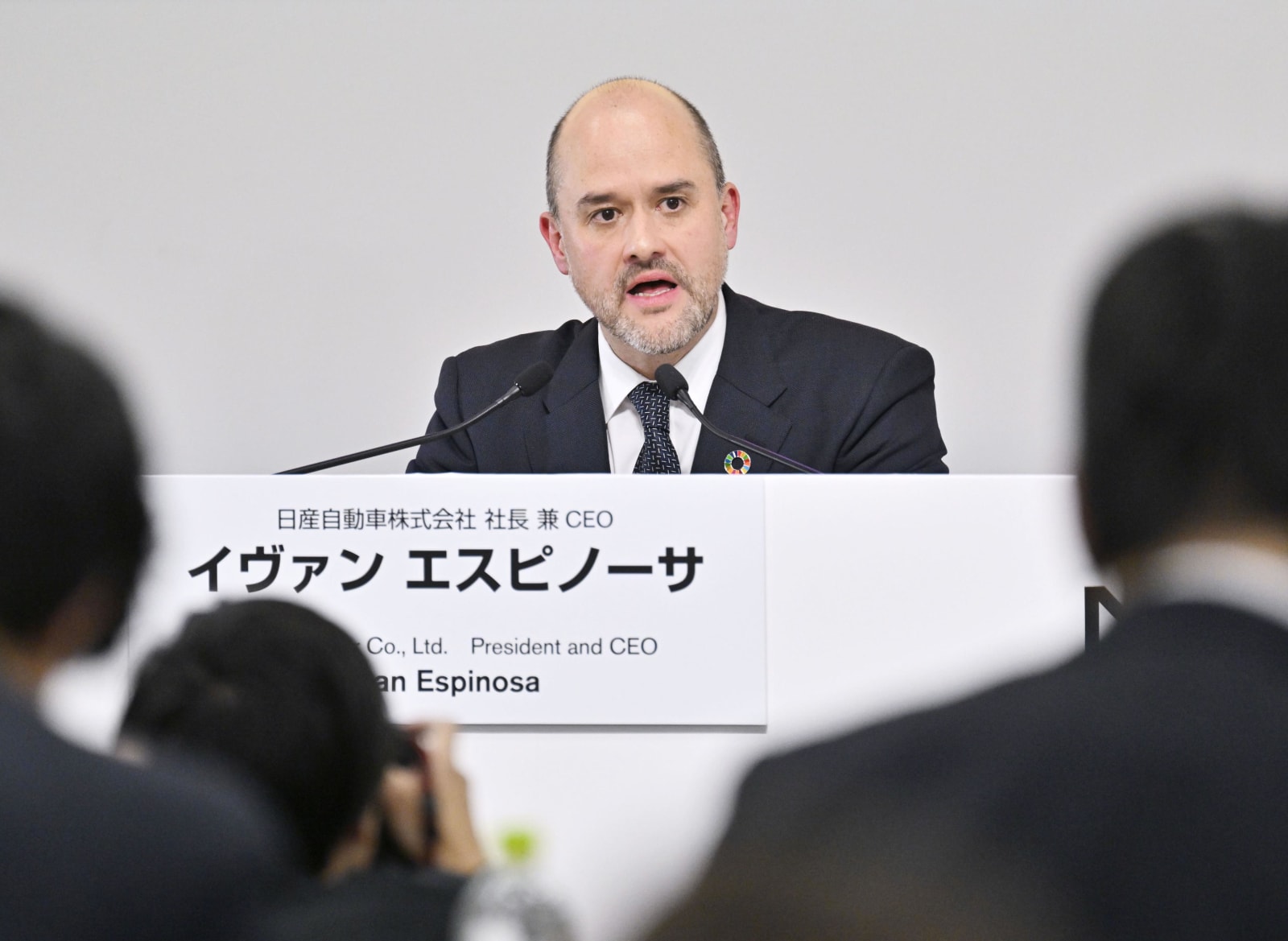
Nissan President and CEO Ivan Espinosa addressed the press conference, stating that the company is “on track” according to its expectations regarding the speed and scale of workforce adjustments. He expressed confidence in the second-half performance on sales, citing the rollout of new models.
Factory Consolidation and Joint Ventures
Out of the seven factories targeted for consolidation, Nissan announced that the sixth plant to be affected is a joint venture factory in Mexico with Mercedes-Benz Group AG. Vehicle production at this facility is set to cease at the end of November. Other plants slated for consolidation include those in Argentina, Japan, India, and Mexico.
Full-Year Projections
For the full year, Nissan maintained its sales estimate of 11.7 trillion yen, representing a 7.4 percent decrease from the previous year. The company also expects an operating loss of 275 billion yen.
Strategic Partnerships and Collaboration
Nissan had previously sought to merge with Honda Motor Co. to share the financial burden of developing electric vehicles and software. However, these talks broke down less than two months later in February. Despite this, Espinosa mentioned that Nissan is still discussing potential collaborations with Honda in several fields and projects.
Conclusion
As Nissan continues to navigate these challenging times, the company’s focus remains on restructuring, cost-cutting, and strategic partnerships. While the road ahead is difficult, the leadership’s confidence in future performance offers a glimmer of hope for the Japanese automaker.