
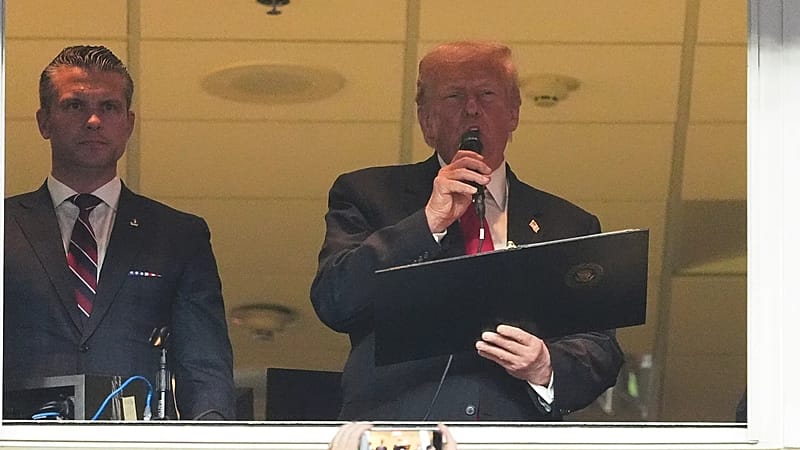
US President Donald Trump made a notable appearance at the Washington Commanders–Detroit Lions game on Sunday, marking a significant moment in his public engagements. This visit was particularly historic as it marked the first time a sitting US president has attended a regular-season NFL matchup in nearly 50 years. The event drew considerable attention, not only for its sports significance but also for the political implications of the president’s presence.
During the game, Trump was briefly acknowledged by the crowd when he was shown on the videoboard. However, his moment of recognition was short-lived as he faced a wave of boos when he spoke during a halftime military ceremony. The mixed reactions highlighted the polarizing nature of his public appearances and the strong opinions that continue to surround him.
Trump was seen watching the game alongside House Speaker Mike Johnson, continuing a pattern of attending major sporting events. His presence at such high-profile matches has become a recurring theme in his public life, reflecting his ongoing engagement with various aspects of American culture and society. These appearances have included events like the Ryder Cup and the US Open, further cementing his visibility in the sports world.
The decision to attend an NFL game is not just about supporting a team or showing interest in sports. It represents a strategic move to connect with different segments of the population. For Trump, these events provide an opportunity to interact with fans, engage with media, and maintain a visible presence in the public eye. Each appearance is carefully planned and often accompanied by significant media coverage, which helps to amplify his message and influence.
The NFL, being one of the most popular sports leagues in the United States, offers a unique platform for political figures to reach a broad audience. The atmosphere during games is typically energetic and passionate, making it an ideal setting for public figures to make an impact. Trump’s attendance at the game underscores the intersection between politics and sports, where personal interests and public image often intertwine.
In addition to the immediate impact of his presence, these events also serve as a way to gauge public sentiment. The reactions from the crowd, whether positive or negative, can provide valuable insights into how the public perceives a political figure. In this case, the mixed reception of Trump during the halftime ceremony reflected the divided opinions that many Americans hold regarding his leadership and policies.
The significance of Trump’s appearance also extends to the broader context of political engagement in sports. Historically, there have been instances where political figures have used sporting events to promote their agendas or rally support. However, the level of scrutiny and debate surrounding such appearances has increased in recent years, particularly in the age of social media and instant news coverage.
Overall, Trump’s attendance at the Washington Commanders–Detroit Lions game highlights the complex relationship between politics and sports. It serves as a reminder of the power of public events to shape perceptions and influence narratives. As the president continues to make appearances at major sporting events, the impact of these interactions will likely remain a topic of discussion and analysis in the coming months.