
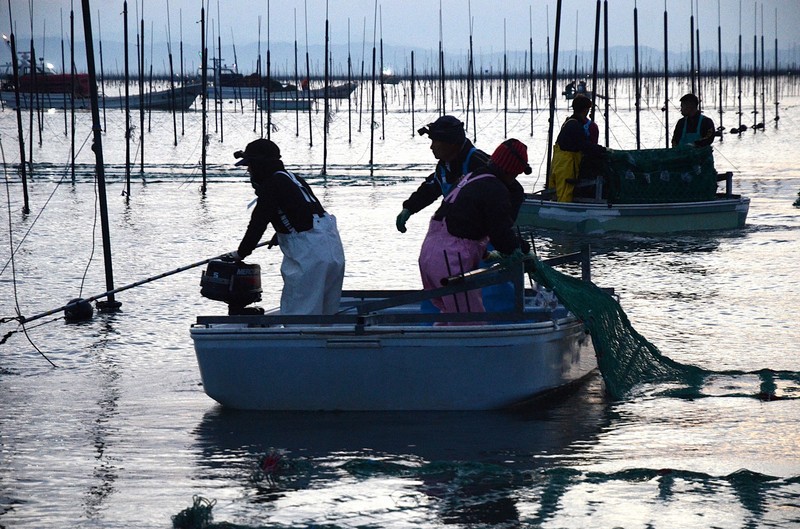
Seeding Process Begins for Farmed Nori Seaweed in Ariake Sea
In the Ariake Sea, located in Kyushu, the process of seeding farmed nori seaweed has officially started. This is a crucial step in the cultivation cycle of this popular marine product, which is widely used in Japanese cuisine. On the morning of November 4, approximately 600 fishing boats set out from the coast of Saga Prefecture to spread nets in the sea. These nets are equipped with oyster shells that contain nori spores, which are the early stages of the seaweed’s life cycle.
The oyster shells, carrying these microscopic spores, are suspended from the nets. Over the next few weeks, the nori will begin to grow on these shells. The first harvest is expected to take place about one month after the seeding process has begun. This timeline allows the seaweed to develop properly in the nutrient-rich waters of the Ariake Sea.
Nori, known for its dark green color and delicate texture, is a key ingredient in many traditional Japanese dishes, including sushi and onigiri. Its cultivation is an important part of the local economy in regions like Saga, where the Ariake Sea provides ideal conditions for its growth. The use of oyster shells as a base for the spores is a traditional method that has been refined over the years to ensure high-quality yields.
The Importance of the Seeding Season
The seeding season marks the beginning of a new cycle for nori farmers. It requires careful planning and coordination among fishermen, who must work together to ensure that the nets are properly placed and maintained. The timing of the seeding is critical, as it must align with seasonal changes in water temperature and currents, which can affect the growth of the seaweed.
Once the seeds have been placed on the nets, they are left to grow for several weeks. During this time, the seaweed develops into a mature form that is ready for harvesting. Farmers monitor the growth closely, checking for signs of healthy development and making adjustments as needed. This period is also when the risk of environmental factors, such as storms or changes in salinity, can impact the yield.
After the initial harvest, the process repeats itself, allowing for multiple cycles of production throughout the year. This ensures a steady supply of nori for both domestic and international markets.
Educational Resources for Language Learners
For those interested in learning Japanese, the article provides valuable educational content. The text is adapted from the Mainichi Shogakusei Shimbun, a newspaper designed for children. It is written in easy Japanese, making it suitable for learners who have already mastered hiragana and katakana. The material is ideal for practicing reading comprehension, as it includes both English and Japanese versions of the text.
Each week, a fresh set of articles is published on Mondays, Wednesdays, and Fridays at 4 p.m. Japan time. Readers can access past installments by clicking on the provided link. For intermediate learners who do not require additional language support, the full version of the newspaper is available directly on the Mainichi Shogakusei Shimbun website.
Additionally, furigana—hiragana annotations for kanji—is included in the text, helping readers understand the meaning of complex characters. This feature makes the content more accessible to learners at various levels of proficiency.
Conclusion
The seeding process in the Ariake Sea is a vital part of the nori cultivation cycle, reflecting the deep connection between local communities and the ocean. As the first harvest approaches, farmers and fishermen prepare for another successful season of producing this essential ingredient. For language learners, the educational resources provided by the Mainichi Shogakusei Shimbun offer a unique opportunity to engage with real-world content while improving their Japanese skills.