
The Strategic Crossroads of Ghana’s Palm Oil Sector
Ghana’s palm oil sector stands at a critical juncture. Once the leading producer in West Africa, the country now faces challenges that threaten its economic and environmental stability. Despite having some of the most favorable agro-ecological conditions for palm oil production, Ghana is importing palm oil products, which affects currency stability, food sovereignty, industrial competitiveness, and rural livelihoods.
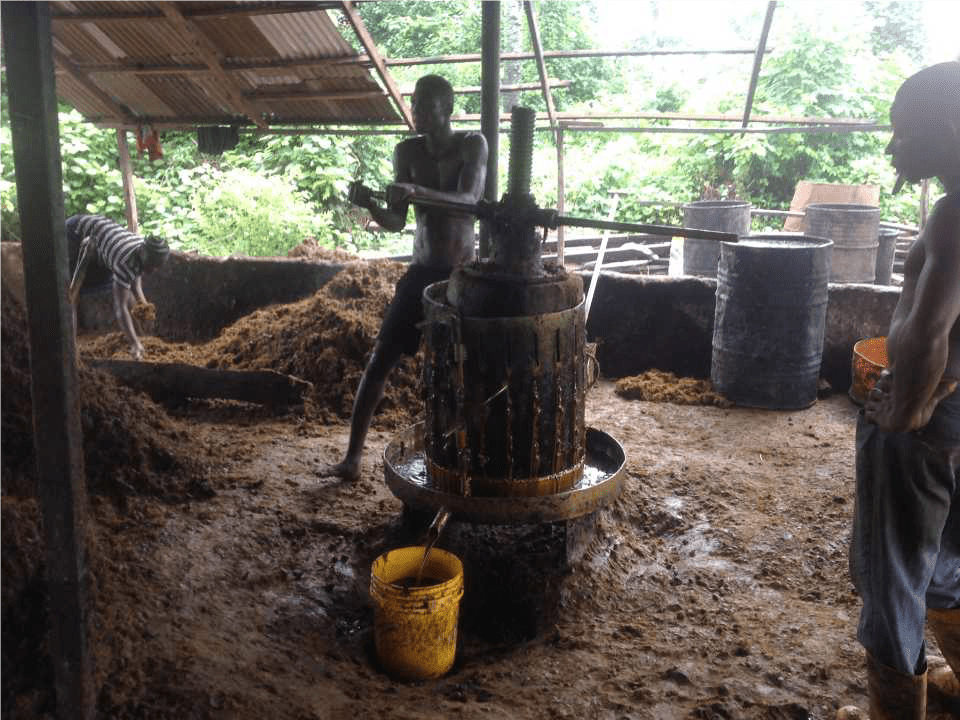
The root of this issue lies in the structure of palm oil production. Over 60% of Ghana’s crude palm oil is produced by artisanal and small-scale processors, many of whom use outdated technology and traditional methods. These mills typically extract only 9–12% oil, compared to 19–23% achieved by industrial mills. This results in low yields and poor-quality oil, characterized by high moisture, dirt content, and elevated Free Fatty Acid (FFA) levels, making it unsuitable for industrial use.
As a result, local processors are confined to informal markets, while refineries in Ghana import Crude Palm Oil to meet industrial needs. This undermines local jobs and puts pressure on the Ghana Cedi.
A National Stability Agenda, Not Merely an Agricultural Issue
For years, the policy debate on palm oil has centered around plantation expansion. However, the most immediate and cost-effective gains come from intensifying yields on existing plantations and upgrading the processing infrastructure in rural economies.
Modernizing artisanal mills offers several strategic benefits:
- Protecting the Cedi: Ghana continues to import palm-oil products annually. Increasing domestic production protects foreign exchange reserves and supports exchange-rate stability.
- Securing Industrial Growth: Local manufacturers often rely on imports because artisanal oil does not meet industrial standards. Upgrading community mills would provide stable, refineable feedstock and strengthen the manufacturing base.
- Empowering Rural Women and Youth: Women make up the majority of artisanal mill labor. Providing access to semi-mechanized technology improves incomes, health, and household resilience. Youth gain skilled employment in machine operation, maintenance, logistics, and quality management.
- Reducing Rural-Urban Drift: Vibrant rural enterprises anchor communities, reduce youth migration pressures, enhance social cohesion, and strengthen local economies. Modern mills can serve as rural industrial hubs, promoting peace and economic stability.
Public Health and Environmental Imperatives
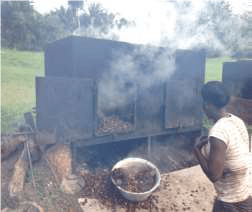
Environmental and health risks from outdated milling practices are often overlooked. Many artisanal mills discharge untreated Palm Oil Mill Effluent (POME) into rivers and streams, damaging aquatic ecosystems and threatening downstream agriculture. Using firewood, palm residues, and sometimes tyres or plastics for heating exposes women and children to dangerous smoke and toxic emissions. Studies emphasize the dangers of chronic particulate exposure, making upgrading boilers, using clean fuels, and installing effluent ponds essential public-health necessities.
The Proven Business Case for Upgrading
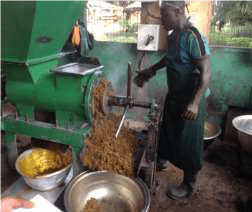
Upgrading does not require reinventing the wheel. Field experience shows that replacing manual presses with screw presses, adopting proper fruit handling, and applying basic quality controls dramatically improve output and quality. For example, Solidaridad’s SWAPP programme recorded extraction efficiency increases from roughly 9% to 15% after equipment upgrades and operator training. Similar results have been achieved in Asia through IFC-supported SME upgrading programmes.
Semi-mechanized mills are:
- More efficient and more profitable
- Safer and cleaner
- Easier to finance
- More attractive to industrial buyers
These improvements have been demonstrated in areas such as Akyem, Agona, Asankragua, Kwaebibirem, and other major palm belts.
TCDA’s Role – Standards, Finance, and Market Confidence
The Tree Crops Development Authority (TCDA), established under Act 1010 (2019), has a mandate to formalize and strengthen value chains for tree crops, including oil palm. TCDA can lead a coordinated mill-upgrade programme anchored in:
- Licensing and classification of artisanal mills
- Enforcing minimum standards for presses, boilers, and effluent systems
- Training and certifying mill operators through TVET institutions
- Linking compliant mills to industrial offtakers
- Partnering with financial institutions to provide equipment leasing and credit
- Prioritizing women’s processing cooperatives
This approach mirrors successful models in Malaysia and Indonesia, where upgrading community mills formed the foundation of competitive palm oil industries.
From Traditional Courtyards to Modern Rural Industry
Ghana does not need to eliminate artisanal mills; it must upgrade and formalize them, ensuring they become dignified, productive rural businesses. This requires:
- Cleaner, safer processing environments
- Steam-based cooking rather than open fires
- Proper fruit handling and sterilization
- Effluent ponds and composting systems
- Basic record-keeping and quality assurance
- Access to equipment leasing and finance
This hybrid model blends local enterprise with industrial standards, offering a practical and inclusive path forward.
Conclusion – A National Duty to Modernise from the Bottom Up
A resilient and prosperous Ghana is built on productive and dignified rural livelihoods. Modernizing artisanal palm oil mills will:
- Increase domestic production and save foreign exchange
- Strengthen the cedi
- Support local manufacturing
- Improve rural incomes and job quality
- Enhance public health and environmental safety
- Empower women and youth
- Reduce rural-urban migration pressures
Across palm-growing districts, Ghana’s agro-industrial future is shaped in the smoky courtyards where rural women struggle with manual presses. These courtyards can — and must — become clean, efficient, semi-mechanized rural factories. When they do, Ghana will move closer to currency stability, rural prosperity, and agricultural sovereignty.
The pathway is proven. The case is clear. The time to act is now.