
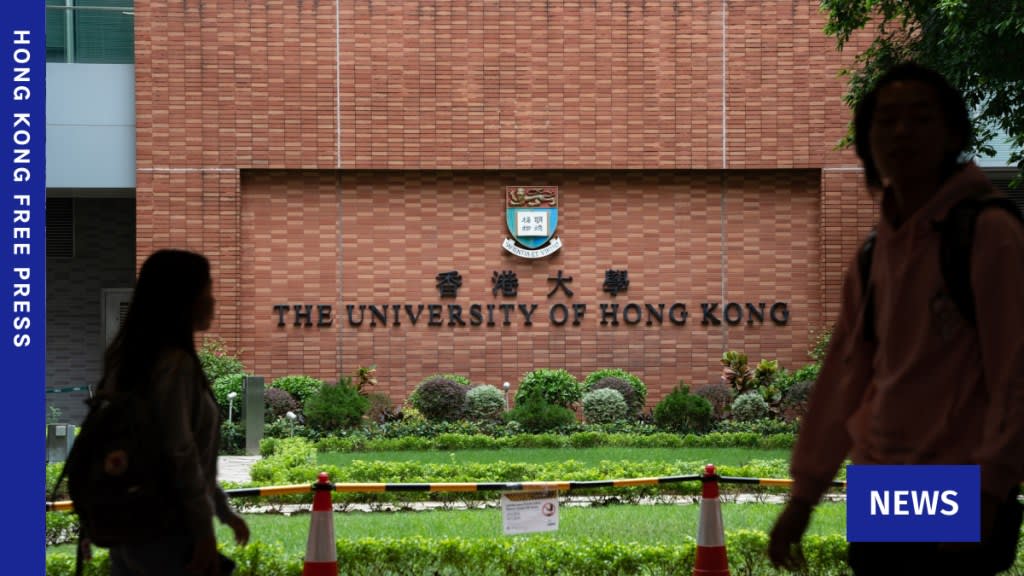
University of Hong Kong Investigates AI-Generated References in Doctoral Thesis
The University of Hong Kong (HKU) has initiated a formal investigation into a published doctoral thesis after it was discovered to contain non-existent references that were generated by artificial intelligence (AI). This development has raised concerns about the integrity of academic research and the use of AI tools in scholarly work.

HKU has stated that it will take “appropriate disciplinary action” if any violations of research ethics or standards are identified during its probe. The investigation centers on a paper titled “Forty years of fertility transition in Hong Kong,” which was published in the academic journalChina Population and Development Studies. The university emphasized its commitment to upholding rigorous academic and research standards, as well as ensuring that all work meets internationally recognized benchmarks for quality and ethical conduct.
The allegations against the paper emerged from online discussions suggesting that the work contained “AI hallucinations”—false, inaccurate, or misleading information generated by an AI bot. The primary author of the paper is HKU PhD student Bai Yiming, with HKU’s chair professor of population health, Paul Yip, listed as the corresponding author. Other co-authors include Billy Li, a researcher from the government’s Census and Statistics Department, and three additional academics.

According to local newspaperMing Pao, the paper includes 61 references, comprising academic articles, books, government statistics, and Legislative Council documents. Of these, 21 items had Digital Object Identifier (DOI) links, while 35 included Google Scholar links. However, upon clicking the links, seven DOIs were found to be “not found,” and 22 Google Scholar links led to pages indicating that the articles could not be located.
In response to inquiries, HKU confirmed that it has strict policies governing the use of AI in academic research. The university has taken the allegations seriously and has launched a formal investigation in accordance with established procedures. It reiterated its dedication to maintaining high standards of academic integrity.
Paul Yip, the corresponding author of the paper, acknowledged to local media outletHK01that the student used AI to organize the references but failed to verify their accuracy. He admitted responsibility for the oversight and apologized for the incident. Yip expressed disappointment and indicated that he would require students to enroll in a course to better understand how to use AI responsibly.

Yip, known for his studies on suicide trends in Hong Kong, defended the academic integrity of the authors, stating that the paper was not fabricated and had passed two rounds of review. He also mentioned that he had reported the incident to the journal, managed by Springer Nature, and that the corrected version of the article would be uploaded soon.
According to Springer Nature’s website, Yip is a member of theChina Population and Development Studieseditorial board, which is led by Qiao Xiaochun of Peking University. However, the paper also appeared to present contradictory information regarding the affiliations of three co-authors: KP Wat, Eddy Lam, and BK So. In one section, the paper described Wat and Lam as HKU scholars, while So was listed as being from Jinan University in Guangzhou. In another section, the affiliations were reversed, with Wat and Lam appearing to be from Hong Kong Metropolitan University and So from Jilin University in Changchun.
HKFP has contacted Yip, Springer Nature, and HKU for further comment. Meanwhile, HKU recently reclaimed its position as Asia’s top university in the 2026 QS Asia University Rankings after a 15-year absence. HKU President and Vice-Chancellor Zhang Xiang highlighted that the achievement affirmed the institution’s academic excellence and underscored its role in shaping global higher education.