
The Rise of Autonomous Warfare
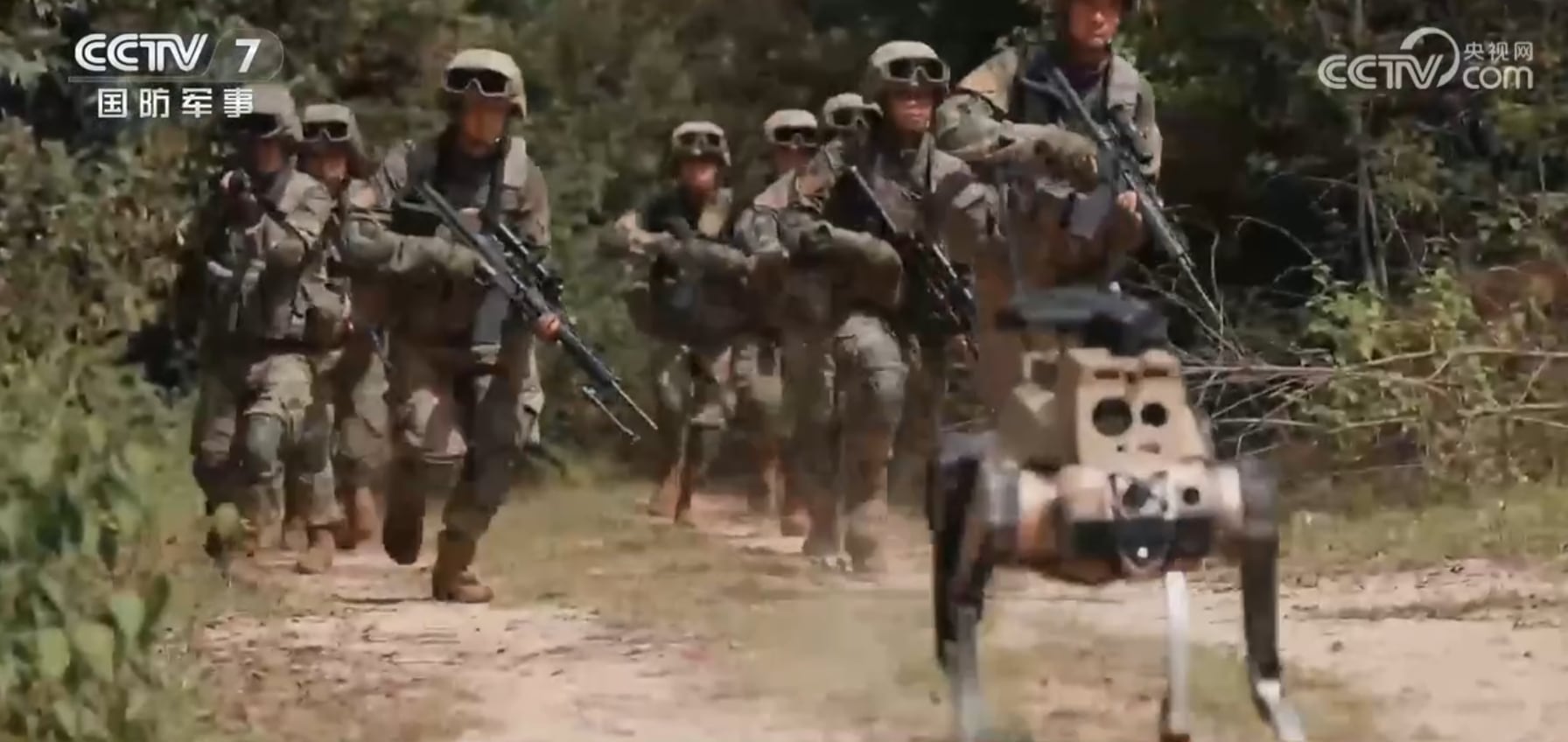
In a dramatic display of military innovation, the Huangchaoling Hero Regiment, part of the Chinese military’s 72nd Division, recently conducted training simulations that involved deploying “wolf robot” forces during a Taiwan landing operation. These robotic units were among the first to charge toward enemy lines in response to the commander’s command, “Forward!” The footage of this exercise was released by state broadcaster CCTV, highlighting the growing integration of robotic forces into combat scenarios.
The use of these wolf robots marks a significant shift from the experimental phase of unmanned systems. Now, they are being incorporated directly into mixed human-robot formations in real-world combat situations. This development signals a new era in warfare where technology plays an increasingly critical role.
U.S. Countermeasures and Unmanned Systems
In response to China’s advancements, the United States is reportedly designing and deploying extensive unmanned systems to counter potential threats, including operations related to Taiwan. The plans involve operating high-performance unmanned aerial vehicles (UAVs) for prolonged reconnaissance and strike missions. Additionally, the U.S. is considering mass-deploying squadrons of small autonomous drones along frontlines to create what some analysts describe as an “unmanned hellscape.”
This strategy aims to block any potential Chinese infiltration using advanced unmanned capabilities. The concept of an “unmanned hellscape” suggests a future battlefield dominated by autonomous systems, where traditional human soldiers may be outnumbered or outmaneuvered by machines.
Global Defense Technology Evolution
Research institutes around the world, such as French defense company Thales, are also contributing to the rapid evolution of global defense technology. According to investigations by WEEKLY BIZ, the pace of development in this field is alarming. It may not be long before the “robot war” depicted in the movieTerminatorbecomes a reality.
The Huangchaoling Hero Regiment, which trained with “wolf robots” in this recent exercise, is the same unit that participated in the Korean War. This historical context highlights the importance of preparing for future conflicts that may involve artificial intelligence and robotics. For countries like South Korea, it underscores the need for more aggressive investment in their defense industry to keep up with the changing landscape of warfare.
Implications for Future Conflicts
As nations continue to invest in autonomous systems, the implications for future conflicts are profound. The integration of robotic forces into military operations could redefine traditional concepts of warfare. It raises important questions about the ethical considerations of using autonomous weapons, as well as the potential for increased casualties and destruction.
Moreover, the development of these technologies may lead to an arms race, where countries compete to develop more advanced and lethal systems. This could result in a destabilization of global security, as the balance of power shifts in favor of those with the most sophisticated technology.
Preparing for the Future
In light of these developments, it is clear that the future of warfare will be shaped by technological advancements. Countries must not only focus on developing these systems but also on understanding their implications. This includes investing in research, education, and international cooperation to ensure that the use of autonomous systems is both effective and ethical.
As the world moves closer to a future where robots play a central role in conflict, it is essential for all nations to consider how they can best prepare for this new reality. The lessons learned from past conflicts, combined with the innovations of today, will shape the strategies and technologies of tomorrow.