
Overview of the Daejang-dong Development Corruption Case
The Daejang-dong development corruption case has been assigned to the Seoul High Court Criminal Division 3, presided over by Judge Lee Seung-han. This decision marks a significant step in the legal proceedings surrounding one of the most high-profile corruption cases in recent South Korean history. The case centers on allegations of collusion between private businessmen and local officials during President Lee Jae-myung’s tenure as mayor of Seongnam City from 2014 to 2015.
Legal Proceedings and Key Players
The Seoul High Court has allocated the appeal trial for the Daejang-dong development corruption case to its Criminal Division 3. This division is no stranger to high-stakes legal battles, having previously handled the appeal trial for President Lee Jae-myung’s perjury instigation case. The division also oversees the appeal trial of Sonamu Party Representative Song Young-gil, who was sentenced to prison in the first trial for allegedly receiving illegal political funds.
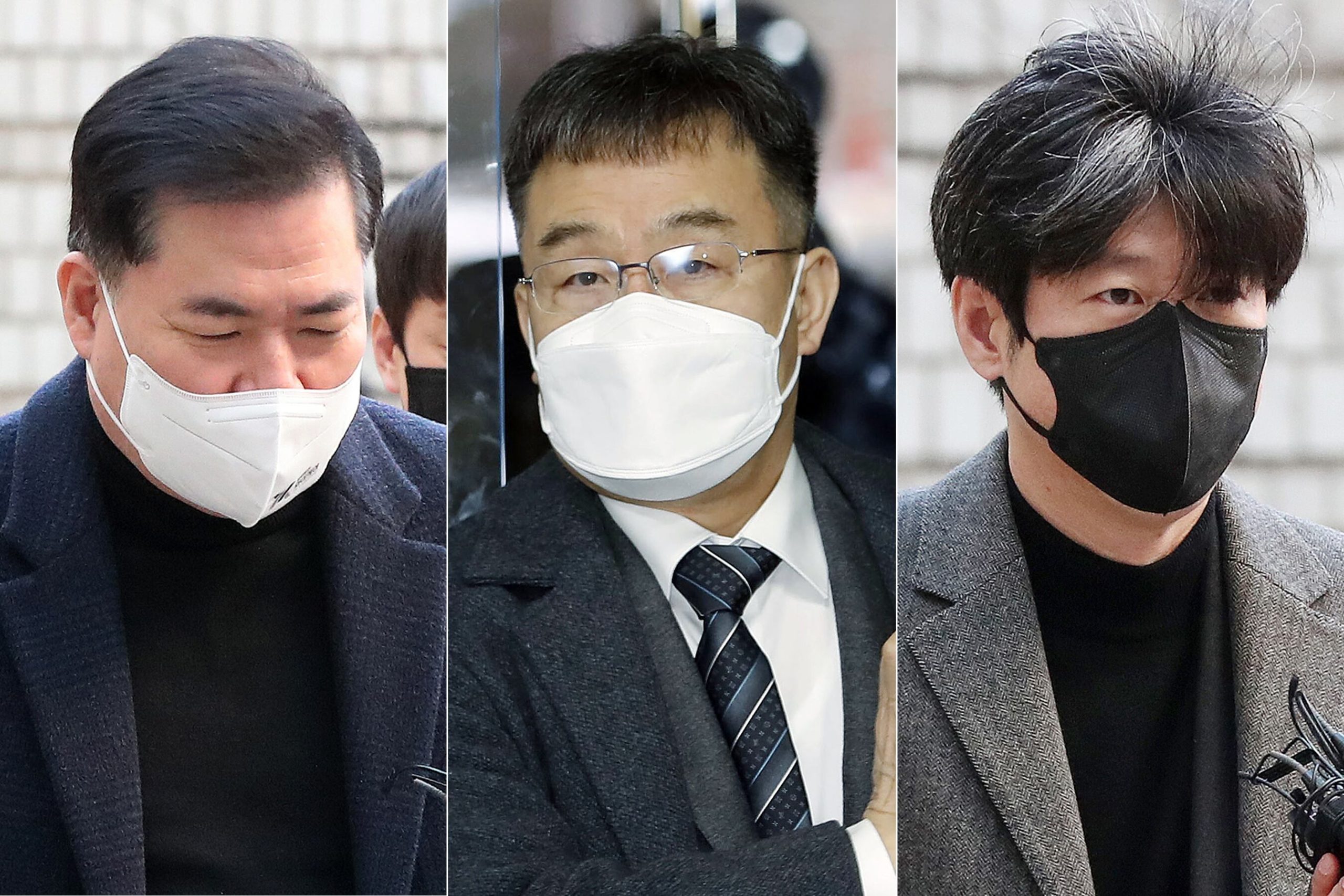
The initial trial was conducted by the Seoul Central District Court Criminal Division 22, led by Presiding Judge Jo Hyeong-woo. In this trial, all private businessmen involved in the Daejang-dong development corruption case were sentenced to heavy prison terms and detained in court on the 31st of last month. Notable among those convicted are:
- Kim Man-bae, a major shareholder of Hwacheon Daeyu, received eight years in prison.
- Yoo Dong-gyu, former head of the Seongnam Urban Development Corporation’s planning division, also received eight years.
- Attorney Jeong Min-yong, who managed the project, was sentenced to six years.
- Attorney Nam Wook and accountant Jeong Young-hak received four and five years, respectively.
Confiscation of Assets and Legal Disputes
The prosecution sought the confiscation of 781.4 billion won, citing the Conflict of Interest Prevention Act. They argued that the private businessmen exploited confidential information for undue profits. However, the court of first instance ordered only 47.3 billion won in confiscation, applying the Corruption Asset Confiscation Act instead of the Conflict of Interest Prevention Act.
All five defendants appealed their sentences. However, the prosecution abandoned its appeal after failing to submit an appeal petition by the midnight deadline on the 7th. This decision means that the private businessmen could face reduced prison terms or lower confiscation amounts in the appeal trial. Under criminal procedure law, the appellate court cannot impose a harsher sentence than the first trial if the prosecution does not appeal.
Background of the Case
The Daejang-dong development corruption case involves private businessmen colluding with Seongnam City during President Lee Jae-myung’s tenure as mayor (2014–2015) to receive preferential treatment in the development project. This collusion resulted in at least 489.5 billion won in damages to the Seongnam Urban Development Corporation. The court defined the case as “a series of corruption crimes in which the defendants conspired through long-term collusive relationships formed via bribery and other means.”
Implications and Future Outlook
As the appeal trial moves forward, the outcome will have significant implications for both the defendants and the broader legal landscape in South Korea. The case highlights the challenges of prosecuting corruption in high-level political and business circles, where collusion and abuse of power can lead to substantial financial and reputational damage.
The involvement of prominent figures and the potential for reduced sentences due to the prosecution’s withdrawal add layers of complexity to the case. The final verdict from the Seoul High Court Criminal Division 3 will be closely watched by legal experts, media, and the public alike.
The Daejang-dong development corruption case serves as a reminder of the importance of transparency, accountability, and the rule of law in maintaining public trust in institutions. As the legal process continues, it remains to be seen how this case will shape future approaches to corruption and governance in South Korea.