
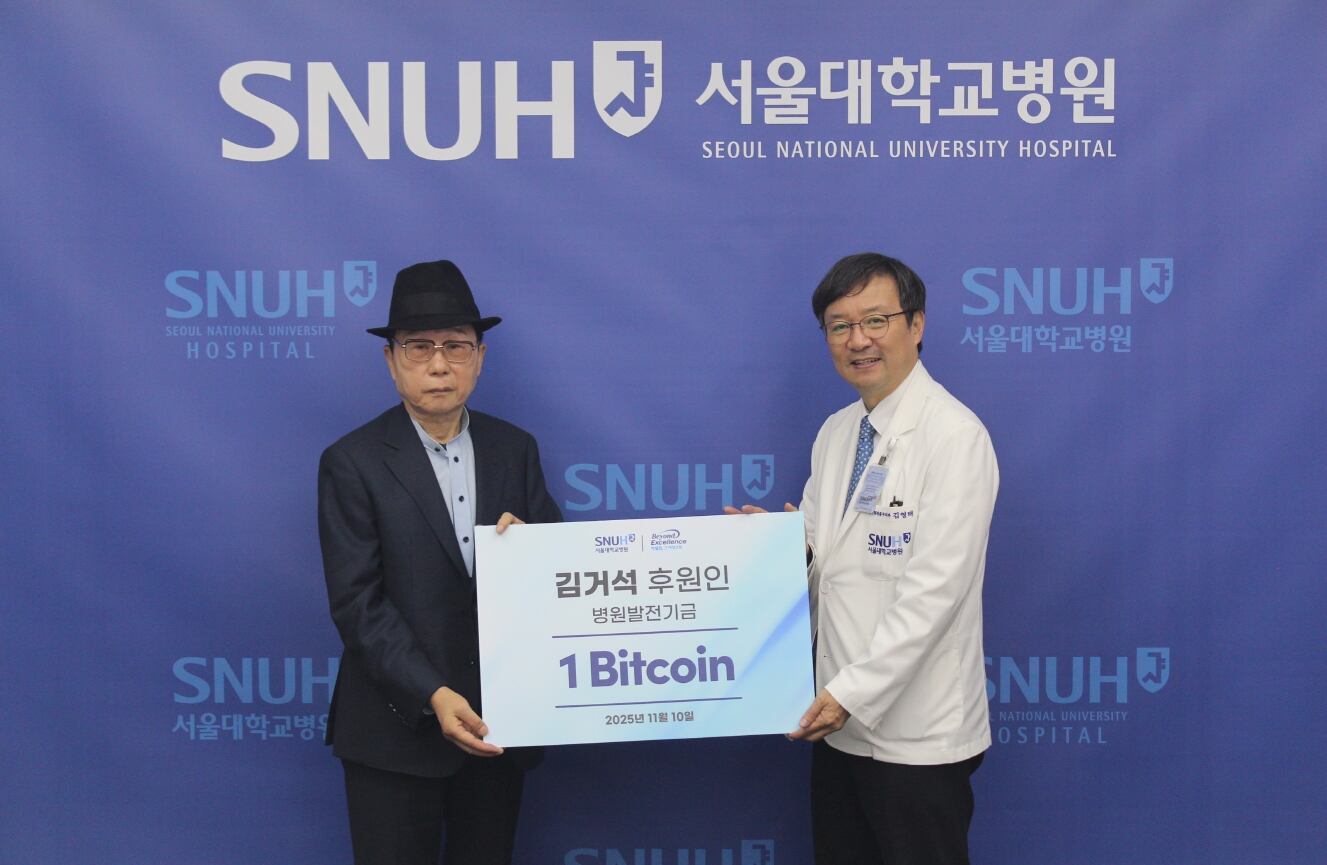
A Pioneering Donation of Bitcoin to a South Korean Hospital
A remarkable story has emerged about a 70-year-old investor who recently donated one Bitcoin to Seoul National University Hospital. This donation, valued at approximately 157 million Korean won, marks a significant milestone in the hospital’s history. It is the first time the institution has received a digital asset as a contribution to its development fund.
According to Seoul National University Hospital, the donation was made by Kim Geoseok, who has been consistently supporting various causes through his generous contributions. In addition to this recent Bitcoin donation, Kim had previously given 800 million Korean won to the hospital’s development fund and 100 million Korean won to the low-income patient support fund. With the latest contribution, his total donations have surpassed 1.05 billion Korean won.
Kim’s generosity extends beyond the hospital. In August, he also donated one Bitcoin each to the Korean Red Cross and Sarangbangul, two organizations that provide critical support to those in need. These donations collectively amount to approximately 1 billion Korean won for each organization, highlighting his commitment to making a positive impact.
At the handover ceremony held at Seoul National University Hospital, Kim expressed his belief that Bitcoin represents a modern and innovative way to contribute to society. He stated, “I believe Bitcoin is a new donation tool that aligns with the times,” and added, “I hope this donation will serve as an opportunity to spread a new form of sharing culture, and I want to continue this form of sharing in the future.”
Seoul National University Hospital has recognized the significance of this donation and is taking steps to ensure that such contributions can be accepted more systematically in the future. The hospital announced that it will establish internal procedures to stably accept digital asset donations. Additionally, they are preparing an operational system to ensure that these donations can be effectively utilized across various fields, including education, research, medical treatment, and public health care projects.
This initiative reflects the hospital’s forward-thinking approach to adapting to the evolving landscape of financial technology. By embracing digital assets, they are not only keeping pace with modern trends but also setting a precedent for other institutions to follow.
The hospital’s decision to convert the Bitcoin donation into cash according to the government’s non-profit corporate virtual asset liquidation guidelines underscores their commitment to transparency and compliance. This process ensures that the funds are used appropriately for the hospital’s development and the benefit of the community it serves.
Kim’s actions demonstrate the potential of cryptocurrencies as a means of philanthropy. His contributions highlight how digital assets can be leveraged to support important causes and make a meaningful difference in people’s lives. As more individuals and organizations explore the possibilities of blockchain technology, stories like Kim’s may become increasingly common.
In conclusion, the donation of Bitcoin to Seoul National University Hospital represents a significant step towards integrating digital assets into traditional charitable practices. It opens up new avenues for donors and recipients alike, fostering innovation and expanding the ways in which communities can support one another. As the hospital moves forward with its plans to accept and utilize digital donations, it sets an example for others to consider the potential of cryptocurrencies in the realm of philanthropy.