
The Rise of Armed Drones in Sub-Saharan Africa
In the last decade, armed drones have become one of the most visible symbols of modern warfare. Once the preserve of advanced militaries, these unmanned aerial vehicles are now widely available on the global arms market. Countries such as Turkey, China, and Iran are producing lower-cost models and exporting them. In Sudan’s ongoing war, which began in 2023, drones have been used by the two major warring parties to gain ground—yet they have caused massive civilian casualties in the process.
A drone is essentially a remotely piloted aircraft that can observe, track, and sometimes strike targets with missiles or bombs. The promise of armed drones is alluring: a lethal, precise, and affordable weapon that can surveil and strike enemies without troops being exposed. But can these drones deliver on their promise in African battlespaces? Brendon J. Cannon shares insights from his study of drone use in Sub-Saharan African conflicts.
What’s Driving the Use of Drones in Sub-Saharan Africa?
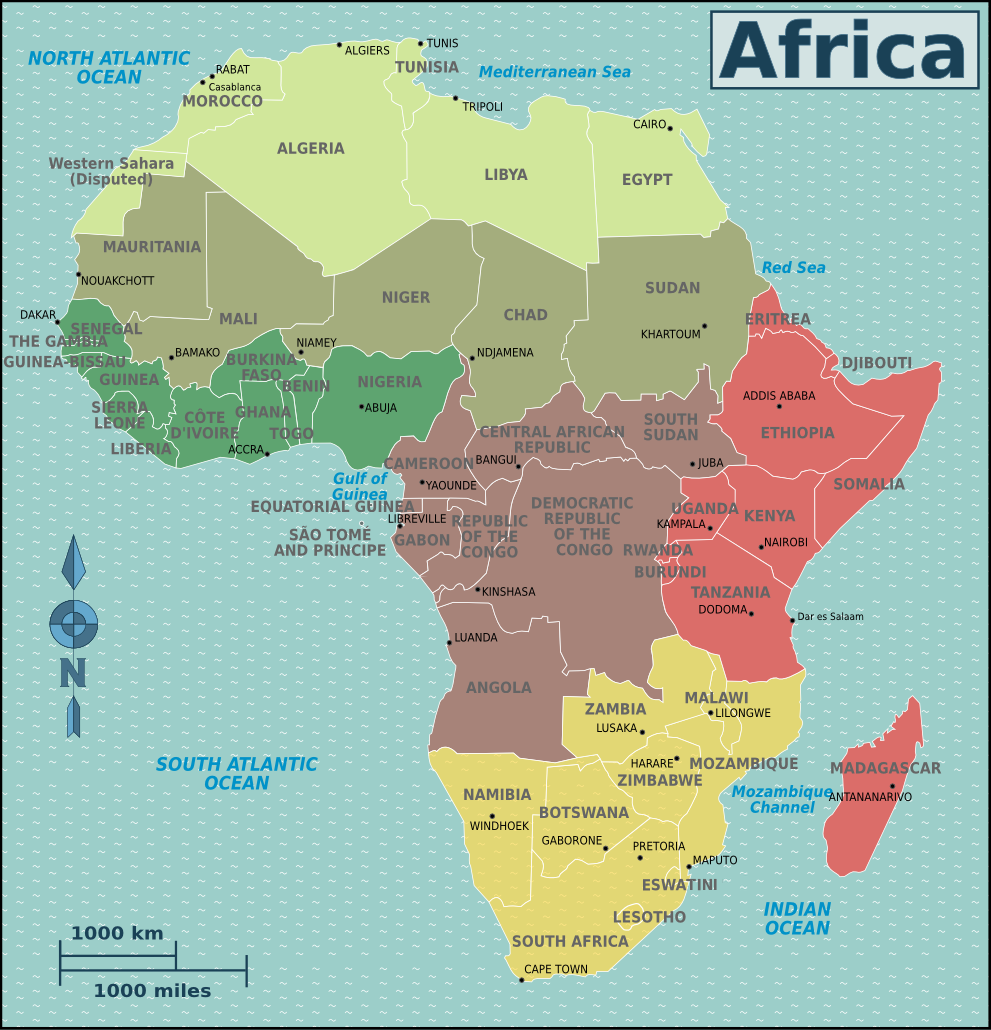
Drones offer tactical advantages. They are seen as a solution to pressing internal security problems, from jihadist incursions in the Sahel to armed insurgencies in Ethiopia and civil war in Sudan. Since 2019, a growing number of African states—among them Niger, Ethiopia, Togo, Sudan, and Somalia—have acquired medium-altitude long-endurance (MALE) drones. Among these types of drones, Turkey’s Bayraktar TB2—along with its successors, the TB3 and Kizilelma (Red Apple)—has captured outsized attention.
In the case of the Turkish TB2 model, for instance, some sources estimate 40 units have been sold to more than 10 African countries since 2019, but actual figures are not public. The TB2 is cheap by military standards (roughly US$5 million a unit) and relatively easy to operate. It has been hailed as a “game-changer” for its reliability, cost, and ready availability.
It has been combat-tested in Syria, Libya, and the Caucasus, a natural border between Europe and Asia. Its success in destroying tanks, artillery, and air defense systems in these conflicts impressed African leaders. As Turkish president Recep Tayyip Erdoğan boasted:
“Everywhere I go in Africa, everyone talks to me about drones.”
Effectiveness of Drones in African Conflicts
Medium-altitude long-endurance drones like the TB2 are entering African conflicts, which are marked by vast geography, difficult terrain, and complex insurgencies that frequently span borders. While drones can deliver lethal force, their ability to shape battlefield outcomes is also contingent on variables like:
- distance, terrain, and weather
- the competence of operators
- the existence of supporting intelligence, logistics, and command systems
With these variables in mind, my recent research with my colleague, Ash Rossiter, found that drones are unlikely to significantly alter the course of conflicts in much of sub-Saharan Africa, for a couple of reasons.
First, there is a general absence of modern integrated air defenses in the region. This is required to deploy drones as lethal precision weapons, particularly in targeting isolated groups. Second, the success of these drones depends on competent operation, their employment in sufficient numbers, and adequate support infrastructure, such as fuel, communication masts, and ground control stations. These are often lacking in remote places where insurgents operate in places like Somalia, Niger, and northern Burkina Faso.
Limitations of Drone Lethality
Where adversaries lack modern, integrated air defenses—as is currently common among insurgent and militia forces in much of sub-Saharan Africa—drones can loiter with minimal risk. They can collect actionable intelligence and conduct precise strikes against vehicles, small groups, and supply lines. This lethality, however, is limited by a number of factors.
Distance
Africa’s size and scale blunt drone range—and therefore efficacy. The TB2’s circa 300km range, for instance, means it worked well in the Caucasus. However, 300km will not get you far in Ethiopia or the Sahel. In Ethiopia, for example, the TB2s had to be repositioned by the government in 2022 from bases near Addis Ababa to Bahir Dar. This was a distance of about 300km, to reach targets in Tigray. This shows how drone bases, security architecture, and forward infrastructure, such as communications masts and logistics support closer to conflict areas, are needed. This increases range and, therefore, outcomes.
Terrain and Weather
Dust and sandstorms in the Sahel can impair the drones’ visible-light sensors. Sandstorms occur frequently in the region, particularly during the dry season. Dense forest canopies in central Africa can conceal movement from drones. Persistent cloud cover over Ethiopia’s highlands or along the Gulf of Guinea may limit efficacy. Electro-optical and infrared payloads, which provide high-definition and thermal imaging, give drones like the TB2 a 360-degree view. This allows them to operate in diverse weather conditions. But they may need to fly under the weather to see targets in these African terrains. This brings its own risks, as it exposes the drones to potential small-arms fire. This has happened in Sudan, where paramilitary troops reported shooting down army drones in August 2025.
Operator Capabilities
Effectively operating a drone requires trained operators, disciplined targeting procedures, and dependable maintenance. Failures can be costly. A Burkinabè TB2 crash in 2023 exposed maintenance and operational fragilities, destroying one of five TB2 drones from the Burkinabè arsenal. A Nigerian drone strike in 2023 that was reportedly aimed at terrorists instead killed about 85 civilians. This was after an incorrect grid reference. It underscored how weak operator capabilities can transform precision weapons into harbingers of tragedy.
Fit to Conflict
Drones are most useful for hitting supply convoys, eliminating specific targets, and targeting loose militant networks. These are missions typical of low-intensity, irregular warfare. They are far less decisive in conflicts against massed troop formations or for holding territory, which has characterized recent wars in Ethiopia and Sudan. These tasks still rely on fighter-bombers or attack aircraft, and ground forces.
Implications for Drone Use in Sub-Saharan Africa
First, medium-altitude long-endurance drones can deliver tactical gains but rarely provide a silver bullet. The initial impression of the TB2 has unfortunately obscured some of its limitations, such as operations across extreme distance, in inclement weather, and the importance of operator proficiency.
Second, in conflicts like Ethiopia and the Sahel, geography and logistics play a critical role. Basing, relay links, and forward-deployed maintenance determine a drone strike’s coverage, persistence, and power.
Third, a drone’s overall effect depends on trained crews, reliable maintenance, and disciplined targeting and command review. Weakness in any of these can result in tragedy, such as civilian deaths.
Finally, as non-state armed groups increasingly adopt drones and some African states like Rwanda and Kenya begin to field better air defenses, the advantage currently held by national governments that own drones will narrow.
The Path Forward
Lasting utility, therefore, requires three things:
- Counter-drone defences, which means countries need to develop strategies and acquire sensors, jammers, and systems to detect, track, and neutralize hostile drones.
- Better protection of the locations and networks from which drones are controlled so that these are not disrupted, sabotaged, or targeted.
- Sustained investment, not just in drone acquisition but also in maintenance, operator training, and basing infrastructure to support continuous flight operations and extend drone reach deeper into battlespaces.