
Rising Unemployment and Economic Concerns
The UK labor market is facing significant challenges as the unemployment rate hit a four-year high, prompting warnings to Chancellor Rachel Reeves that she must avoid further damaging businesses during the upcoming Budget. Recent data reveals a struggling jobs market with increasing redundancies, as the Chancellor prepares to implement more tax hikes.
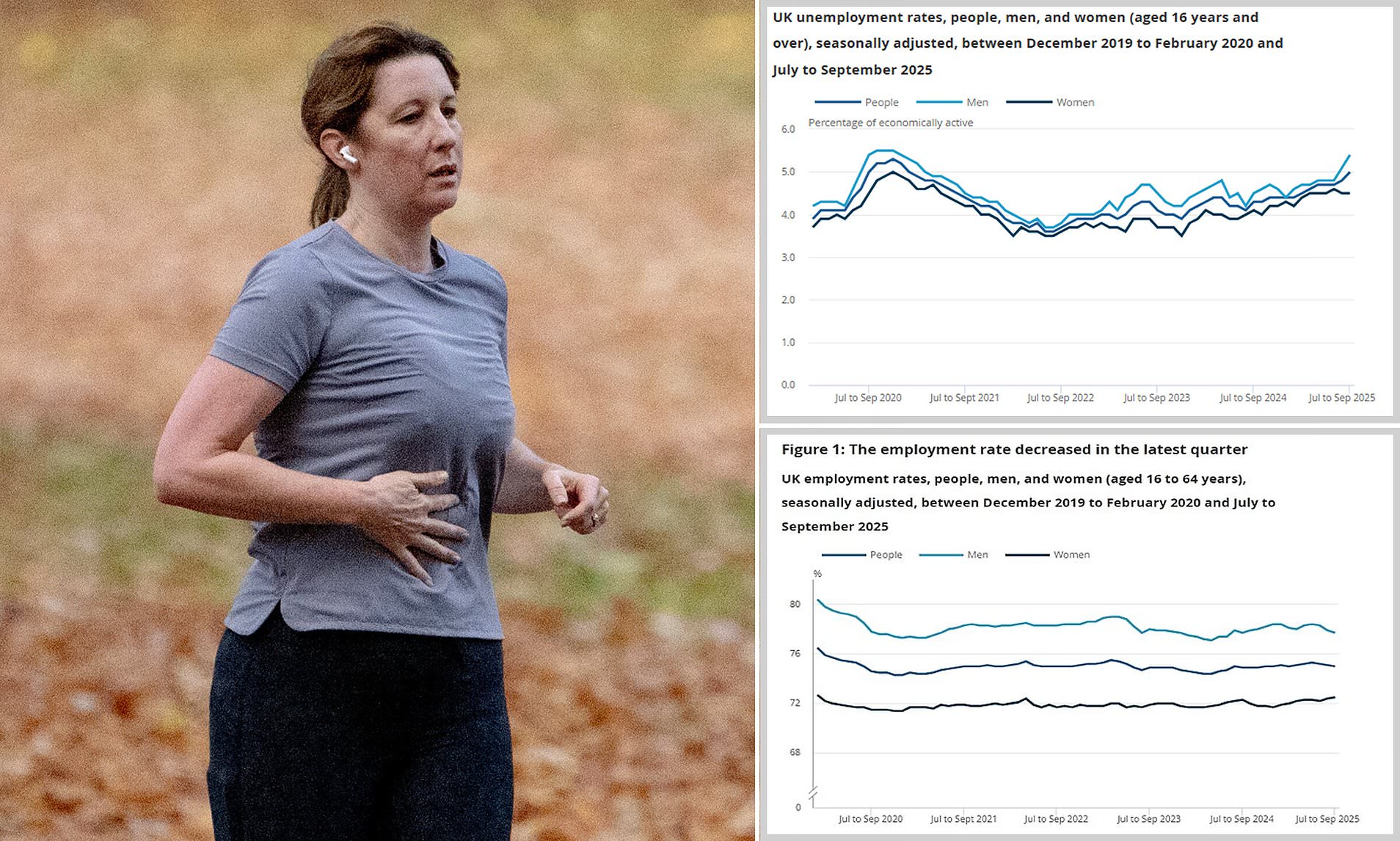
Analysts suggest that the current situation is a result of previous fiscal policies, where Ms. Reeves imposed additional costs on firms through her major fiscal package last year. This has led to a reaction in the form of rising unemployment and slower wage growth. The latest figures show that the unemployment rate stood at 5 per cent for the three months ending in September, up from 4.8 per cent in the previous quarter. This marks the highest level since early 2021 and exceeds the 4.9 per cent expected by economists.
The Office for National Statistics (ONS) reported that average regular wage growth fell to 4.6 per cent in the three months to September, down from 4.7 per cent in the previous period. After accounting for CPI inflation, this represents a 0.8 per cent increase, which is the lowest seen since April 2022. While the private sector experienced only a 4.2 per cent rise in wages between July and September, the public sector saw a more substantial 6.6 per cent increase. Recent inflation-busting pay deals, such as those for London Underground staff, have seen wages rise by at least 8.9 per cent over the next three years.

The ONS also noted that the number of workers on UK payrolls decreased by 32,000 in October, bringing the total to 30.3 million. This follows a similar drop in the previous month. Liz McKeown, ONS director of economic statistics, stated that these figures indicate a weakening labor market. She highlighted that the number of people on payroll is declining, with revised tax data showing falls in most of the last 12 months. Additionally, the unemployment rate reached a post-pandemic high.
Ms. Reeves has indicated that maintaining Labour’s promises not to increase income tax, national insurance, or VAT will require cutting investment, although she has ruled out this option. She also hinted at scrapping the two-child benefit cap, stating that families should not be worse off due to having more children. One potential move under consideration is increasing income tax by 2p while reducing national insurance by 2p on earnings under £50,000 annually. This could offset some of the impact while still generating approximately £6 billion for the Treasury.
Isaac Stell, Investment Manager at Wealth Club, emphasized that the employment data does not offer any pre-budget comfort, as the unemployment rate has reached its highest level since May 2021. He suggested that the government’s fiscal policies have significantly contributed to these figures, placing responsibility on their shoulders. With speculation around the Budget reaching fever pitch, businesses are delaying hiring and avoiding investment until they understand the economic landscape better.
Nye Cominetti, Principal Economist at the Resolution Foundation, noted that the UK labor market is weakening across all fronts. He pointed out that the number of jobs in the economy continues to fall, unemployment has reached 5 per cent for the first time in almost a decade, and pay growth is also weakening. Only the stabilization of vacancies offers a glimmer of hope.
Suren Thiru, ICAEW Economics Director, suggested that the dire labor market picture might increase the chances of a December interest rate cut. He explained that businesses, already weakened by April’s rise in national insurance, are likely to reduce recruitment further in anticipation of another difficult Budget. This weakening in wage growth is expected to accelerate over the winter, with downward pressure from an ailing economy and increasing job losses.
Work and Pensions Secretary Pat McFadden emphasized the need to address the labor market issues, stating that over 329,000 more people have moved into work this year. He outlined plans to modernize Jobcentres, expand youth hubs, and tackle ill-health through stronger partnerships with employers. An independent investigation has also been launched to ensure all young people are earning or learning.
The Conservatives criticized the Government’s policies, claiming they are driving opportunity out of Britain as unemployment rises. Shadow work and pensions secretary Helen Whately highlighted 13 consecutive months of rising unemployment, attributing it to the Chancellor’s tax hikes and red tape on businesses. She argued that the Government’s high-tax, anti-business policies are making life harder for families and those seeking work.
The Liberal Democrats called for reversing last year’s national insurance increase in response to rising unemployment. Daisy Cooper MP, Lib Dem Treasury spokesperson, urged the Chancellor to reconsider her approach, emphasizing that forcing small businesses to pay more in tax for giving people jobs would damage job opportunities. She stressed the need for the Government to support small businesses, which employ millions in Britain.
Liz McKeown reiterated the ONS findings, noting that the number of people on payroll is falling, with revised tax data showing declines in most of the last 12 months. Meanwhile, the unemployment rate has reached a post-pandemic high. However, the number of job vacancies remains broadly unchanged. Wage growth in the private sector slowed further, but the public sector continues to see stronger pay growth, reflecting some pay rises being awarded earlier than last year.