
Britons Face Triple Infections This Winter
Scientists have issued warnings that Britons could be at risk of triple infections this winter, with concerns growing about the possibility of the country experiencing its worst flu season on record. Leading virologists are particularly worried about a potential severe flu outbreak that could leave people vulnerable to other seasonal illnesses such as norovirus and respiratory syncytial virus (RSV). Additionally, the ongoing circulation of Covid is expected to add to the challenges.
A concerning early spike in flu cases has been attributed to a troubling mutant strain of the flu. Experts believe this strain may be more severe than usual due to genetic mutations in the H3N2 strain, making it “hotter” and “nastier.” These changes could leave people more susceptible to infections.
Health officials have urged individuals experiencing symptoms like coughs, sore throats, or runny noses to limit contact with vulnerable groups, including the elderly, pregnant women, and those with underlying conditions. The fear is that these individuals could become seriously unwell from one or more winter viruses.
This situation could lead to a “quad-demic” involving four winter illnesses: flu, Covid, norovirus, and RSV. Such a scenario could place significant pressure on an already strained healthcare system.
Dr. Simon Clarke, an infectious disease expert at the University of Reading, explained that there is strong evidence that flu and Covid can simultaneously infect someone. He noted that the symptoms of these viruses can be similar, making it challenging to distinguish between them without proper testing. He also mentioned that it’s possible for someone infected with a respiratory virus like flu, RSV, or Covid to be co-infected with norovirus.
However, he added that evidence suggests a flu infection might provide some protection against RSV for a few months. Despite this, people could still be infected with both RSV and flu at the same time, leading to more severe symptoms.
A 2024 study published by German researchers in the journal Nature found that a flu or RSV infection could yield between 40 to 100% protection against the other virus for one to five months.
Professor Paul Hunter, an infectious diseases expert from the University of East Anglia, emphasized that it is possible to catch more than one infection at the same time or close to the same time. He noted that while clinical differences can sometimes be identified, they are often not reliable because these viruses cause similar gastrointestinal and respiratory symptoms.
Rising Flu Cases and Health Concerns
Recent data from the UK Health Security Agency (UKHSA) indicates that the majority of influenza viruses subtyped were H3N2. The rate of hospital admissions for flu in England was 3.8 per 100,000 people last week, up from 2.4 the previous week. This level of admissions is typically not reached until the start of December, according to the UKHSA.
Flu rates remain over three times higher than normal for this time of year, with the highest rates observed in children and young people. Anecdotal reports suggest that the H3N2 strain can cause more severe body aches, longer-lasting tiredness, and symptoms that come on more suddenly.
Prof Nicola Lewis, director of the World Influenza Centre at the Francis Crick Institute in London, described H3N2 as a “hotter” and “nastier” virus that is more impactful on the population. She expressed concern over the unusual dynamics of this strain.
Vaccination Efforts and Public Health Measures
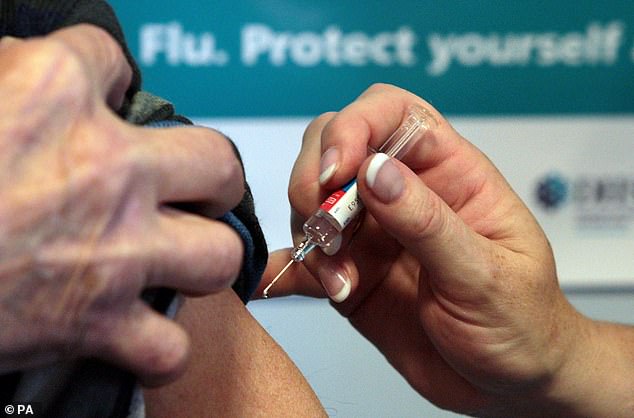
Since September, health officials have encouraged millions of eligible individuals to come forward for their Covid and flu jabs to reduce the risk of severe illness and hospitalization. They have also advised people to seek help from pharmacies and local urgent treatment centers when appropriate.
Those invited for top-up doses include over-65s, care home residents, frontline health and social care workers, and pregnant women. The decision on the design of the vaccine in the UK was made in February to ensure enough time to produce the necessary doses. However, given that the mutant variant did not appear until June, the vaccine is not expected to offer full protection against the strain.
Despite this, experts emphasize that the vaccine remains vital as it can help reduce severe symptoms. Professor Adam Finn, a professor of pediatrics at the University of Bristol, noted that the early start of this year’s flu epidemic is a concern because there hasn’t been enough time for many people to get vaccinated. He highlighted that even though the new H3N2 strain is different from the one in this year’s vaccines, they should provide some degree of protection against this strain and other flu strains that may emerge during the winter.
Current Status of Other Viruses
Latest UKHSA data shows that Covid levels are still low and at expected levels. Among all tested samples from GP surgeries, just 3.5% were positive for Covid, with hospital admissions around 2.22 per 100,000 patients. Infections have significantly decreased compared to earlier in the pandemic.
Norovirus, which can show similar symptoms to Covid, causes chills, fever, and headaches, along with explosive vomiting and diarrhea. While it usually resolves within two to three days, severe cases may require hospitalization, especially for the elderly and children.
The virus spreads through close contact with infected individuals, touching contaminated surfaces, and consuming food handled by someone with norovirus.