
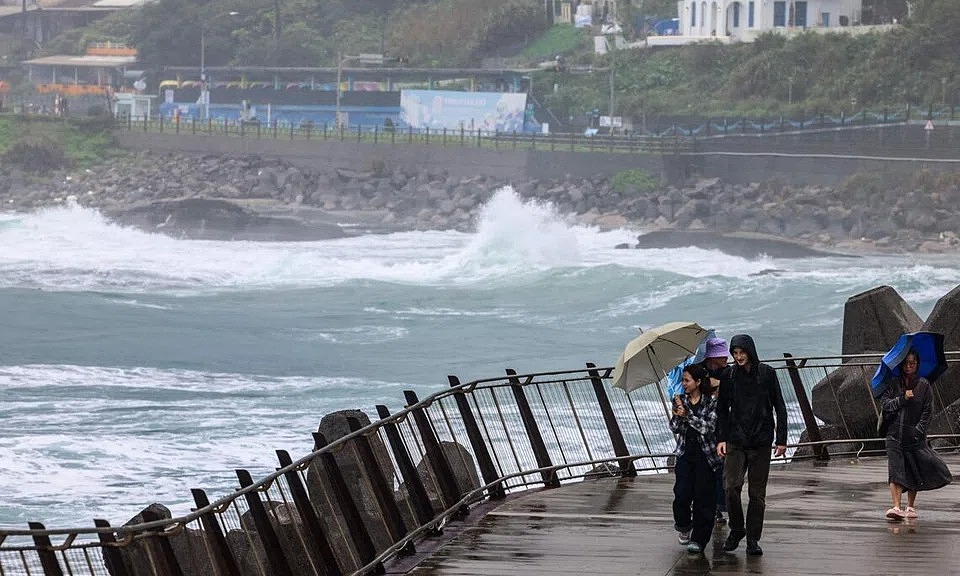
Typhoon Fung Wong Threatens Taiwan with Heavy Rain and Evacuations
On November 11, Taiwan issued a land warning in anticipation of the arrival of Typhoon Fung Wong. The storm, although weakened, is expected to bring significant rainfall to the island’s mountainous eastern coast. As a result, over 3,000 residents were evacuated from vulnerable areas ahead of the typhoon’s approach.
Fung Wong is predicted to make landfall on the southwestern coast of Taiwan near the major port city of Kaohsiung around November 12. Before reaching Taiwan, the typhoon passed through the Philippines as a more powerful system, where it caused the death of six people. After making landfall, the storm is expected to move across the southern part of the island and eventually exit into the Pacific Ocean along the sparsely populated eastern counties of Taitung and Hualien.
Precautionary Measures Taken by Authorities
Taiwanese authorities have urged residents to avoid the mountains, coasts, and other potentially hazardous zones. These warnings come in the wake of a previous typhoon in September that resulted in 18 deaths in Hualien due to severe flooding. In response to the current threat, the government has ordered evacuations in the town of Guangfu, which was affected by the deadly floods earlier this year. A total of 3,337 people from four counties and cities have been relocated to safer locations.
In preparation for the typhoon, Hualien and the neighboring county of Yilan both closed schools and offices on November 11. This decision reflects the seriousness of the situation and the need to prioritize public safety.
Impact on Key Regions
Despite the widespread concerns, the northern city of Hsinchu, home to TSMC—the world’s largest contract chipmaker—will not be directly affected by the typhoon. This is a relief for the region, which plays a crucial role in global semiconductor production.
The potential for heavy rainfall and flooding remains a key concern for the eastern parts of the island, where the terrain is more rugged and prone to landslides. Authorities are closely monitoring the storm’s path and providing regular updates to ensure that residents are well-informed and prepared.
Ongoing Monitoring and Preparedness
As the typhoon approaches, local governments continue to assess the situation and implement necessary measures. Emergency services are on high alert, and additional resources may be deployed if needed. Public awareness campaigns are also being conducted to remind residents of the importance of following safety guidelines and staying away from dangerous areas.
Residents in affected regions are advised to stay tuned to official announcements and follow any instructions provided by local authorities. The focus remains on minimizing the impact of the storm and ensuring the safety of all individuals in the path of Typhoon Fung Wong.
Conclusion
Typhoon Fung Wong poses a significant challenge for Taiwan, particularly in the eastern coastal areas. While the storm has weakened, its potential to cause heavy rain and flooding necessitates continued vigilance and proactive measures. The coordinated efforts of authorities and the cooperation of the public will be essential in navigating the challenges posed by this weather event.