
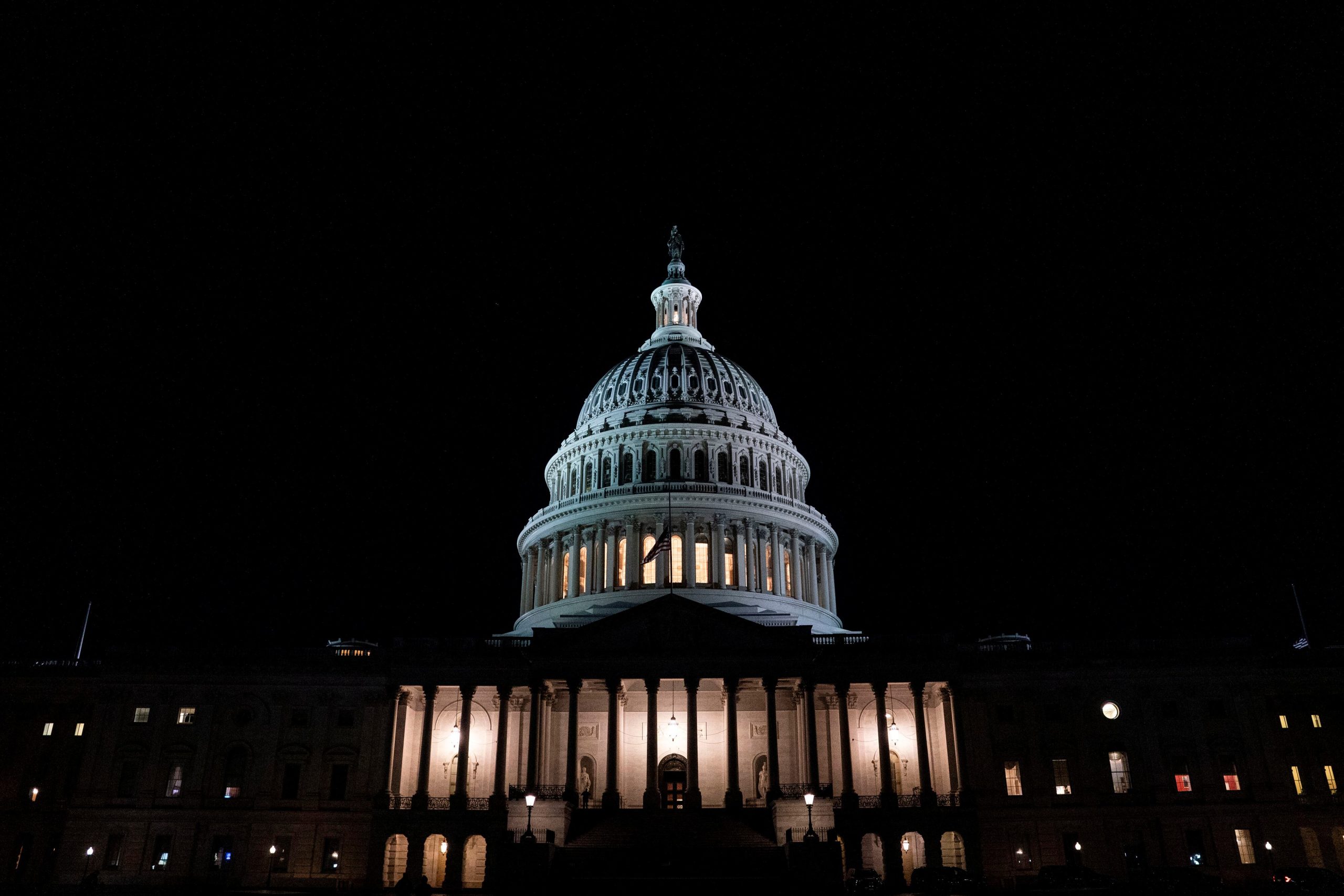
U.S. Senate Passes Temporary Budget Bill to End Government Shutdown
The U.S. Senate has successfully passed a temporary budget bill, known as a Continuing Resolution (CR), to end the ongoing federal government shutdown. The bill was approved with 60 votes in favor and 40 against during a plenary session. This critical step marks a significant development in ending the longest shutdown in U.S. history, which has now lasted 41 days.
Once the bill is sent to the House of Representatives, it only requires a simple majority to pass. If signed by President Donald Trump, the shutdown will come to an end. House Speaker Mike Johnson, a Republican and leader of the majority party in the House, announced that the budget bill will be put to a vote around the 12th, raising hopes that the shutdown could conclude as early as this week.
Internal Struggles Within the Democratic Party
Despite the progress, the Democratic Party is experiencing internal conflicts. Some moderate members have shifted their support from opposition to backing the budget bill, but this has not prevented calls for the resignation of Senate Majority Leader Chuck Schumer. The party faces growing pressure due to the defections of several members under his leadership.
The Republican Party currently holds 53 out of 100 seats in the Senate, and the budget bill required 60 votes to pass. In addition to three senators who had already supported the bill since the start of last month, five Democratic or independent senators leaning toward the Democrats changed their stance on the day of the vote. This shift provided the necessary support for the bill’s passage.
Deadlock Over Health Insurance Programs
A major point of contention between the two parties was the Democratic demand for support of public health insurance programs such as Obamacare and Medicaid. The Republican Party did not accept these demands, leading to a deadlock. However, on the 9th, some Democratic senators agreed to a proposal by Senate Republican Leader John Thune to hold a separate vote on extending Obamacare by the second week of December.
Senator Jean Shaheen, who supported the temporary budget bill, stated, “We believe the shutdown was very effective in raising concerns about health insurance,” and added, “Since there is a promise of a future vote, we will have more opportunities to address this issue.” The budget bill included provisions to rescind mass layoff measures for federal employees implemented by the Trump administration and to prevent further layoffs.
Support from President Trump and House Leadership
The Associated Press reported that although 10 to 12 moderate Democratic senators were expected to vote in favor due to their participation in negotiations, only five actually changed their stance. This number was exactly what the Republicans needed to secure the bill’s passage. President Trump also expressed support for the agreement, stating, “We will resume government operations very quickly.”
The budget bill was sent to the House of Representatives for a vote. Fox News reported that Johnson stated in a call with lawmakers, “We plan to hold the vote by at least the 12th.” He also issued a “Washington, D.C. recall order” for fellow party members who are staying in their districts during the recess.
Expected Outcome and Future Implications
The House of Representatives, where the Republican Party holds 219 out of 435 seats, also requires a simple majority to pass the budget bill. It is expected that President Trump will sign it immediately upon receipt, thereby ending the longest shutdown in history. Johnson said, “Our long nightmare is finally coming to an end.”
Meanwhile, within the Democratic Party, there are growing calls for Senate Majority Leader Chuck Schumer to resign, as he failed to prevent members from defecting under his leadership. The resolution of the shutdown marks a pivotal moment in U.S. politics, highlighting both the challenges and the potential for bipartisan cooperation.