
Introduction to the New Heating Systems
The Korea Land and Housing Corporation (LH) has announced a series of improvements aimed at enhancing heating systems in multi-family housing complexes. This initiative is designed to reduce residents’ fuel costs and ensure safer heating usage, making it a significant step forward for public housing in the country.
The Cascade Boiler System
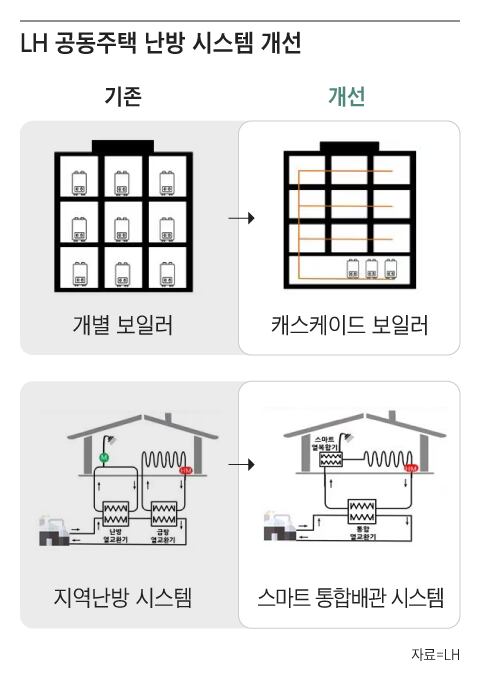
One of the key components of this initiative is the implementation of a ‘cascade boiler’ system. This centralized high-efficiency system replaces the previous individual heating structures found in many buildings. The cascade boiler system concentrates multiple boilers in a mechanical room within the building, allowing for the automatic generation of only the required amount of heat.
This centralized approach is expected to improve energy efficiency by approximately 20% compared to the existing individual installation method. Additionally, the removal of boiler rooms within households will help expand living space. The absence of in-house boilers also eliminates risks such as carbon monoxide poisoning and fire hazards. Another advantage of the system is that if some boilers malfunction, others automatically compensate, ensuring continuous heating.
Targeting Specific Housing Units
The target for this system includes long-term public rental housing units measuring 50 square meters or less and housing over 300 households. LH stated that they plan to apply the system starting with districts approved for new business plans this year, considering design conditions and other factors.
Smart Integrated Piping System
In addition to the cascade boiler system, LH will introduce a ‘smart integrated piping system’ utilizing AI technology. Existing district-heated apartments had separate pipelines for heating and hot water, leading to significant heat loss and complex maintenance. The new system integrates heating and hot water supply pipelines and uses AI to control temperature and flow in real time.
This smart system can predict heat demand per household to provide optimal heat supply. It is expected to reduce energy consumption by approximately 9% through minimized heat loss. The integration of these systems represents a major advancement in the efficiency and sustainability of heating solutions in multi-family housing.
Benefits for Residents
Oh Joo-heon, Public Housing Headquarters Director at LH, emphasized the importance of these improvements. He stated, “We have improved heating systems in multi-family housing to allow residents to enjoy safer and more comfortable living without the burden of fuel costs.”
Conclusion
The introduction of these advanced heating systems marks a significant milestone in the evolution of public housing infrastructure. By focusing on energy efficiency, safety, and cost reduction, LH is setting a new standard for residential heating solutions. These initiatives not only benefit current residents but also pave the way for a more sustainable future in housing development.