
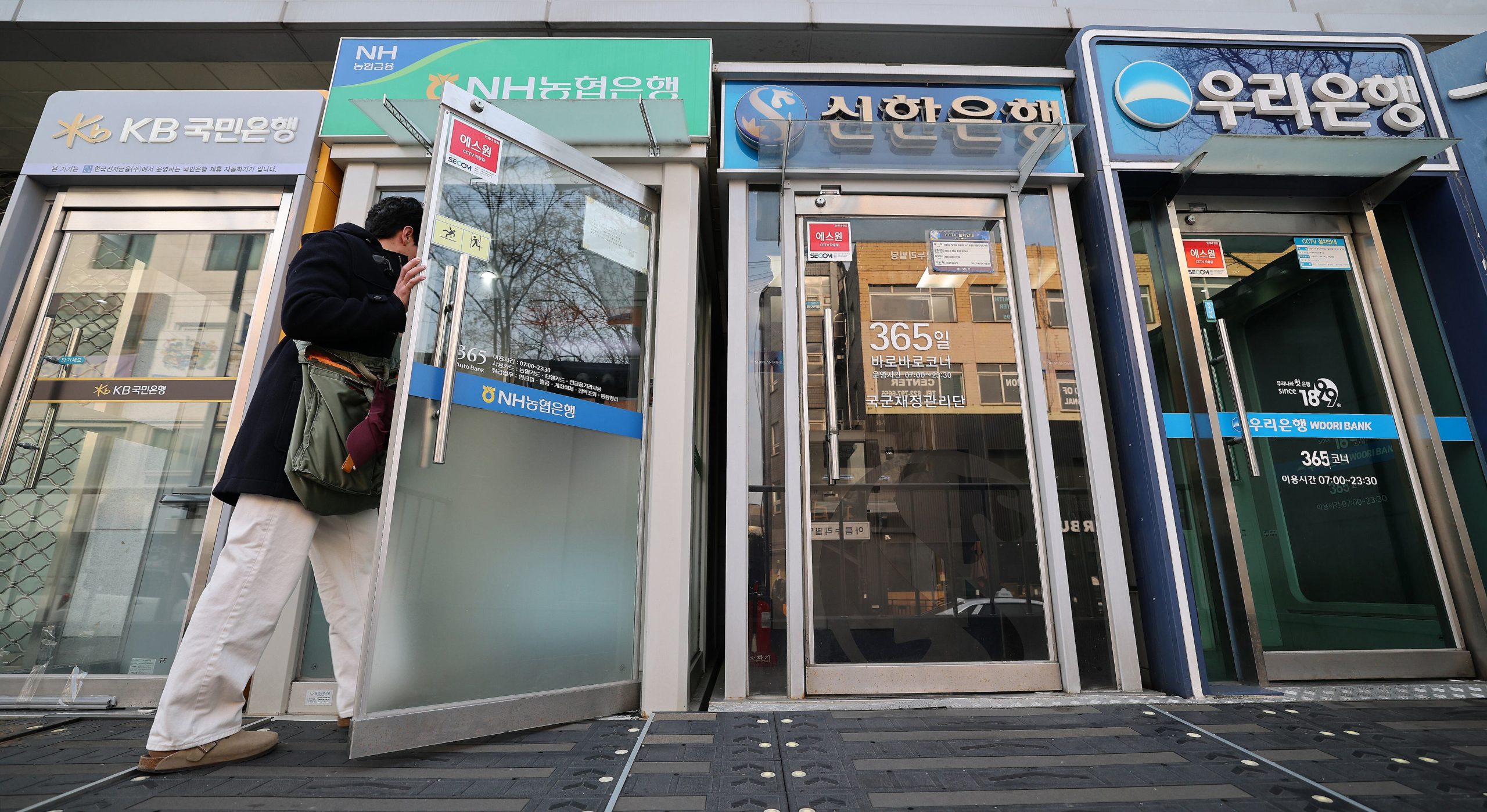
Rising Interest Rates in Major Banks
Recent developments in the banking sector have seen major banks’ fixed-term deposit interest rates surpass those of savings banks, creating an inverted interest rate phenomenon. This shift is unusual because savings banks typically offer higher interest rates compared to regular banks due to their lower deposit stability. However, the current trend shows that the deposit interest rates at commercial banks have actually risen higher than those at savings banks.
According to the Korea Banking Association on the 10th, the highest interest rates for one-year fixed-term deposit products at the five major banks—KB Kookmin, Woori, Hana, Shinhan, and NH Nonghyup—are set at an annual rate of 2.65-2.75%. Woori Bank recently increased its highest interest rate for fixed-term deposit products from an annual 2.65% to 2.75%, a 0.1 percentage point increase, effective from the 8th. KB Kookmin Bank and Hana Bank also raised their highest interest rates from an annual 2.65% to 2.7%, starting on the same day. Shinhan Bank and NH Nonghyup Bank have the lowest highest interest rates at an annual 2.65%.
Savings Banks Face Declining Rates
In contrast, according to the Korea Federation of Savings Banks, the average interest rate for one-year fixed-term deposit products offered by 79 savings banks stood at an annual 2.67%. Among the five major banks, Woori, KB Kookmin, and Hana Bank’s deposit interest rates are higher than the average savings bank rate. Savings banks’ deposit interest rates fell below the 2.7% range on the 30th of last month and have continued to decline slightly since then. As of that day, out of 304 one-year fixed-term deposit products from savings banks, only 83 products exceed an annual interest rate of 2.7%.
Factors Influencing Rate Changes
The Bank of Korea is expected to maintain the base rate, which was initially forecasted to be lowered, until the end of this year. This expectation has led to increased likelihood of further deposit interest rate hikes by banks. Market experts believe that recent signs of rising real estate prices have made it difficult for the central bank to lower the base rate in the near future.
Additionally, with recent stock price increases, investors are shifting funds previously deposited in banks to stock investments. This has led to analysis that banks are raising deposit interest rates to retain funds. On the other hand, savings banks are busy recovering from deteriorated soundness due to real estate project financing (PF) defaults and lack suitable projects to urgently secure deposits and execute loans by the end of the year.
Potential ‘Reverse Money Move’
Due to these factors, there are forecasts that a ‘reverse money move’ phenomenon, where funds flow from savings banks to commercial banks, may occur. This shift could further impact the financial landscape, as commercial banks continue to attract deposits with higher interest rates, while savings banks struggle to maintain their market position.
Conclusion
The current situation highlights the dynamic nature of the banking sector, with major banks leveraging higher interest rates to attract deposits amid a challenging economic environment. As the Bank of Korea navigates its monetary policy, the interplay between commercial and savings banks will likely shape the future of deposit rates and investment trends. Investors and consumers alike will need to stay informed as these changes unfold.