
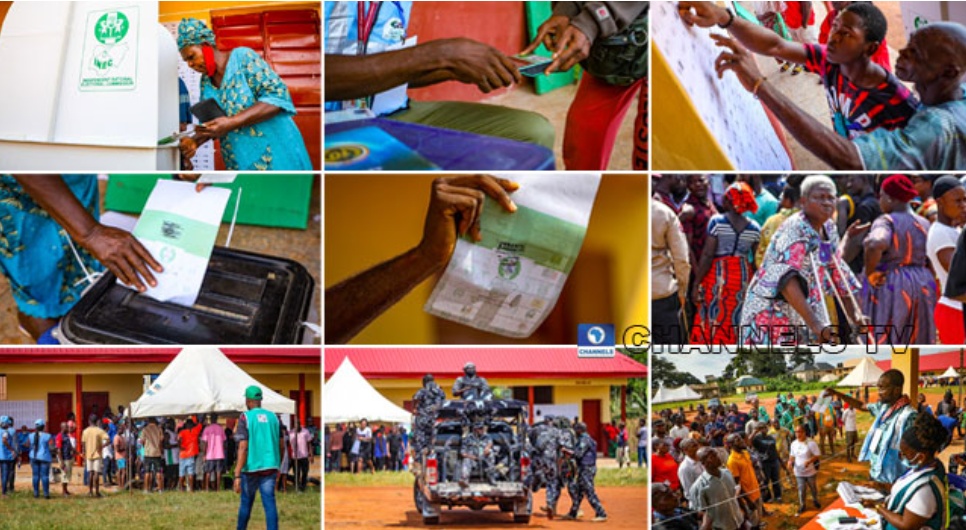
Anambra State Governorship Election: A Glimmer of Improvement Amid Persistent Voter Apathy
The 2025 Anambra State governorship election marked a slight improvement in voter participation, yet the turnout remains far below democratic expectations. According to the Independent National Electoral Commission (INEC), only 21.4 per cent of the 2,788,864 registered voters turned out, with 598,229 voters accredited and 584,054 valid votes recorded.
Incumbent Governor Charles Soludo of the All Progressives Grand Alliance (APGA) emerged victorious, securing 422,664 votes. His main rival, Nicholas Ukachukwu of the All Progressives Congress (APC), received 99,445 votes, while Young Progressives Party candidate Paul Chukwuma came third with 37,753 votes. George Moghalu of the Labour Party claimed the fourth position with 10,576 votes.
Soludo’s win was notable as he secured victories across all 21 local government areas (LGAs), making him only the second individual in Anambra’s history to achieve this feat after former Governor Willie Obiano in 2017.
Historical Context of Low Turnout
Since the return to democracy in 1999, Anambra State has consistently struggled with low voter participation. The Centre for Democracy and Development (CDD) notes that no governorship election in the state has ever seen a 50 per cent turnout. In 1999, 46.4 per cent of the 2.2 million registered voters cast their ballots. However, by 2010, turnout had dropped to 16 per cent, with just 302,000 voters participating out of 1.84 million registered.
Participation slightly improved in 2013, reaching 25 per cent, but fell again in 2017 to 21 per cent. The lowest point came in 2021, when only about 10 per cent of registered voters participated. While the 2025 figure of 21.4 per cent marks an improvement, it still falls well below democratic expectations.
Nationwide Trends in Voter Turnout
Anambra’s low turnout reflects a broader trend of voter disengagement across Nigeria. According to Yiaga Africa’s 2025 policy brief, national voter turnout has continuously declined from 69 per cent in 2003 to just 27 per cent in the 2023 general election, the lowest since 1999. In 2023, only about 25 million valid votes were recorded out of 93 million registered voters.
The brief attributes the decline to several factors, including an inflated voter register, poor mobilisation, insecurity, and waning trust in the electoral process. In the 2023 gubernatorial elections, the average turnout across 28 states was 31 per cent, but South-east states recorded the lowest. Ebonyi recorded the region’s highest turnout at 22 per cent, while Abia and Enugu managed only 18 per cent.
Northern states performed better, with four states recording turnout above 40 per cent. Across Nigeria’s recent elections, including off-season polls, turnout has consistently remained below 35 per cent. Some by-elections have recorded as low as three to eight per cent participation.
Contributing Factors to Low Turnout
Security concerns remain a major factor in low turnout in Anambra elections. Analysts attribute historically low participation to IPOB-led sit-at-home orders and general insecurity. According to Kimpact Development Initiative (KDI), despite consistent growth in voter registration in Anambra State, voter turnout has fallen by over 58 per cent in the last eight years.
The group noted that while more citizens are registering to vote, fewer are turning out on election day, describing it as a troubling trend that points to deepening voter apathy and declining trust in the electoral process.
Executive Director of KDI, Bukola Idowu, explained that Anambra North Senatorial District, which has the highest number of registered voters, consistently records the lowest turnout. She highlighted that some local governments, such as Anambra East, Anambra West, and Ogbaru, are largely riverine and hard-to-reach communities, with a higher voter-to-polling-unit ratio than other districts.
These factors have contributed significantly to voter fatigue, disenfranchisement, and the persistent low turnout in the region.
Trust Deficit and Citizens’ Disengagement
For Cynthia Mbamalu, director of Programmes at Yiaga Africa, the low voter turnout in Anambra reflects a deep trust deficit in Nigeria’s electoral process. Many citizens, especially young people, now believe their votes do not count and that election outcomes are often predetermined.
“The Anambra election is a reminder that citizens’ confidence in the process has waned,” she explained. “People increasingly feel that elections no longer translate into good governance or improved quality of life, so they disengage altogether.”
Ms. Mbamalu said the trend points to growing disenchantment not only with elections but with democracy itself. Reversing this requires more than new laws; reforms must be operationalised, and the political class must change its culture of impunity, abuse of power, and corruption.
She urged INEC to ensure more transparency, including better logistics management and full compliance with electoral laws. Political parties must also “put their houses in order” by strengthening internal democracy and investing in voter engagement.
[CITING GHANA AS AN EXAMPLE, SHE NOTED THAT POLITICAL PARTIES IN THE COUNTRY ACTIVELY CONDUCT DOOR-TO-DOOR CIVIC EDUCATION, A MODEL NIGERIA COULD EMULATE.]
Civil society, the media, religious institutions, and even the private sector must all play a part. If democracy fails, we all suffer the consequences. Getting governance to work for the people is the surest way to inspire renewed faith in elections.