
The Role of AI in Transforming Africa’s Future
At the Africa Education Trust Fund (AETF) AI Conference, held at the Accra International Conference Centre, Moses Kwesi Baiden Jnr, Founder and CEO of Margins ID Group, emphasized the importance of integrating artificial intelligence (AI) into various aspects of African society. He highlighted that leveraging AI could be a pivotal step for the continent to improve its economic and social standing.
Baiden pointed out that the majority of Africa’s population is under 30, presenting a unique opportunity to reshape the continent’s future. However, he cautioned that this transformation requires more than just discussions and policy documents. It demands a deliberate effort to incorporate AI into education systems, regulatory frameworks, and business practices.
The integration of AI can significantly enhance decision-making processes by analyzing large volumes of data quickly. This capability allows for accurate decisions to be made faster than traditional methods. Yet, Baiden stressed that the effectiveness of AI depends on the quality of data used. Without reliable and verified data, even the most advanced technologies cannot produce trustworthy outcomes.
Trust has become a critical asset in the digital era. In Ghana, the National Identification database serves as a secure and verifiable foundation, acting as a single source of truth across both public and private sectors. Margins ID Group collaborated with the National Identification Authority to develop the Ghana Card system, which provides a central source of verified identity. This infrastructure supports machine-driven decision-making across government and business operations.
AI in Agriculture and Economic Development
The application of AI in agriculture has already shown promising results. By utilizing the national database, the government has been able to distribute subsidies directly to verified farmers, reducing instances of impersonation and ensuring that funds reach the intended recipients. Combining this farmer data with information on logistics, market access, and road infrastructure on a single platform enables AI to help achieve agricultural efficiency and reduce import dependency.
Despite these advancements, human interference continues to hinder progress. Baiden identified key challenges to data-driven governance, including saboteurs of economic systems, fraudsters, and those who benefit from corruption and inefficiency. These individuals resist transparency because data-driven systems expose their activities and eliminate opportunities for exploitation.
Baiden urged a shift in mindset, emphasizing the need for honesty and a commitment to creating a clean, virtual trust in society. He argued that AI provides the ability to make decisions based on data rather than human elements. This shift requires a rethinking, rebirth, and reorientation of efforts to advance the African agenda through data-driven decisions and education.
Collaboration and Infrastructure Development
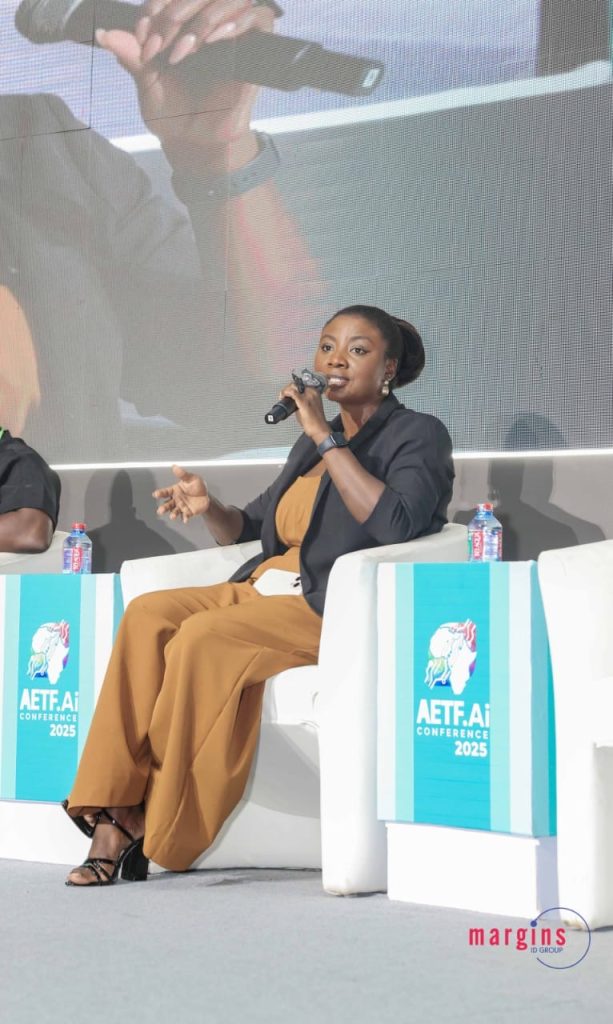
Mina Ebela Hassan, Acting Chief of Marketing and Communications at Margins ID Group, highlighted the company’s role in bridging business and technology. She mentioned that the company has built infrastructure that traces every financial transaction, enabling businesses to track and prevent fraud while protecting their operations and services.
Other speakers at the conference, including Dr Ekwow Spio-Garbrah, Hon. Sam George, and Nii Kodjo Ashifie Papanyira, called for collaboration among government, academia, civil society, and the private sector to create digital solutions that reflect Africa’s identity, priorities, and ambitions.
With over three decades of expertise in digitisation, data warehousing, smart card technology, access control systems, and digital identity solutions, Margins ID Group and its subsidiaries remain committed to strengthening Ghana’s data ecosystem. The company partners with institutions to achieve SDG 16.9 – Legal Identity for All.