
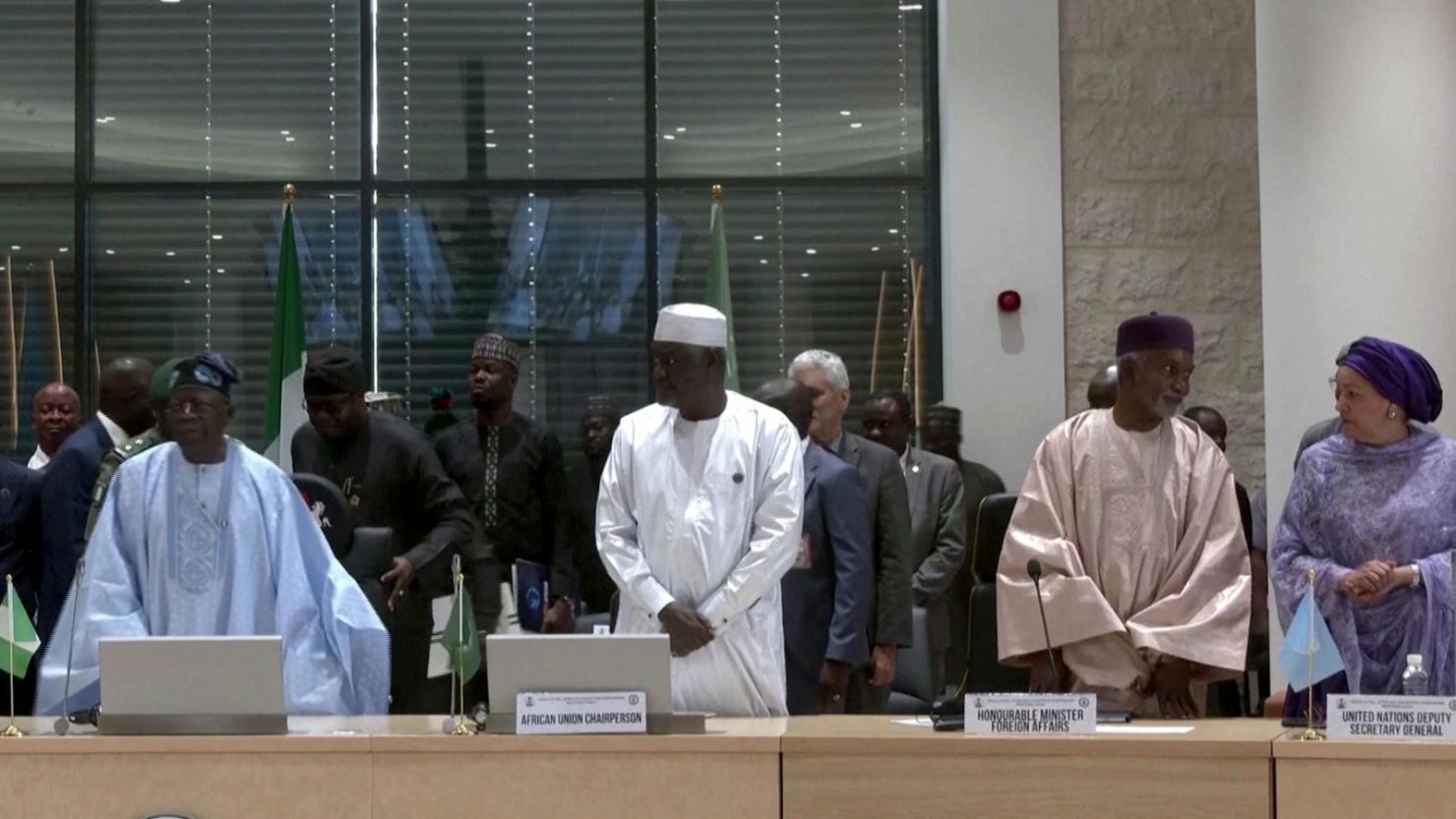
Regional Leaders and Islamic Scholars Unite to Combat Terrorism in West Africa
The Economic Community of West African States (ECOWAS), in collaboration with Islamic scholars and organisations, has called for stronger unity, cooperation, and non-violent strategies to counter terrorism and extremism across West Africa and the Sahel. This call came at the close of the first West African Islamic Conference on Security and Governance, which took place from November 4 to 6, 2025, at the ECOWAS Parliament in Abuja, Nigeria.
The theme of the event was “The Role of Islamic Organisations in Countering Terrorism in the Sahel.” The three-day conference, co-organised by ECOWAS and the Jamiyyatu Ansariddeen Attijaniyya, brought together a diverse group of participants including Islamic leaders, traditional rulers, political figures, scholars, representatives from ECOWAS member states, and international organisations.
A Landmark in Regional Cooperation
In his address, the President of the ECOWAS Commission, Omar Touray, described the conference as a landmark in regional cooperation against terrorism. He acknowledged the growing threat of terrorism and violent extremism in the region, citing the 2025 Global Terrorism Index report, which reveals a significant shift in global terrorism patterns, with Africa emerging as the new hub of terrorism. The Sahel region, in particular, has seen a dramatic increase in terrorism.
Touray reiterated that the regional body’s Action Plan Against Terrorism focuses on both kinetic and non-kinetic strategies. He emphasized the need to modernise traditional Quranic schools to prevent youth radicalisation. “We need to improve and modernise the school system and convert them into conducive and formalised centres of learning and economic empowerment,” he stated. He also recognised member states’ ongoing efforts to integrate traditional Islamic schools into national education systems.
Emir of Kano Commends ECOWAS Leadership
The Emir of Kano, Muhammad Sanusi II, commended ECOWAS for its leadership and international partners for their collaboration. “Your commitment to regional peace and security is a beacon of hope for our citizens,” he said. Calling for continued partnership between governments and religious institutions, the Emir, who is also the President of the association in Nigeria, added, “Let us strive to create a region where every individual can live in peace, security, and dignity. Let us work together to build a brighter future for our children and our community.”
A Focus on Non-Kinetic Strategies
Mohamed Chambas, the African Union High Representative for “Silencing the Guns,” stressed that the main objective of the gathering was to develop and implement an action plan that leverages Islamic organisations’ influence to counter terrorism through non-kinetic strategies. Chambas, who was represented by the ECOWAS Commissioner for Political Affairs, Peace and Security, Ambassador Abdel-Fatah Musah, said, “Participants affirmed that authentic Islamic teachings promote peace, justice, and respect for human life, rejecting all forms of extremism and violence.”
He highlighted that terrorism and violent extremism threaten social stability, economic growth, social cohesion, and national unity. Participants identified poverty, unemployment, social exclusion, political marginalisation, and weak governance as key enablers of extremist recruitment. Chambas urged stakeholders to remain steadfast in implementing the recommendations. “Over 40 million children are out of school, and terrorism-related deaths have increased 10 percent in the past decade. A robust discussion shared best practices and crafted strategic recommendations to promote peace, neutrality, and stability.”
Key Sessions and Outcomes
The conference featured 11 sessions under seven sub-themes, examining the economic, social, and political factors fueling radicalization in the region. It also discussed reforming traditional Islamic education systems, promoting youth empowerment, and building stronger community resilience against extremist recruitment.
The conference concluded with the adoption of the Regional Declaration on Improving Islamic Education and Countering Violent Extremism, which outlines strategies to strengthen Islamic organisations’ roles in promoting peace, tolerance, and coexistence.
Alarming Surge in Terrorist Activity
Over the past decade, West Africa and the Sahel have witnessed an alarming surge in terrorist activity. According to reports, groups linked to al-Qaeda and the Islamic State continue to exploit porous borders, weak governance, and local grievances to expand their influence across Mali, Niger, Burkina Faso, the northern part of Nigeria, and parts of coastal West Africa.