
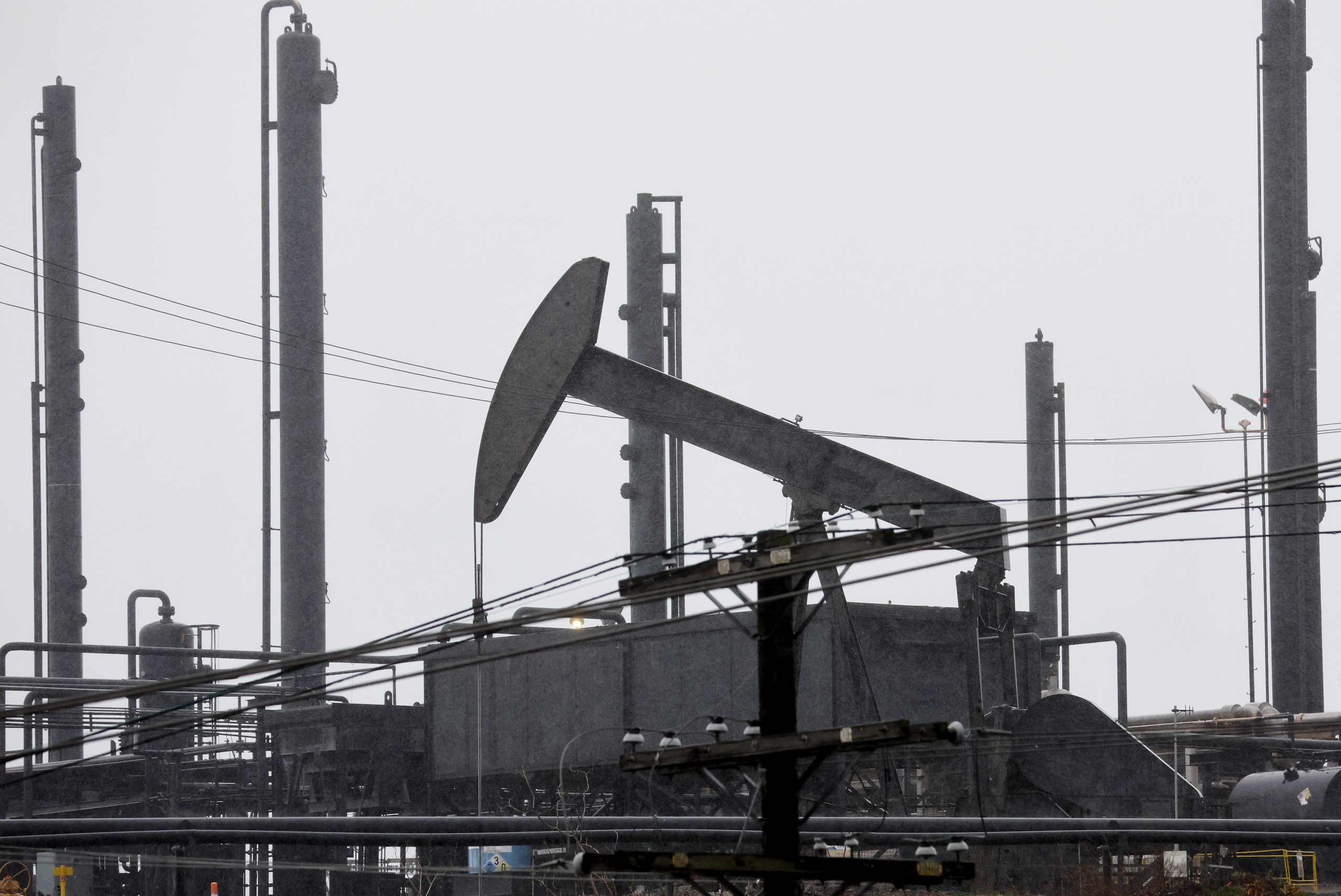
Global Energy Prices Expected to Decline in 2025
Global crude oil and gas prices are anticipated to continue their downward trend next year, which could alleviate the financial strain on the Oil Fuel Fund. This prediction comes from the Oil Fuel Fund Office (Offo), which has analyzed current market conditions and future projections.
The decline in energy prices is expected to persist from this year, as various factors have kept energy demand and supply in check. According to Pornchai Jirakulpisan, director for policy and strategy at Offo, economic uncertainty is a major factor contributing to the drop in energy prices. Analysts do not foresee a significant recovery in the global economy next year, which is likely to keep energy prices low.
In 2026, the Dubai crude oil reference prices are projected to range between $60-70 per barrel. Under the Platt price benchmark, diesel prices are expected to be between $75-85 per barrel, while gasohol prices will fall within the $70-80 per barrel range. The Saudi Aramco reference prices for liquefied petroleum gas (LPG) are estimated at $460-500 per tonne.
As of October 30, the crude oil price stood at $70.6, with diesel and gasoline priced at $87.7 and $80.9 per barrel, respectively. LPG was recorded at $548 per tonne.
Mr. Pornchai attributed the low energy prices in 2025 partly to the unsuccessful efforts by OPEC and its allies to reduce production and boost oil prices. Additionally, a milder winter is expected to result in lower energy demand, further contributing to the decline in prices.
Lower energy prices mean that authorities may not need to subsidize oil prices through the Oil Fuel Fund. This should help reduce the fund’s debt to financial institutions to 28 billion baht by the end of this year, down from the current 31.8 billion baht.
New Power Development Plan Panel Established
In another development, a new power development plan (PDP) drafting panel has been formed following nearly a seven-year delay, according to the Energy Policy Administration Committee (Epac). The panel, chaired by Thosaporn Sirisamphan, who previously served as board chairman of the Bank of Thailand, the Tourism Authority of Thailand, and PTT Plc, will work on the 2026 PDP.
The 2026 PDP aims to outline electricity demand and supply plans that align better with Thailand’s transition to clean energy. It will replace the 2024 PDP, which was scheduled for enforcement from 2024 to 2037. The previous plan was scrapped due to the need to address key energy issues and the change in government.
Epac also decided to maintain the LPG price at 423 baht per 15-kilogramme cylinder under the state price subsidy programme until December 31. This decision extends the previous expiry date of November 30.
Key Factors Influencing Energy Prices
The continued decline in energy prices is influenced by several factors:
- Economic Uncertainty: Analysts predict that the global economy will not recover significantly in 2025, leading to reduced demand for energy.
- OPEC and Allies’ Production Decisions: The unsuccessful efforts by OPEC and its allies to cut production have contributed to lower oil prices.
- Weather Conditions: A milder winter is expected to reduce energy demand, especially for heating purposes.
- Government Policies: The decision to maintain subsidies for LPG under the state price programme helps stabilize prices for consumers.
These factors collectively contribute to the downward trend in energy prices, which is expected to benefit both consumers and the Oil Fuel Fund.
Future Outlook for Energy Markets
Looking ahead, the energy market is expected to remain volatile due to ongoing geopolitical tensions, changes in global demand, and shifts in energy policies. However, the current trend of declining prices offers some relief to countries heavily reliant on imported fuels.
The establishment of the new PDP drafting panel signals a commitment to developing a more sustainable and efficient energy strategy. This initiative is crucial for ensuring that Thailand can meet its energy needs while transitioning towards cleaner sources of power.
With the right policies and strategic planning, the country can navigate the challenges of fluctuating energy prices and work towards a more stable and secure energy future.