
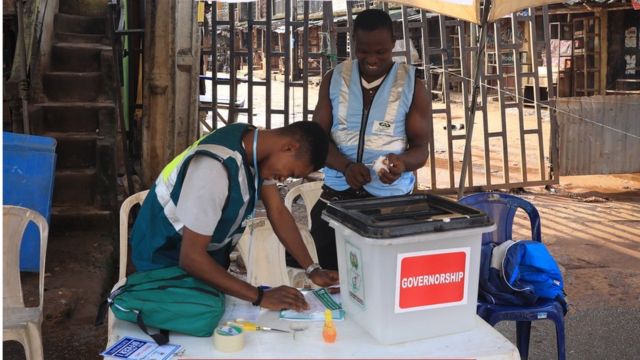
Call for Evidence of Vote Buying Ahead of Anambra Governorship Election
The Chairman of the Independent National Electoral Commission (INEC), Prof. Joash Amupitan, has called on members of the public to come forward with evidence of vote buying in the lead-up to the Anambra governorship election. This appeal was made during a press conference held in Abuja on Thursday evening, where Amupitan addressed concerns about potential electoral malpractices.
Amupitan emphasized that INEC has a strict zero-tolerance policy towards any form of inducement aimed at influencing voters. He stated, “At the stakeholders conference in Anambra State, someone even offered to provide evidence of vote buying, and we have requested him to present such evidence before the commission. This will then be forwarded to the police for appropriate action.”
He further clarified that vote buying, often referred to as vote trading, is explicitly prohibited under Section 151 of the Electoral Act. “We have taken a firm stance against this practice, and we have successfully dealt with it in previous elections,” he said. Amupitan also mentioned that individuals have reportedly provided names of those involved in such activities, but INEC is still awaiting these details to take necessary actions.
While INEC does not have the authority to arrest or prosecute individuals, the commission works closely with law enforcement agencies to ensure that all legal procedures are followed. This collaboration is crucial in maintaining the integrity of the electoral process and ensuring that any violations are appropriately addressed.
Controversy Surrounding Governor Soludo’s Campaign Cash Reward Scheme
The warning from INEC comes amid growing controversy surrounding the campaign cash reward scheme introduced by Anambra State Governor Professor Charles Soludo. Critics have accused the administration of indirectly encouraging vote buying through this initiative. However, Soludo has defended the scheme, stating that the incentives were specifically targeted at party members who are actively canvassing for votes rather than voters themselves.
According to the governor, the cash rewards were intended as performance-based incentives for a small group of party workers who play a vital role in mobilizing grassroots participation. He argued that the scheme was designed to motivate dedicated supporters and enhance the overall effectiveness of the campaign.
Despite these explanations, the controversy has sparked debates about the ethical implications of such schemes and their potential impact on the fairness of the election. The issue remains a focal point of concern for both political observers and the general public.
Public Response and Ongoing Investigations
INEC’s call for evidence of vote buying has been met with mixed reactions from the public. Some citizens have expressed support for the initiative, believing it will help curb electoral fraud and ensure a transparent process. Others, however, remain skeptical, questioning the practicality of reporting such incidents and the effectiveness of the measures being taken.
The commission has reiterated its commitment to upholding electoral integrity and ensuring that all candidates and voters are treated fairly. As the election approaches, INEC continues to monitor the situation closely and is prepared to take decisive action against any violations of the law.
Conclusion
With the Anambra governorship election drawing near, the call for evidence of vote buying underscores the importance of maintaining a fair and transparent electoral process. INEC’s proactive approach, combined with the cooperation of law enforcement agencies, aims to address concerns and prevent any form of electoral misconduct.
As the situation develops, the public is encouraged to remain vigilant and report any suspicious activities. The outcome of the election will depend not only on the candidates’ platforms but also on the collective efforts of all stakeholders to uphold the principles of democracy.