
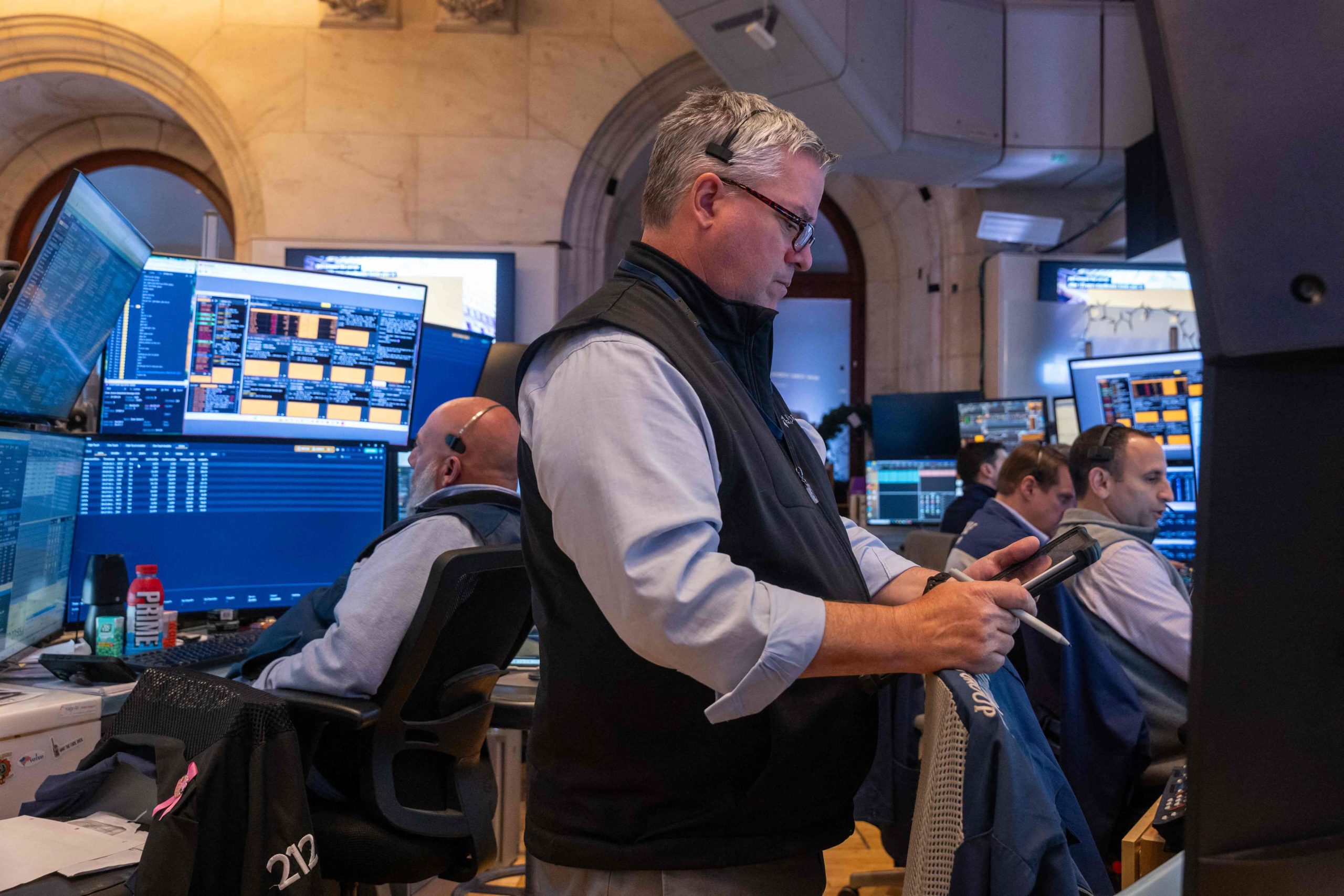
The U.S. stock market experienced a broad decline, driven by growing concerns over the overvaluation of artificial intelligence (AI) companies and ongoing instability in the labor market. Major indices reflected this downturn, with the Nasdaq Composite Index dropping nearly 2% as big tech firms faced significant losses. The Wall Street Journal highlighted that “Anxiety over AI has resurfaced,” signaling a shift in investor sentiment.
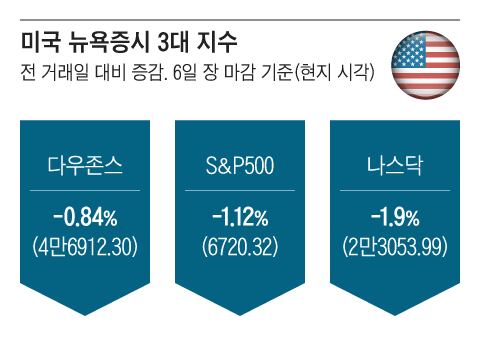
On the 6th, local time, several key indices saw notable declines. The Dow Jones Industrial Average fell by 0.84%, while the S&P 500 dropped 1.12%. The Nasdaq Composite, heavily weighted with technology stocks, declined by 1.9%. Among the major players, NVIDIA suffered a loss of 3.65%, AMD tumbled by 7.27%, Microsoft decreased by 1.98%, Amazon slid 2.86%, Tesla fell 3.54%, and Meta declined 2.67%. Palantir, an AI software company facing scrutiny over its valuation, saw a sharp drop of 6.84%. The Financial Times reported that Palantir’s losses had exceeded 12% for the week, indicating deepening investor concerns.
Investors are increasingly uneasy about the high valuations of tech stocks that fueled the market’s rally this year. This uncertainty has led to a wave of selling, causing volatility across the sector. Analysts suggest that the market is reassessing the long-term potential of AI-driven companies, which may have been overestimated during the previous period of rapid growth.
In addition to concerns about AI, the labor market has also contributed to the overall unease in the financial sector. According to Challenger, Gray & Christmas (CG&C), a job search and employment consulting firm, the number of layoffs in the U.S. last month (October) reached approximately 153,000. This represents an 183% increase from the previous month, marking the highest level for the same month since 2003. CNBC reported that this figure revealed an unstable economic picture at a time when there were few available economic indicators due to the government shutdown.
The combination of these factors has created a challenging environment for investors. The market is now grappling with the implications of both technological overvaluation and labor market instability. As a result, many investors are adopting a more cautious approach, leading to increased volatility and uncertainty in the financial markets.
Several key points summarize the current situation:
- Tech Sector Volatility: Major technology companies have seen significant drops in their stock prices, reflecting growing concerns about their valuations.
- Labor Market Concerns: A sharp rise in layoffs has raised alarms about the health of the U.S. economy, especially given the lack of recent economic data.
- Investor Sentiment: Investors are becoming more cautious, leading to a broader sell-off across the market.
- Economic Indicators: With limited data available due to the government shutdown, the economic outlook remains unclear, adding to the uncertainty.
As the market continues to adjust to these challenges, it will be crucial to monitor developments in both the AI sector and the labor market. These factors will likely play a significant role in shaping the future direction of the U.S. stock market.