
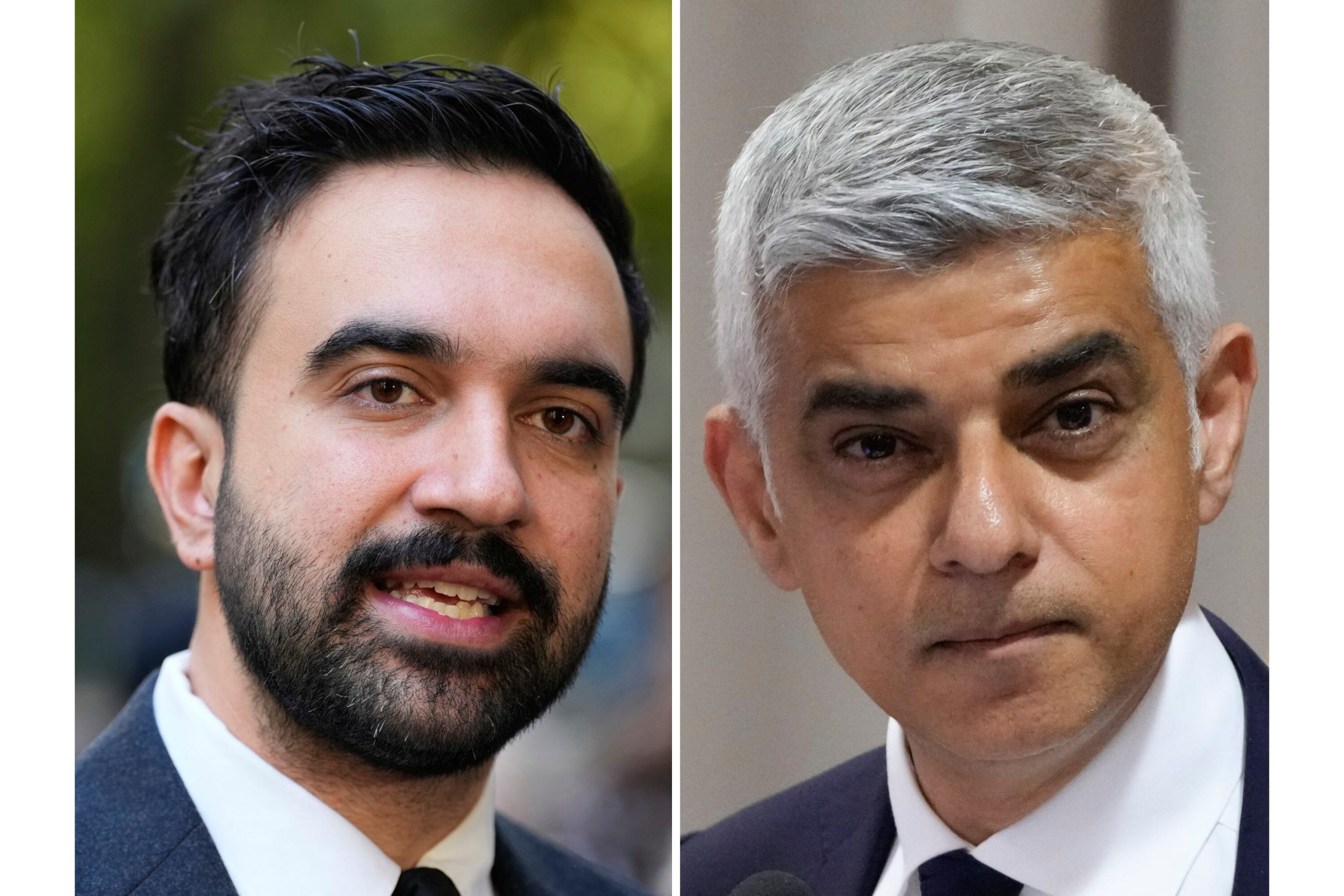
A New Era for South Asian Muslims in Urban Leadership
Zohran Mamdani, a candidate from the Democratic Party, made history by winning the New York City mayoral election on the 4th. This victory marks a significant milestone as it is the first time that South Asian Muslims have secured mayoral positions in two of the world’s major financial hubs. In London, Sadiq Khan, a 55-year-old Pakistani-British lawyer and member of the Labour Party, has been serving his third term as mayor since 2016. Following the confirmation of Mamdani’s win on the 4th, Khan shared a message on X, stating, “New Yorkers made a clear choice between hope and fear, choosing ‘hope’ like London.”
In a Bloomberg TV interview the day before the election, Khan expressed his admiration for Mamdani, saying, “Both of us are rooted in immigrant communities and share a common fight against inequality faced by our cities.” He extended his wishes for Mamdani’s success. Despite their similar ethnic and religious backgrounds and affiliation with progressive parties within a two-party system, their life journeys have taken different paths. Khan, who was born to a bus driver father and a seamstress mother, rose from a self-made background to become a human rights lawyer and a three-term mayor. On the other hand, Mamdani, who comes from a family of a renowned economist and film director, was raised in a more privileged environment.
Shared Challenges and Divergent Paths
Both leaders have faced criticism from former U.S. President Donald Trump. Their adversarial relationship began in 2015 when Khan, who was preparing to run for London mayor, strongly condemned Trump’s announcement of a Muslim entry ban a year before Trump launched his presidential campaign. Trump renewed his attacks in September during a UN General Assembly speech, targeting Khan by claiming, “London has a terrible mayor, and they are trying to bring in Islamic law,” while discussing Europe’s illegal immigration issues. In the New York mayoral race, Trump labeled Mamdani a radical communist and publicly endorsed Andrew Cuomo, a former Democratic governor of New York.
Growing Ties Between Two Leaders
These attacks have led to speculation that Khan and Mamdani, both Muslim immigrants with anti-Trump leanings, may grow closer in the future. Their shared experiences as leaders from immigrant communities and their commitment to progressive values could serve as a foundation for collaboration. As both leaders navigate the challenges of urban governance, their mutual support and understanding of each other’s struggles may play a crucial role in shaping the future of their respective cities.
The Impact of Representation
The victories of Mamdani and Khan highlight the increasing representation of South Asian Muslims in leadership roles across major global cities. Their success not only reflects the growing influence of immigrant communities but also underscores the importance of diversity in political leadership. As they continue to address issues such as inequality, public safety, and economic development, their unique perspectives and backgrounds will undoubtedly contribute to the ongoing dialogue about the future of urban policy.
Looking Ahead
With their recent elections, both Mamdani and Khan have set the stage for new policies and initiatives that reflect the needs and aspirations of their constituents. Their leadership styles, shaped by their personal histories and cultural backgrounds, offer fresh approaches to longstanding challenges. As they move forward, the focus will be on how they can leverage their positions to create more inclusive and equitable societies for all residents. The coming years will be critical in determining the impact of their leadership on the cities they serve.