
A Growing Controversy Around Shein in Paris
Paris, often referred to as the “city of fashion,” has found itself at the center of a heated debate over the Chinese ultra-low-cost fashion brand Shein. While the brand’s first offline store in the city attracted long lines of eager customers, it has also drawn significant criticism from citizens and local politicians, who are calling for an end to its operations in France.
Shein opened its first global flagship store on the 5th at the BHV Department Store in the Marais district, central Paris. This permanent store marks a strategic move for the company, which primarily sells clothing and accessories online. The brand reportedly paid a substantial entrance fee to BHV Department Store, signaling its commitment to expanding its presence in Europe.
Inside the Shein store, young Parisians participated in an “opening rush,” purchasing items as soon as the store opened. The products offered by Shein—ranging from T-shirts and blouses priced between 3 to 15 euros (approximately 5,000 to 25,000 Korean won) to dresses priced between 10 to 30 euros—are significantly cheaper than those of European fast-fashion giants like H&M or Zara. Despite the low prices, Shein has managed to gain popularity in France by quickly adapting to the latest trends.
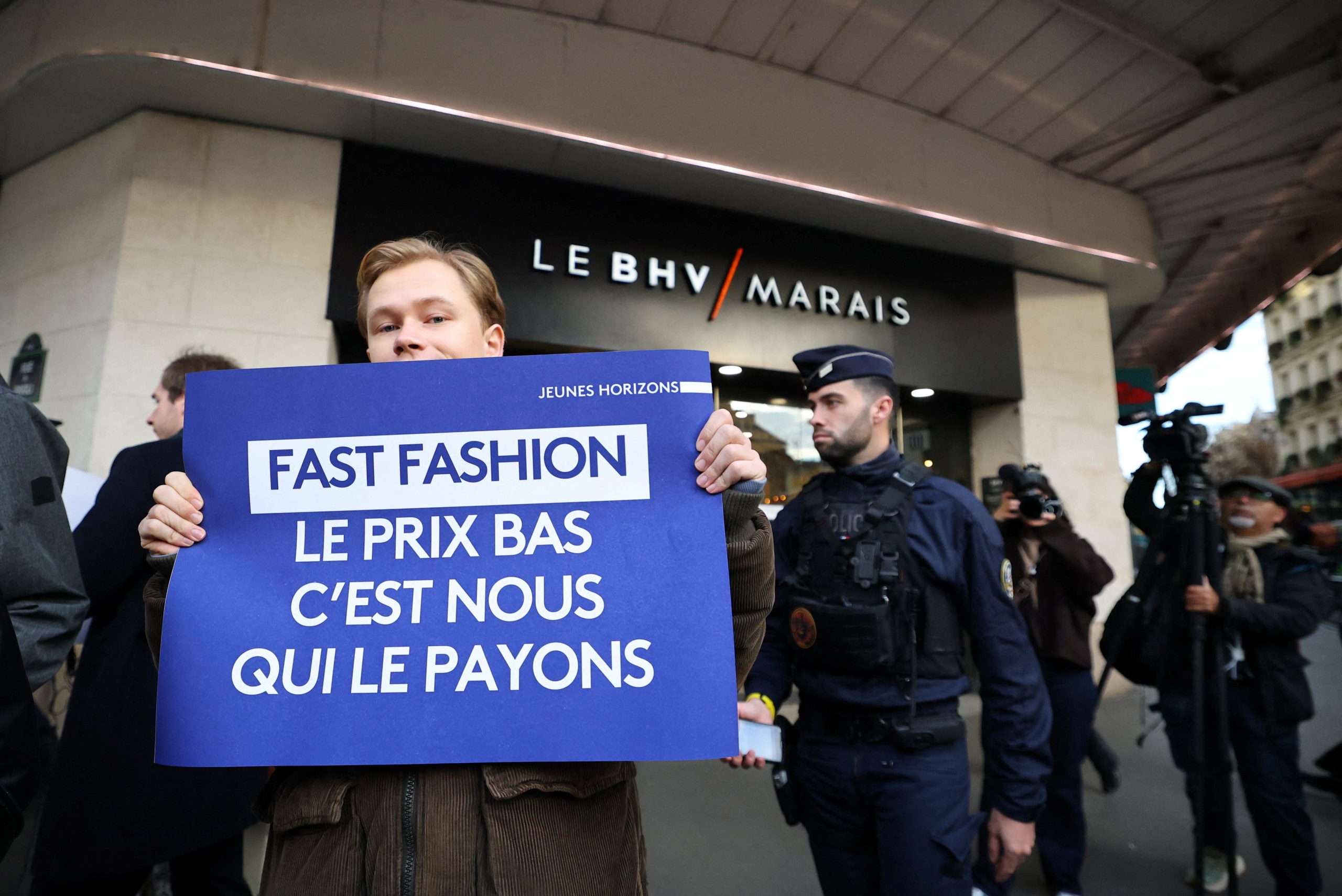
However, not everyone is celebrating the arrival of Shein in Paris. Next to the opening rush line, citizen groups and local politicians held protests demanding opposition to the store’s opening and a halt to its operations. Slogans and signs read, “Oppose unfair, human rights-exploiting ultra-low prices,” “Dumping company harming downtown commerce and employment,” and “Shein is complicit in pedophile crimes.” Emmanuel Grégoire, a candidate for the next Paris mayor, criticized the store’s opening, stating, “BHV is helping Shein whitewash its image,” and calling it “a deal with the devil.”
Legal and Ethical Concerns
Shein faced intense backlash after an adult doll depicting a young girl holding a bear was found for sale on its French online store. Following the French Directorate General for Competition, Consumer Affairs and Fraud Control’s (DGCCRF) formal complaint against Shein on the 1st of last month for distributing and selling child pornography, the French government requested the court on the 5th to block access to the site, stating, “Shein has repeatedly and systematically violated French laws.”
Shein has already been fined a total of 191 million euros (approximately 315 billion Korean won) this year for false discounts, exaggerated advertising, and other violations. The brand has removed the problematic products but stated, “These were not direct sales items but products from third-party sellers,” adding that it is investigating how the sellers bypassed internal controls.
Broader Implications and Ongoing Investigations
French authorities are expanding their investigation to other Chinese online shopping malls, such as AliExpress and Temu, and are reportedly considering measures to suspend Shein’s operations. French media highlighted, “Pornographic-like products and content are being distributed on these shopping malls, but there are no measures to block access by minors.”
The controversy surrounding Shein has sparked a broader conversation about the responsibilities of online retailers and the need for stricter regulations to protect consumers, especially minors. As the debate continues, the future of Shein in France remains uncertain, with both supporters and critics weighing in on the brand’s impact on the city’s fashion scene and its ethical implications.