
A Historic Accord Between Somaliland and Puntland
The idea of a cordial relationship between Somaliland and Puntland—two neighboring regional administrations in northern Somalia—was always unlikely. However, an unexpected agreement signed in Nairobi, Kenya, on October 5 changed the narrative. This deal marked a significant shift in the long-standing tensions between the two entities.
Since the signing, Somali commentators have expressed surprise at the joint security and cooperation accord. The agreement pledged collaboration against al-Shabaab, support for reconciliation efforts in Erigavo (the capital of the disputed Sanaag region), and measures to facilitate cross-border trade. A joint communiqué described the talks as “historic,” promising to usher in “a new atmosphere of trust and mutual confidence.”
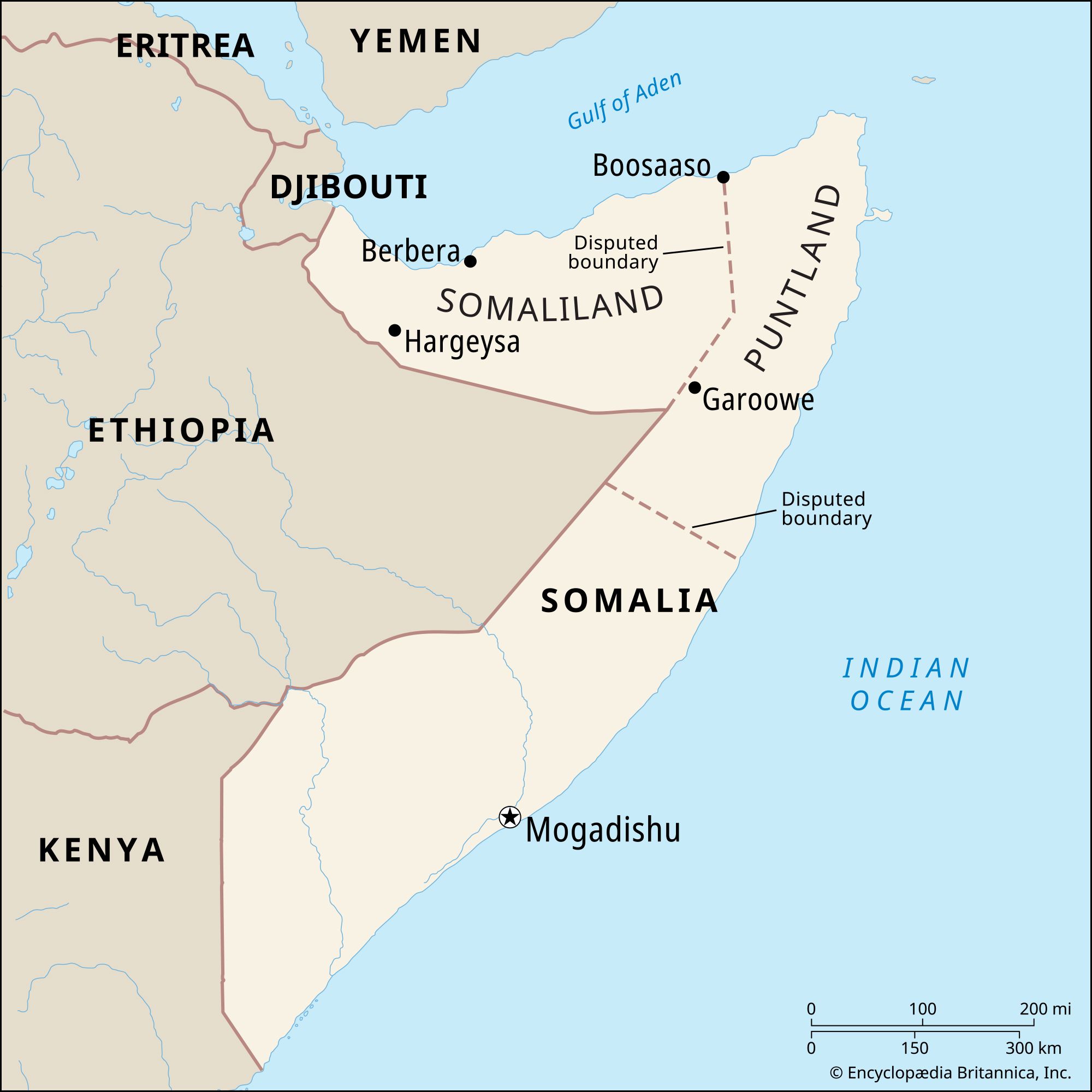
Until recently, the two authorities were embroiled in a dispute over control of vast territories in the Sool and Sanaag regions, both claimed by Puntland and Somaliland. Somaliland considers these regions as part of the former British Somaliland Protectorate and claims to have inherited them. The region has tried to secede from Somalia since 1991, but without success.
Puntland, on the other hand, asserts that the Sanaag and Sool regions fall under its jurisdiction, arguing that they are inhabited by people with clan-based ties to Puntland, which is one of the six federal states of Somalia. These competing claims have led to several armed confrontations in the past.
A Major Turning Point
A major turning point came when an uprising in Laascanood (Las Anod) town led to clashes between militias loyal to local clans and Somaliland forces. The militias gained the upper hand and seized most of the Sool region in August 2023. Subsequently, the Sool, Sanaag, and Cayn (SSC) regions declared themselves an independent authority named SSC-Khatumo, aligning with the Mogadishu-based Federal Government of Somalia (FGS).
Both Puntland and Somaliland—former rivals over the disputed land—were further frustrated when the FGS sent Prime Minister Hamza Abdi Barre to Las Anod, the capital of SSC-Khatumo, in April 2025 to affirm the central government’s support. SSC-Khatumo’s position was further strengthened when the federal government dispatched Interior Minister Ali Yusuf Hosh to Las Anod to assist locals in transforming SSC-Khatumo into a Federal Member State (FMS).
Following a conference in Las Anod, attended mainly by delegates from the Sool and Sanaag regions, a new state was announced in September 2025: The Northeast State of Somalia. It joined the other five FMS—Jubaland, South West, Hirshabelle, Galmudug, and Puntland.
A Surprising Agreement
The declaration of the Northeast State was not welcomed by Puntland or Somaliland. That former adversaries would now meet and sign a far-reaching accord, issuing a detailed communiqué, was surprising. They did so in Nairobi.
The communiqué stated, among other things: “The two sides will cooperate in maritime security, targeting piracy and illicit trafficking, and work to dismantle organized crime networks undermining peace and trade in the Horn of Africa.” The document praised the Somaliland president’s peace initiative and called on local residents to participate in reconciliation talks in the previously disputed town of Erigavo, located about 1,300 km northeast of Mogadishu.
Somaliland officials stated, “This collaborative approach helps prevent clashes, reduces the risk of extremism, and promotes stability, ensuring that border communities can live, trade, and prosper in peace.” While the Hargeisa administration portrayed the agreement as a diplomatic win—highlighting Puntland’s formal recognition of Somaliland’s governance and right to self-determination—opposition parties in Somaliland, including Kaah and Kulmiye, argued that such arrangements undermine Somaliland’s efforts to present itself as a sovereign entity to the international community.
Omissions and Criticisms
However, what was missing from the accord was any mention of the border between Somaliland and Puntland, now complicated by the emergence of the Northeast State. This omission was highlighted by Mohamed A. Haji Hussein in an October 16 article published by Wardheer News.
In his piece,The Enemy of My Enemy: How Somali Politics Lost Its Purpose, Hussein wrote, “Along the border between Somaliland and Puntland, the statement made no mention of the newly recognized Northeast State (of Somalia), which is now under the FGS.” “Anyone familiar with Somali politics would immediately recognize the inconsistency,” he added, noting that Somaliland insists the accord does not alter its borders, governance, or political trajectory.
Political Tensions and Reactions
The Nairobi developments in early October—including the formation of an alliance by political opponents of Somali President Hassan Sheikh Mohamud, such as the newly formed Somali Future Council, the Mogadishu-based Somali Salvation Forum, and rebellious leaders from Puntland and Jubbaland—sparked strong criticism from Mogadishu.
Defence Minister Ahmed Moalim Fiqi, a top ally of President Mohamud, condemned the Nairobi gatherings as advancing “outside interests rather than the Somali people’s.” Writing on his Facebook page on October 8, Fiqi insisted that Somalia’s future must be decided within the country, not abroad, warning that those “opposed to the establishment of Somali statehood” will never determine the nation’s fate.
In Puntland, four major political parties—Ifiye, Mustaqbal, Mideeye, and Sincad—issued a joint statement condemning the agreement. They called it “unconstitutional” and said it “risks encouraging (Somaliland) separatist agendas.” The parties urged the Puntland parliament to annul the deal.
A Complex Political Landscape
Many criticize this style of governance, where authorities bypass political realities. In this case, the formerly disputed territory is now the Northeast State of Somalia, sandwiched between Puntland and Somaliland. Similarly, the central government seeks to enforce authority within hostile territories.
Hussein further observed that Somali leaders—including Hassan Sheikh Mohamud, Abdirahman Irro of Somaliland, and Said Deni of Puntland—employ strategies aimed at preserving power, each focused on countering perceived rivals. “Citizens of those states (Somaliland and Puntland) support their leaders not because they deliver tangible benefits, but because they see them as defending against President Hassan Sheikh’s attempts to centralize power,” Hussein wrote, suggesting that the formation of the Northeast State by the FGS without consensus is part of a broader strategy to defeat political opponents.