
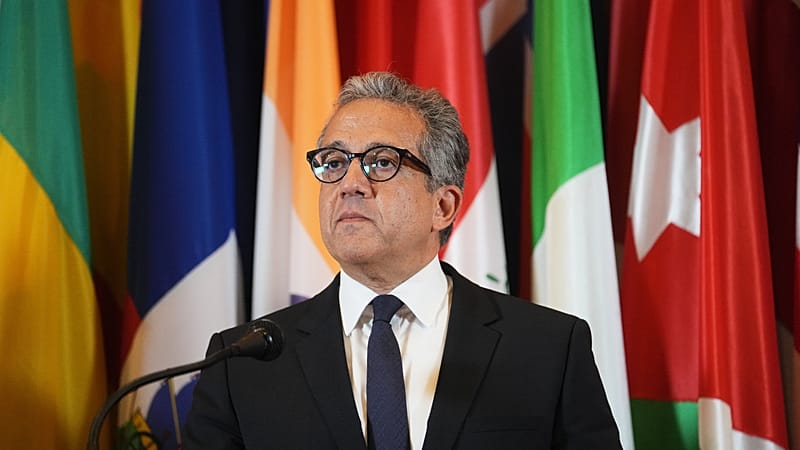
The General Conference of UNESCO has officially elected Khaled El-Enany as the new Director-General of the organization. The election took place on Thursday, with El-Enany securing 172 votes out of a total of 174 ballots cast. This decisive victory marks a significant milestone in the history of UNESCO, as El-Enany will become the first Director-General from an Arab country and the second from Africa to hold this prestigious position.
El-Enany was initially chosen as the Director-General in early October after receiving 55 out of 58 votes in the UNESCO Executive Board. The board is responsible for the selection process of the organization’s leadership, and his overwhelming support from the board paved the way for his eventual election by the General Conference.
His main competitor in the race was Firmin Mataku, a Congolese candidate who received only two votes. Mataku’s lack of widespread support highlighted the strong backing that El-Enany had garnered from member states across the globe. The election results reflect a broad consensus on El-Enany’s qualifications and vision for UNESCO’s future.
El-Enany will take over from Audrey Azoulay, who has served as Director-General since 2017. Azoulay’s tenure has been marked by efforts to strengthen UNESCO’s role in promoting education, science, and cultural heritage. She will step down on 15 November, making way for El-Enany to assume his new responsibilities.
As the 12th Director-General of UNESCO, El-Enany brings a wealth of experience and expertise to the role. His background in education and international cooperation has positioned him as a strong advocate for the organization’s mission. He is expected to continue UNESCO’s commitment to fostering global dialogue and collaboration in areas such as sustainable development, media freedom, and the protection of cultural diversity.
Key facts about El-Enany:
- First Arab Director-General: El-Enany’s appointment makes him the first leader from an Arab country to head UNESCO, a historic achievement that underscores the growing influence of the region in global affairs.
- Second African Leader: He follows in the footsteps of Amadou Mahtar Mbow, who served as Director-General from 1974 to 1987. Mbow was the first African to hold this position, and El-Enany’s election marks a renewed presence of African leadership within UNESCO.
- Strong Support: The high number of votes he received demonstrates the confidence that member states have in his ability to lead UNESCO through its next phase of development.
El-Enany’s leadership is expected to bring a fresh perspective to UNESCO’s work, particularly in addressing contemporary challenges such as digital inequality, climate change, and the preservation of intangible cultural heritage. His appointment also signals a shift towards greater representation from the Global South in key international organizations.
As the new Director-General prepares to take office, the global community will be watching closely to see how he navigates the complex issues facing UNESCO and how he will shape the organization’s future direction.