
The Crisis of Deforestation and Its Impact on Water Access in Ghana
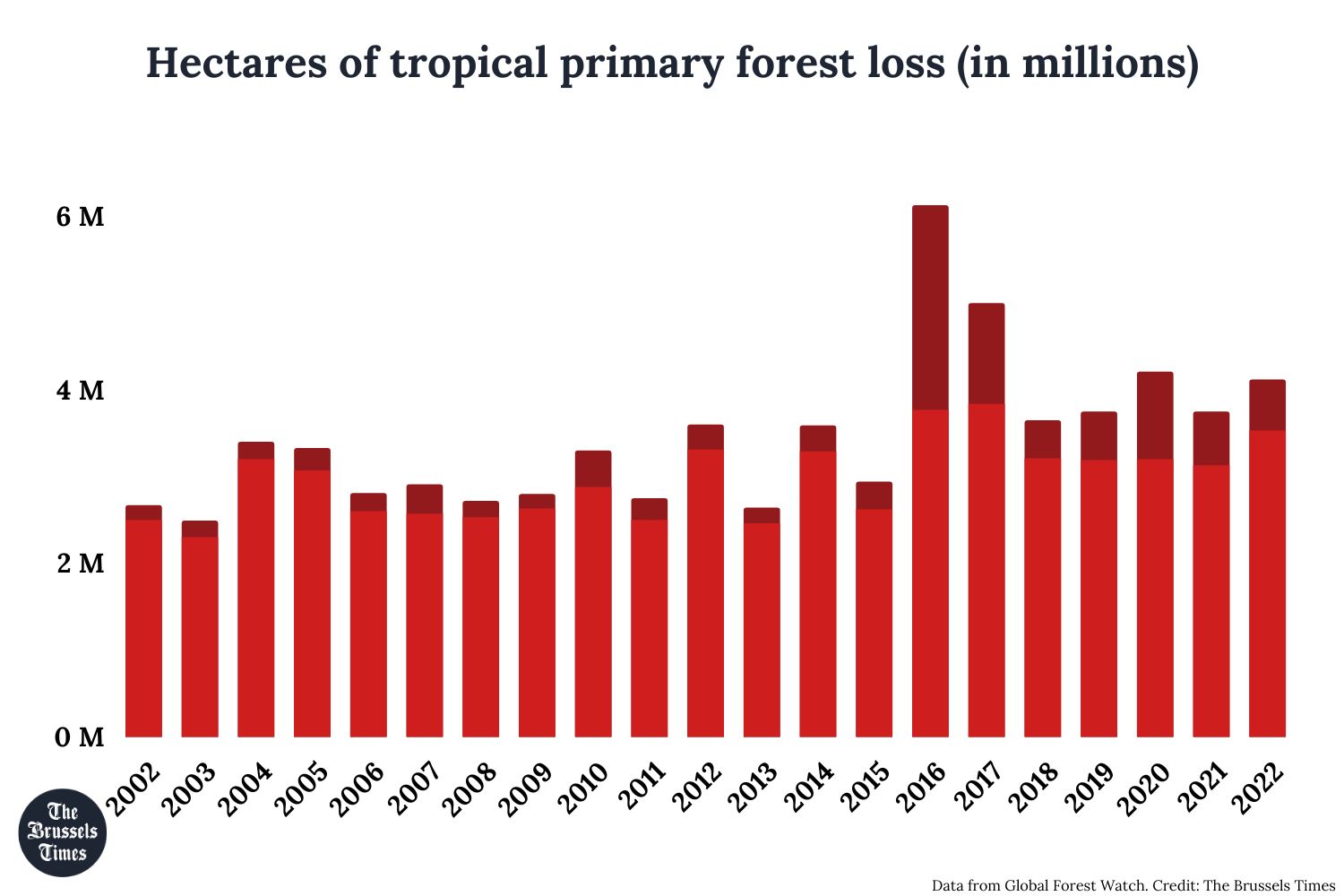
Ghana is experiencing a significant loss of its forest cover, with an estimated 24,800 hectares disappearing each year. This area is equivalent to the size of Edinburgh, the capital city of Scotland, or roughly 37,000 football pitches. According to a recent report by WaterAid and Tree Aid titledFrom Roots to Rivers: How Deforestation Impacts Freshwater Access, this deforestation is not only threatening the environment but also undermining access to clean water and affecting the health and livelihoods of millions.
The study, which analyzed satellite data from 2013 to 2025, revealed a clear link between forest loss and the decline in both the quality and availability of freshwater across West Africa. In Ghana, the findings show that deforestation has led to deteriorating water quality, making it increasingly difficult for rural and peri-urban communities to access safe drinking water.
As vegetation is lost, vital ecosystems that once filtered pollutants, protected soil from erosion, and regulated rainfall are being destroyed. With fewer trees, rainfall flows directly over exposed soil into rivers and streams, carrying sediment, waste, and agricultural runoff that contaminates water sources. This results in a reduction in the amount of safe water available for household use, irrigation, and livestock.
Across Ghana, Nigeria, and Niger, the report estimates that more than 122 million people—approximately 45 percent of the combined population—are at risk from unsafe surface water. In Ghana alone, nearly 38 percent of the population lives in high-risk areas where water quality is deteriorating rapidly. While Nigeria and Niger experience more pronounced losses in surface water, Ghana’s challenge is distinct: even where water remains available, it is increasingly unsafe to drink.
The analysis of satellite data showed that the loss of every 1,000 hectares of forest in Nigeria and Niger correlates with an average 9.25-hectare reduction in surface water. In Ghana, however, the issue is more about water quality. Deforestation has led to higher sedimentation, pollution, and algal growth in rivers and reservoirs.
Although not directly mentioned in the report, illegal mining continues to be a major factor. At the end of last year, the Forestry Commission noted that 34 of Ghana’s 288 forest reserves had been severely damaged by galamsey (illegal mining). This has placed additional strain on water treatment systems, while rural communities without such facilities face rising health risks.
The report warned that this trend could worsen as climate change intensifies rainfall patterns, producing floods and run-off that accelerate erosion in deforested areas. It described a “rainfall paradox” in which short-term increases in rainfall mask the long-term depletion of groundwater and loss of reliable freshwater systems. In many parts of the country, heavy rains cause severe flooding followed by prolonged droughts, further stressing water supplies.
“Water is at the center of the climate crisis,” the report stated. “When forests are cut down, the natural systems that keep water flowing cleanly into the ground collapse. The result is dirty water, failed harvests, and declining resilience among communities already least equipped to cope.”
The human impact of these trends is visible in communities that depend directly on rivers and streams for daily survival. In Yendi, Northern Region, residents report that the Daka River, a vital source of drinking and irrigation water, now dries up earlier each year. Tree Aid, which worked with local farmers to restore vegetation along the riverbank, said the project has already improved soil fertility and water retention—with crop yields rising as new tree cover stabilizes the environment.
The report identified unsustainable land use, charcoal production, and weak enforcement of forest protection laws as major drivers of Ghana’s deforestation. It called for urgent investment in climate-resilient water systems and the integration of forest and water policies into national climate plans. It also urged decision-makers to support locally-led reforestation initiatives and prioritize equitable access to clean water in rural areas.
Globally, 75 percent of accessible freshwater originates from forested landscapes. The report warned that Ghana’s continued forest loss could have cascading effects on agriculture, health, and biodiversity. It recommended that water management, sanitation, and reforestation efforts be treated as one integrated system rather than separate development challenges.
Despite its grim statistics, the research offers cautious optimism. It highlighted Niger’s success in restoring 101,000 hectares of vegetation through planned reforestation, resulting in measurable increases in surface water availability. This, the authors suggest, shows that the damage caused by deforestation can be reversed through long-term planning, investment, and local participation.
“When trees disappear, water disappears,” the report warns. “Protecting forests is not just an environmental priority, it is a matter of public health, food security, and national survival.”