
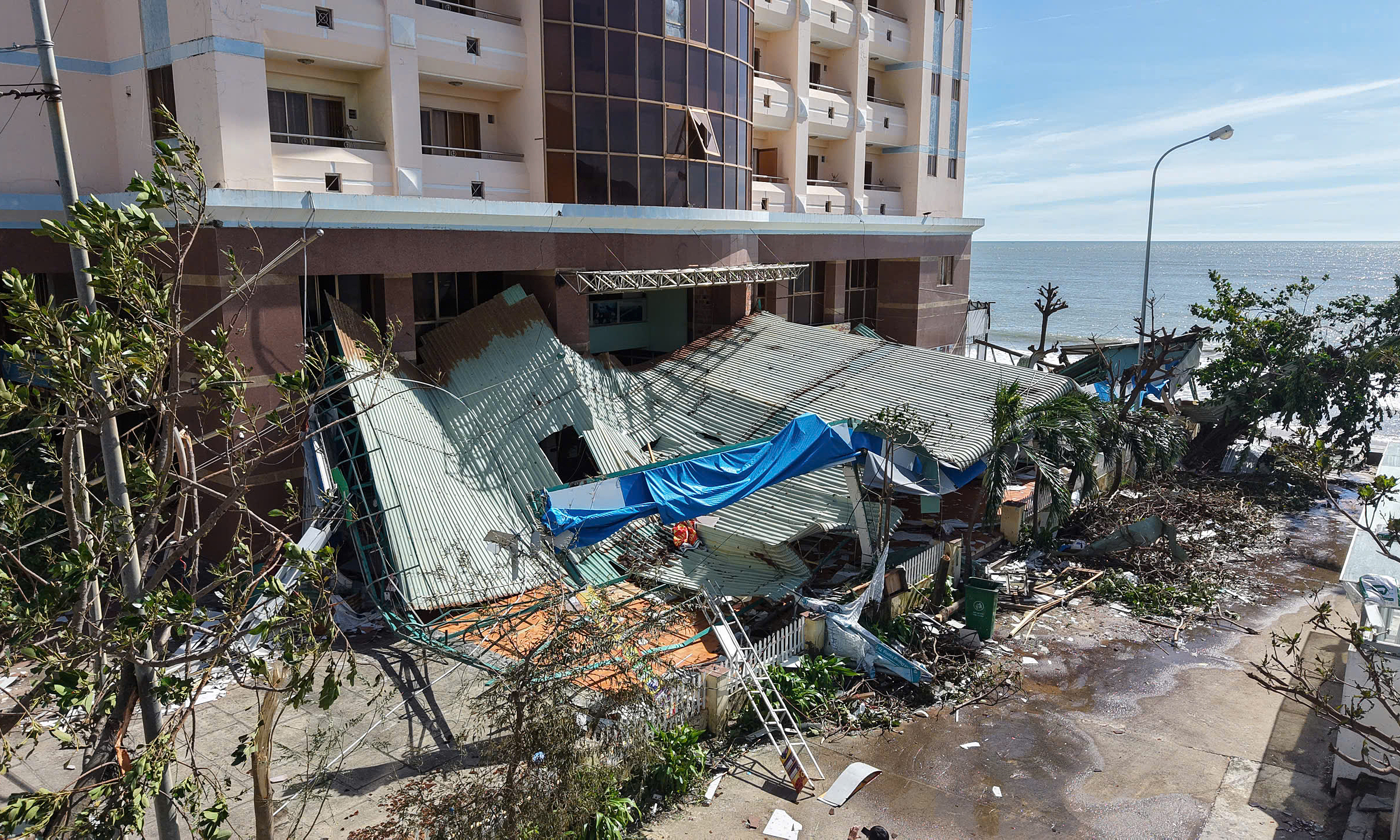
Typhoon Kalmaegi Causes Significant Damage in Central Vietnam
Typhoon Kalmaegi has resulted in at least five fatalities and extensive structural damage across central Vietnam following its landfall on Thursday night. The storm has impacted nearly 2,600 homes, with a significant number of them either damaged or having their roofs torn off. The Government Party Committee released a report detailing the aftermath of the typhoon, highlighting the severity of the situation.
According to the report, three people lost their lives in Dak Lak Province, while two others perished in Gia Lai. Additionally, three individuals are still missing in Quang Ngai, and six others have been injured. The storm’s impact was particularly severe in Gia Lai, where over 2,400 houses were affected. In total, 52 houses completely collapsed due to the typhoon’s force.
The storm also triggered powerful waves that led to the sinking of nine boats. Destructive winds further exacerbated the situation by damaging the power supply system, resulting in widespread outages in Gia Lai. Despite the challenges, authorities credit the minimized losses to the comprehensive preparation efforts undertaken by both governmental agencies and local residents.
Proactive Measures Taken Before the Storm
Provinces had completed necessary preparations by 1 p.m. on Thursday, well ahead of the storm’s anticipated landfall. Warnings were issued, directing 61,500 vessels carrying over 291,000 crew members away from harm’s way. Nearly 130,000 households, encompassing over 539,000 people, were evacuated to safety before the typhoon struck.
Coastal defenses were reinforced by securing more than 93,200 fish cages. To ensure public safety, restrictions were imposed, prohibiting residents from going outside after 6 p.m. A large response force was deployed, including over 269,000 officers and soldiers, along with 6,700 vehicles, such as specialized units, to maintain communication and manage the situation effectively.
Background on Typhoon Kalmaegi
Typhoon Kalmaegi, the 13th storm to affect Vietnam this year, originated as a tropical depression over the central Philippines on November 1. The storm moved into the East Sea on Wednesday morning, with wind speeds reaching up to 149 kph. It rapidly gained strength over the warm seas, peaking at 167–183 kph by Thursday morning before making landfall on the coast that evening.
The Philippines also suffered severe destruction from the storm, with at least 140 people killed and 127 missing. The impact of Typhoon Kalmaegi serves as a reminder of the importance of preparedness and coordinated response efforts in mitigating the effects of natural disasters. As communities in Vietnam continue to recover from the damage caused by the typhoon, the focus remains on rebuilding and ensuring the safety of residents in the face of future threats.