
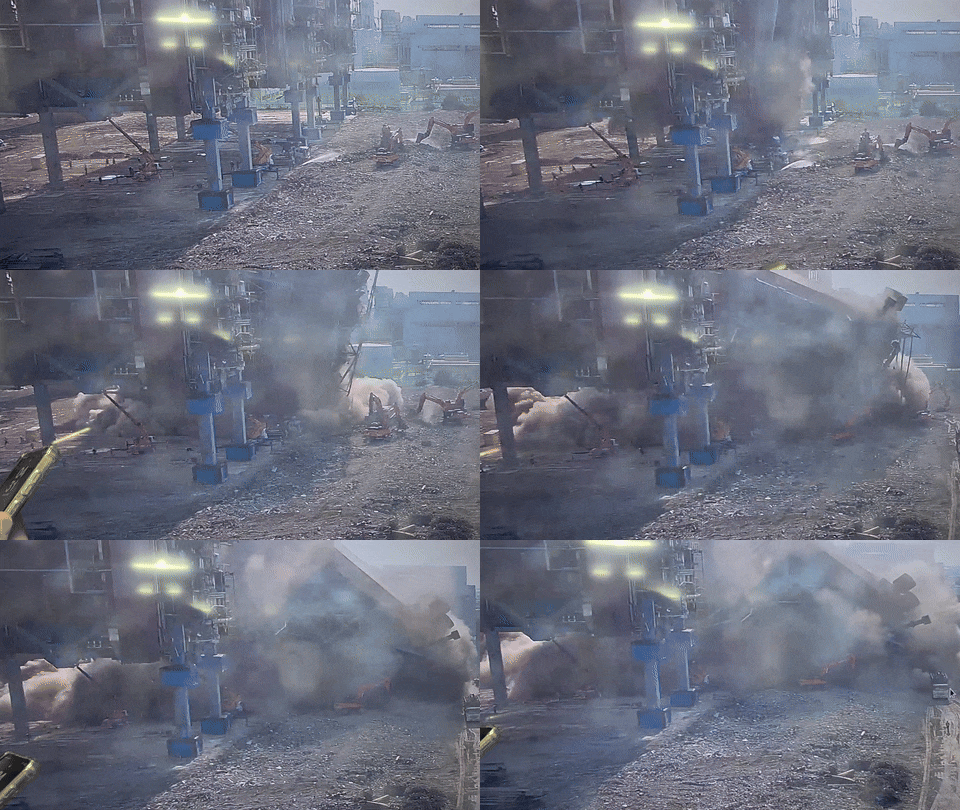
Understanding the Critical Window for Rescue Operations
The golden time for rescue operations is rapidly approaching in the aftermath of a boiler tower collapse that occurred around 2 p.m. on the 6th at the Korea East-West Power Ulsan Thermal Power Plant, located in Ulsan’s Nam-gu district. Experts, including academics and fire safety professionals, define this critical period as 72 hours—until 2 p.m. on the 9th. During this time, the chances of rescuing individuals who may be trapped beneath the rubble are significantly higher.
Experts warn that survival time for those buried can decrease further at night due to low temperatures and severe injuries. This is because the body’s ability to withstand harsh conditions diminishes quickly, especially when exposed to extreme cold or physical trauma.
Why 72 Hours Matters
The academic and fire safety communities consider 72 hours the golden time for rescuing people buried in collapse accidents. This timeframe is based on the maximum time a person can survive without food or water. After this period, dehydration sets in, causing survival rates to plummet. However, it’s important to note that survival time varies depending on individual conditions, such as the severity of injuries sustained during the incident.
In the case of this particular accident, which occurred in November, the large daily temperature fluctuations may shorten the golden time even further. The weather conditions can play a significant role in determining how long a person can endure being trapped under debris.
Impact of Temperature Changes
Professor Lee Young-joo from Kyungil University’s Fire and Disaster Prevention Department highlighted that severe temperature changes between day and night increase physical fatigue and strain, reducing the time survivors can endure. The missing individuals in this accident likely suffered severe injuries from collapsing steel structures, making their situation more dangerous.
Ulsan’s temperature, which rose to a high of 20.1 degrees Celsius the previous day, dropped to 9.5 degrees Celsius that morning. Given the power plant’s proximity to Ulsan Bay, the wind chill likely made temperatures feel even lower. This drastic change in temperature can have a profound impact on the survival chances of those trapped.
Historical Context and Lessons Learned
Experts emphasize that few cases of survival exist after the golden time, so buried individuals must be rescued as quickly as possible. Looking back at past incidents, the 1995 Sampoong Department Store collapse serves as a stark reminder of the importance of timely rescue efforts. In that incident, 40 people were rescued, but only three survived beyond 72 hours.
Similarly, in April’s Gyeonggi Gwangmyeong Shinansan Line collapse, one worker was rescued after 13 hours, while another was found dead five days after the accident. These examples underscore the urgency of swift action during such crises.
Government Response and Coordination
The government has taken decisive steps by holding a Central Accident Control Headquarters meeting. The decision was made to focus all efforts on rescuing the missing through the National Fire Agency. Kim Sung-whan, Minister of Climate, Energy and Environment, urged, “Mobilize all resources to rescue them swiftly before the golden time expires.”
This coordinated approach highlights the importance of collaboration among various agencies and the need for a unified strategy to maximize the chances of saving lives. As the clock ticks down, every moment counts in the race against time to locate and rescue those still missing.
Conclusion
The situation remains dire, with the window for successful rescue operations narrowing by the hour. The combination of environmental factors, physical trauma, and limited resources makes this a particularly challenging scenario. However, with the right strategies and unwavering determination, there is still hope for those trapped beneath the rubble. The lessons learned from past incidents serve as a reminder of the critical importance of speed, coordination, and resourcefulness in such emergencies.