
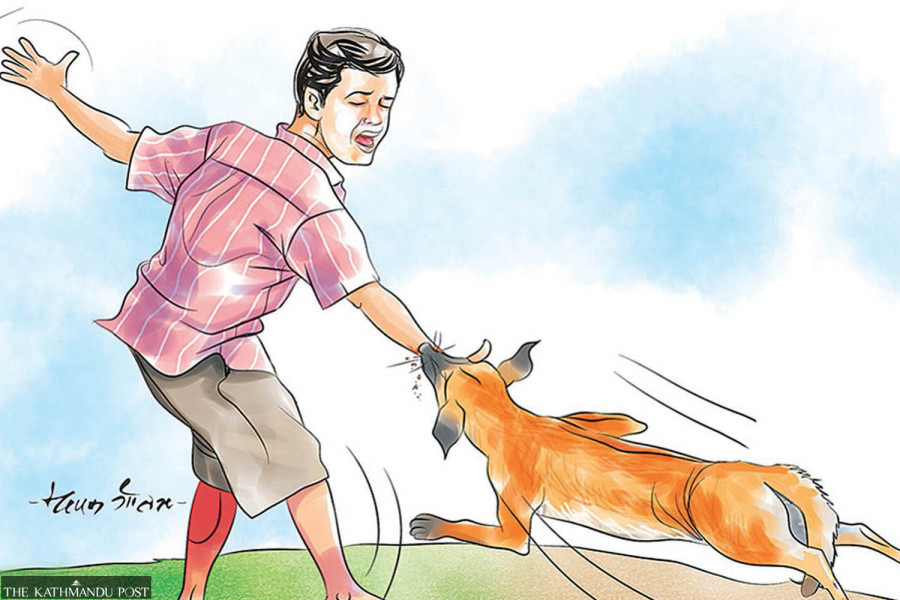
A Tragic Case of Rabies in Nepal
Kathmandu, Nov. 7 — A few months ago, a woman in her early 30s from outside the Kathmandu Valley was rushed to Sukraraj Tropical and Infectious Disease Hospital after showing symptoms of rabies. Her husband told doctors that he had taken her to nearby health facilities for an anti-rabies vaccine after a dog bite, but the facility did not have the vaccine available at the time.
“I didn’t have money to buy the anti-rabies vaccine from a private pharmacy, and neither hospital nor private pharmacies warned me about the fatal risks if the vaccine is not administered immediately,” the victim’s husband said, as quoted by a doctor at the hospital. “I am a daily wage labourer and would have done anything to save my wife.”
Rabies is 100 percent preventable if the anti-rabies vaccine is administered on time, but once clinical symptoms appear, the disease is always fatal. The woman died during treatment.
For months, dog bite victims have reported being unable to access the rabies vaccine in state-run health facilities. However, health officials at the Ministry of Health and Population have repeatedly denied any shortage of the vaccine at these facilities, even though victims are often forced to pay for it themselves.
When the Post contacted provincial health agencies about the stock of anti-rabies vaccine, they admitted there was a critical shortage.
“We received only 3,300 doses of rabies vaccine from the federal government,” said Nelson Mahat, information officer at the Health Logistics Management Centre of Bagmati province. “The doses are insufficient even for a month. We have to supply the vaccine to health facilities in 13 districts, and demand is especially high in Chitwan and other districts. Change in vaccine protocol has also increased demand.”
Officials at the Epidemiology and Disease Control Division acknowledged the low stock.
“Yes, we do not have much stock of rabies vaccine,” said Dr Chandra Bhal Jha, director at the division on Wednesday. “We are in the process of purchasing more, and Rs190 million has been allocated to purchase the vaccine this fiscal year.”
Jha admitted that shortages could occur in health facilities, as the procurement process takes months.
The Impact of Vaccine Shortages
Doctors warn that increased deaths from rabies infection could occur if victims do not receive free vaccines. They say that most victims cannot afford to pay for the vaccine, and free administration is the only way to save lives.
“If victims are deprived of the vaccine in state-run health facilities, it causes psychological distress to them and their family,” said Dr Sher Bahadur Pun, chief of Clinical Research Unit at Sukraraj Hospital. “Deaths from rabies could also spike if the availability is not ensured on time.”
Rabies is a deadly viral disease that spreads through the saliva of infected animals, especially dogs and jackals. Dog bites are responsible for almost all rabies deaths in Nepal.
Nepal aims to eliminate dog-transmitted rabies by 2030, a target set by the World Health Organisation. However, the Health Ministry’s data show that dogbite cases have been rising every year. Over 60,000 people seek rabies vaccines at state-run health facilities every year. Every day, around 400 people come to Sukraraj Hospital for the vaccine, while thousands more seek treatment at private centres.
It is estimated that over 100 people die of rabies every year throughout the country.
Challenges in Preventing Rabies Deaths
Doctors say not all dog bite incidents appear on record or all victims seek treatment, which is a challenge to preventing rabies deaths and a major obstacle to meeting the goal of eliminating dog-transmitted rabies by 2030.
Rabies, according to the World Health Organisation, kills 59,000 people globally every year, one person every nine minutes, mostly children and the poor. The disease, while fatal, is 100 percent preventable if there is access to vaccines and life-saving treatment after dog bites.