
The Importance of Charity in Islam
In the name of Allah, Most Gracious, Most Merciful.
Allah says: “Indeed Allah does not like anyone who is arrogant and braggart. Those who are stingy and bid [other] people to be stingy, and … those who spend their wealth to be seen by people, and believe neither in Allah nor in the Last Day. As for him who has Satan for his companion, an evil companion is he!” (Qur’an: 4: 36-38)
Charity is a fundamental aspect of Islamic teachings, emphasizing the importance of generosity and selflessness. One of the key principles is that charity should be given secretly, as it is considered more virtuous than giving openly. According to the Qur’an:
“If you disclose your charities, that is well, but if you hide them and give them to the poor, that is better for you, and it will atone for some of your misdeeds, and Allah is well aware of what you do.” (Qur’an- 2:271)
This verse highlights the spiritual benefits of giving without seeking recognition.
Permissible Income and Good Assets
Charity must come from permissible income and good assets. The Qur’an states:
“O you who have faith! Spend of the good things you have earned, and of what We bring forth for you from the earth, and do not be of the mind to give the bad part of it, for you yourselves would not take it, unless you overlook it. Know that Allah is all-sufficient, all-laudable.” (Qur’an- 2:267)
This emphasizes the importance of ensuring that the wealth given in charity is clean and lawful.
Prioritizing Dependents and Relatives
It is recommended to start giving charity to dependents and relatives. The Prophet (SAW) said:
“To give something to a poor man brings one reward, while giving the same to a needy relation brings two; one for charity and the other for respecting the family ties.”
The Qur’an also mentions the importance of spending on parents and relatives:
“They ask you as to what they should spend. Say, “Whatever wealth you spend, let it be for parents, relatives, orphans, the needy, and the traveller.” Whatever good that you may do, Allah indeed knows it.” (Qur’an- 2:215)
Hastening to Spend Charity
Hastening to spend charity is another important principle. The Qur’an says:
“And hasten towards your Lord’s forgiveness and a paradise as vast as the heavens and the earth, prepared for the Allah wary. Those who spend in ease and adversity, and suppress their anger, and excuse [the faults of] the people, and Allah loves the virtuous.” (Qur’an- 3:133)
Additionally, the Qur’an warns:
“Spend from what We have provided you before death comes to any of you, whereat he will say, “My Lord, why did You not respite me for a short time so that I might have given charity and become one of the righteous!” (Qur’an- 63:10)
Forms of Charity
Charity can take many forms beyond just money. The Prophet (SAW) said:
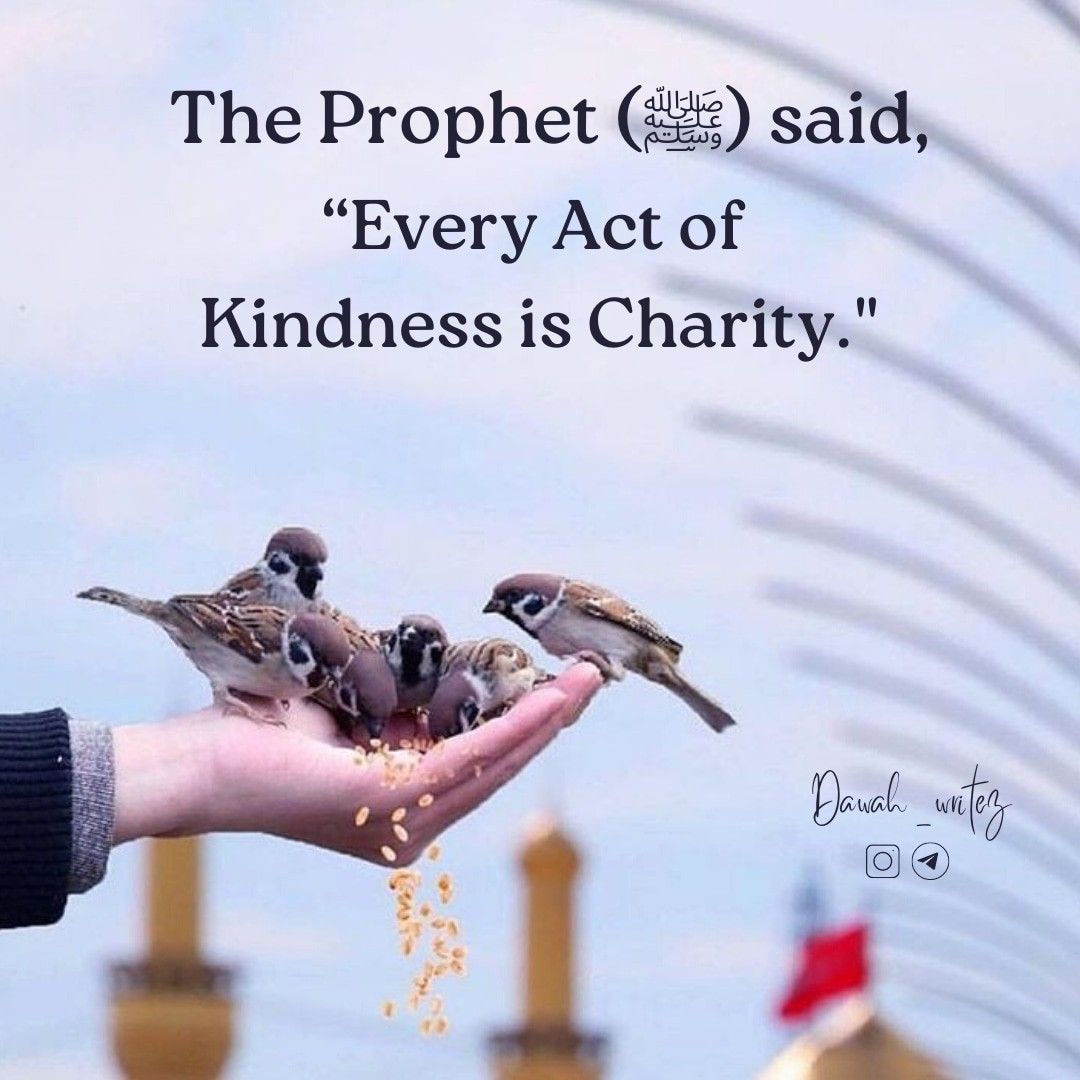
“Every good deed is charity. Verily, it is a good deed to meet your brother with a smiling face, and to pour what is left from your bucket into the vessel of your brother.”
This includes acts such as offering a smile, giving wise advice, helping build a home or mosque, and even simple gestures like removing obstacles from the road.
Charity as a Way of Life
Charity is not just about giving money; it is a way of life. Muslims are encouraged to give from their wealth, time, and effort as an act of gratitude to Allah. The Messenger of Allah (SAW) said:
“Charity is due upon every joint of the people for every day upon which the sun rises. Being just between two people is charity. Helping a man with his animal and lifting his luggage upon it is charity. A kind word is charity. Every step that you take towards the mosque is charity, and removing harmful things from the road is charity.”
Even the poorest Muslim can earn rewards through good deeds such as praising Allah or fulfilling lawful desires.
Small Deeds, Great Rewards
Small good deeds can have a tremendous impact. The Prophet (SAW) said:
“Do not regard any good deed as insignificant even meeting your brother with a cheerful face.” He also said, “Give even with half of a date in charity, and if one cannot find it, then with a kind word.”
These actions, though small, can be the reason for entering Paradise.
Charity for Animals
Charity extends beyond humans to animals as well. In one narration, the Prophet (SAW) spoke about helping a thirsty dog:
“A prostitute saw a dog lolling around a well on a hot day and hanging his tongue from thirst. She drew some water for it in her shoe, so Allah forgave her.”
Perpetual Charity
Some acts of charity continue to benefit others even after the person has passed away. The Prophet (SAW) said:
“When a person dies his works end, except for three: ongoing charity, knowledge that is benefited from, and a righteous child who prays for him.”
Self-Abnegation and Sacrifice
Self-abnegation, or sacrificing for others, is a path to salvation. The Qur’an speaks of a family who gave all their food to the needy while they themselves were hungry:
“They give food, for the love of Him, to the needy, the orphan, and the prisoner, [saying,] “We feed you only for the sake of Allah. We do not want any reward from you or any thanks.” (Qur’an- 76: 8-9)
This act of selflessness leads to eternal rewards.
Following the Example of the Companions
The Qur’an also mentions the companions of the Prophet (peace be upon him and his pure progeny):
“They love those who migrate toward them, and do not find in their breasts (hearts) any need for that which is given to them, but prefer to themselves, though poverty be their own lot. Those who are saved from their own greed, they are the felicitous.” (Qur’an- 59:9)
They understood the transient nature of this world and chose the path of salvation.
Conclusion
Charity is not just a duty but an attitude that should guide our daily lives. From smiling at a brother to helping someone in need, every action can be considered charity. By choosing to give, we not only help others but also earn multiplied rewards from Allah.