

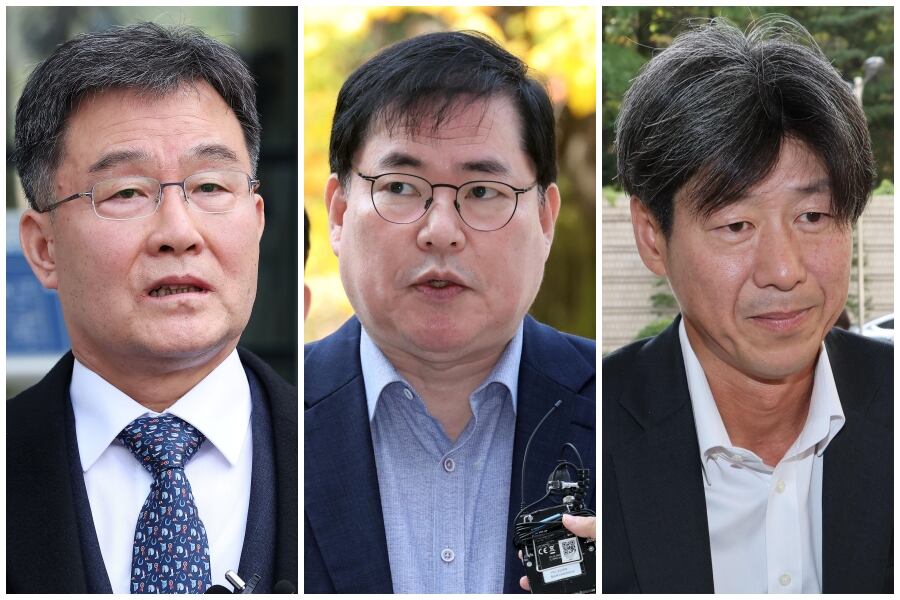
Overview of the Daejang-dong Case
The first-instance ruling in the Daejang-dong case recognized the breach of trust by Kim Man-bae and other developers involved in the project. However, it did not make a judgment on the responsibility of President Lee Jae-myung, who was then the mayor of Seongnam. The court stated that Lee was unaware of Yoo Dong-gyu’s receipt of money and that the “428 billion Korean won profit-sharing agreement” could not be directly linked to him.
Within the Democratic Party, some members have called for the dismissal of the indictment, claiming that the prosecution’s charges are fabricated. They argue that the court has officially confirmed the president’s lack of involvement. This demand goes beyond merely calling for a trial suspension, effectively urging the prosecution to drop the case entirely.
The 719-Page Ruling
Does the 719-page ruling contain a judgment of “fabricated charges”? The court detailed the over-decade-long collusion between Seongnam City and private developers in the Daejang-dong project. It highlighted how the developers supported Lee Jae-myung’s re-election as Seongnam mayor and helped a Saenuri Party-affiliated lawmaker become city council speaker, even passing an ordinance to establish a public corporation.
While developers preferred the land-exchange method for private development, the decision-making power ultimately rested with Seongnam City. When the city chose the expropriation method to quickly advance Mayor Lee’s pledge to transform the First Industrial Complex into a park, the developers sought “ironclad guarantees.” They needed to be selected as the project operator in the public bidding process.
In June 2014, they formed a “brotherhood group” with Yoo Dong-gyu and others at a bar. Subsequently, the bidding process was tailored to exclude construction companies. The court noted, “They received preferential treatment, being effectively pre-selected as the operator in a process where competition was inevitable under the expropriation method.” In return, Yoo’s side was promised 428 billion Korean won.
Profit Distribution and Public Discontent
The Daejang-dong project’s expected profit was 400–500 billion Korean won. Developers’ recorded conversations even referred to it as “a 400 billion Korean won heist.” However, the public corporation, which held a 50.1% stake, received only a fixed profit of 183 billion Korean won. The remaining profit—despite the developers holding just a 7% stake—went entirely to them.
The court observed, “Residents’ land was expropriated at low prices, allowing developers to save costs,” and questioned, “Why should private developers take all the profits from real estate price increases?”
Key Findings and Implications
The ruling’s highlight lies in the court’s use of the term “top leadership” in explaining Yoo’s sentencing. It stated, “Yoo acted as an intermediary manager, conveying and coordinating intentions between Seongnam City’s top leadership and private developers.” This implies Yoo’s responsibility was significant but not equivalent to that of the top leadership.
The court described the Daejang-dong case as “a series of corruption crimes collusively committed through long-term collusion formed via bribery and other means.” It emphasized that allowing private developers to profit excessively constitutes breach of trust, and those involved cannot avoid responsibility. The court merely withheld judgment on President Lee’s connection, as he was not a defendant in this case.
Addressing Corruption and Public Trust
As the ruling party, the priority should be to address and prevent real estate development corruption that causes public disillusionment. Demanding the dismissal of the indictment by claiming a “fabricated prosecution”—a term absent from the ruling—will only provide grounds to scrutinize who the “top leadership” truly is.