
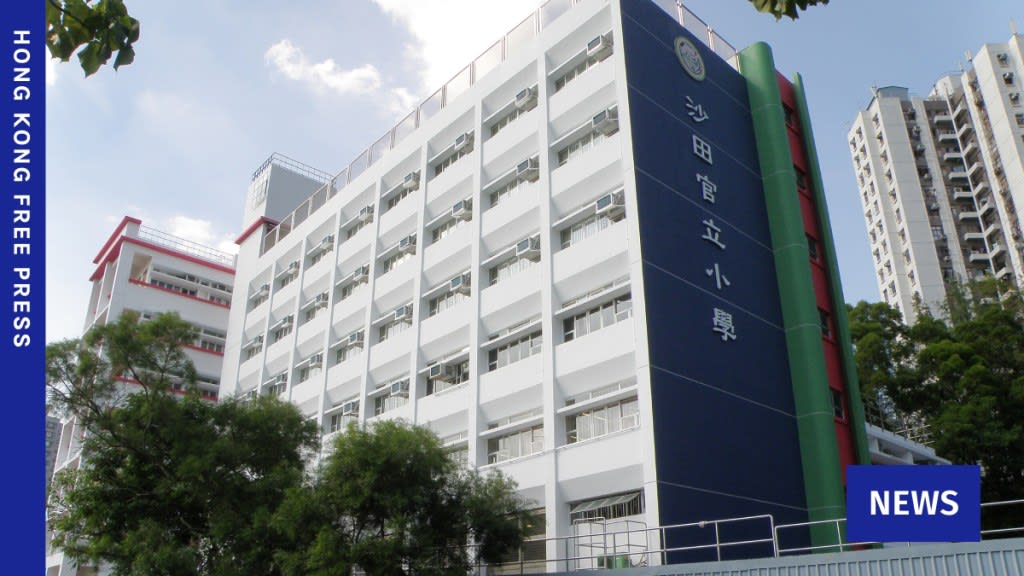
The Debate Over Traditional and Simplified Chinese in Hong Kong Schools
Hong Kong’s education authorities have emphasized the importance of teaching traditional Chinese characters to all students, regardless of their background. This statement came after a government-subsidized school allowed the use of simplified Chinese in examinations, sparking discussions about language policy in the region.

Shatin Government Primary School’s Policy Change
Earlier this week, Shatin Government Primary School issued a notice to parents stating that it would permit the use of simplified characters in assessments for students from primary two to primary six. The decision was made to create a “more friendly environment for assessments” for students with a “mainland Chinese background” or those who are accustomed to using simplified Chinese.
In Hong Kong, traditional Chinese characters are used, which contain more strokes compared to the simplified form used in mainland China. This difference has led to debates about the implications of allowing simplified characters in exams.

Parental Concerns and Reactions
A mother of a student at the school, surnamed Cheng, expressed her views during a radio interview on Thursday. She argued that simplified Chinese characters can be written more quickly, giving students who use them an advantage over those writing in traditional characters. Cheng suggested that the school introduced the new policy to accommodate a small group of new students, mostly in primary five, who had made several mistakes in their exams.
The school clarified that it did not intend to replace traditional Chinese with simplified Chinese. HKFP has reached out to the school for further comment.

A ‘Transition Period’ Controversy
Cheng shared in a radio interview on Friday that she and seven other parents met with the school’s head. During the meeting, the principal acknowledged that the new policy was implemented too quickly. The principal attempted to reassure the parents by referring to the policy as a “transition” measure for half a school term. However, Cheng found this explanation unsatisfactory, believing it was unfair to other students.
Education Bureau’s Statement
The Education Bureau (EDB) released a statement on Friday, emphasizing that learning traditional Chinese would help students communicate effectively and integrate into Hong Kong society. The EDB stated that if students had not learned traditional Chinese before, schools should provide appropriate support to address their needs during this transition period.
The statement also noted that whether schools allow students to use simplified Chinese characters in tests and exercises depends on the school’s “actual teaching situation.” Factors such as the institution’s learning and assessment goals are considered in making such decisions.
School’s Position on Traditional Chinese
In its notice to parents, the school reiterated that traditional Chinese remains the mainstream in Hong Kong’s education system. It stressed that students must have a solid understanding of traditional Chinese for academic, communication, and employment purposes. The school emphasized that the policy change was not meant to undermine the importance of traditional characters but to support students with different linguistic backgrounds.