
The Crisis of Deforestation and Water Scarcity in West Africa
A recent report by WaterAid, in collaboration with Tree Aid, has highlighted a growing crisis in West Africa, where deforestation is leading to significant water loss. Ghana, in particular, is among the most affected countries. The research underscores how the destruction of forests is not only reducing access to clean drinking water but also threatening the health, food security, and livelihoods of millions of people.
The study, which analyzed 12 years of satellite imagery, tracks the impact of deforestation in Ghana, Niger, and Nigeria. It reveals that the loss of forest cover is disrupting rainfall patterns, increasing runoff, and severely degrading water quality. The report warns that 45 percent of the population across these three countries — over 122 million people — now live in high-risk water zones.
Ghana’s Forest Loss Worsening Water Crisis
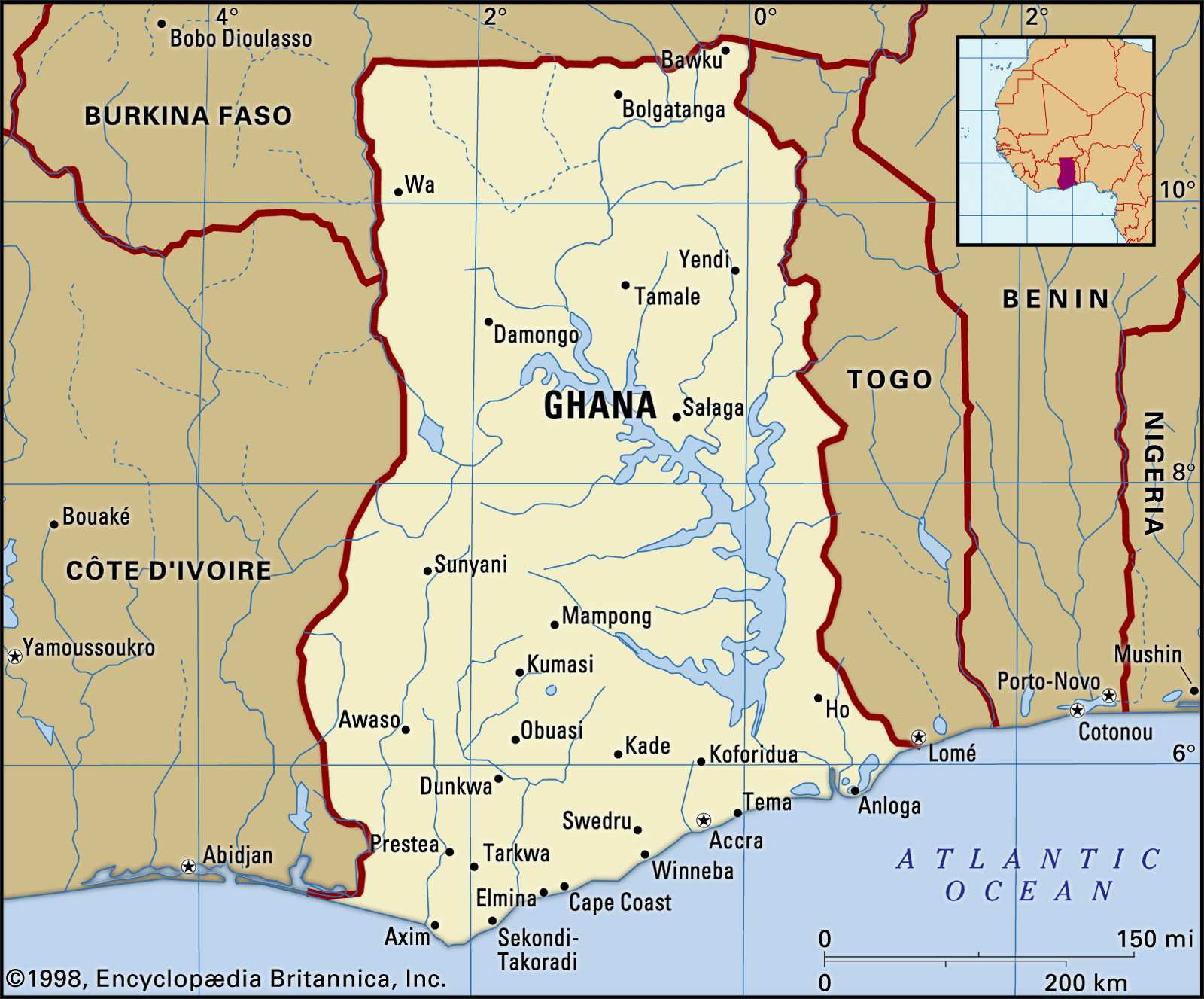
In Ghana, vegetation has declined by 298,000 hectares between 2013 and 2025, an area equivalent to losing a city the size of Edinburgh every year. This large-scale forest loss is directly linked to declines in water quality, leaving millions exposed to unsafe water sources.
Researchers found that forest loss around river catchments in central and southern Ghana is causing higher runoff and increased algae growth, which degrades surface water and pollutes rivers that once provided clean water for communities. While heavy rainfall may temporarily boost water availability, the report warns that this masks a long-term decline in water quality and groundwater recharge, making communities vulnerable to contamination and scarcity.
“Deforestation around water bodies is dismantling nature’s filtration system,” the researchers note. “As forests vanish, water becomes less safe to drink, and communities lose their natural protection against drought and floods.”
Climate and Community Impacts
Despite higher rainfall linked to climate change, which has risen by an average of 59.5 millimeters a year in Ghana, the overall water balance is deteriorating. Deforestation, erosion, and flooding are pushing the water cycle “off kilter,” resulting in long dry spells following intense rains. This instability makes water harder to manage and more dangerous for human consumption.
A recent WaterAid poll found that 93 percent of Ghanaians fear for their future and their children’s future due to climate change, emphasizing the urgency of integrating forest and water management into climate action plans.
A Regional Crisis with Global Implications
Regionally, the findings are alarming:
- 24,800 hectares of forest are being lost on average each year in Ghana.
- 85.6 million people in Nigeria live in areas at high risk of water loss linked to deforestation.
- 99.5 percent of available freshwater in Niger is at risk of being unsafe or of poor quality.
If these trends continue, much of West Africa could face worsening droughts, flash floods, and waterborne diseases, even in areas where rainfall is rising.
WaterAid Ghana Calls for Urgent Action
Reacting to the findings, Ewurabena Yanyi-Akofur, Country Director for WaterAidGhana, said:
“What we are seeing is nature’s alarm bell ringing loudly. The same trees that pull water from the ground, shade our rivers, and cool our towns are vanishing and with them, our clean water. Ghana’s fight against deforestation is a fight for life itself. If we lose our forests, we lose our water, and without water, there is no future.”
She added that the research should serve as a wake-up call for policymakers and the public alike, urging that protecting Ghana’s forests must be seen as a national priority for health, livelihoods, and climate resilience.
WaterAid Calls for Urgent Global Action
Commenting on the new findings, Abdul Nashiru Mohammed, Regional Director for WaterAid West Africa, noted:
“Trees and water are the essence of life in West Africa’s forest communities and around the world. Trees draw water into the earth, enrich soil for farmers, and shield land from floods. But as forests fall, water is vanishing at a ruthless rate. This catastrophic impact of deforestation is slipping under the radar of world leaders — a ticking time bomb for millions of people’s access to clean water. That is why at COP30, we are demanding that global governments step up, listen to the voices of communities most at risk, and take urgent action to tackle the interconnected nature of the water and climate crisis. Attempting to tackle either deforestation or water access in isolation is doomed to failure.”
A Call for Leadership and Collaboration
The report comes just days before COP30 in Brazil, where WaterAid is calling on world leaders to take decisive action to integrate forest and water management into climate finance pledges and national climate plans. Investing in water systems that strengthen access to safe drinking water and protect vulnerable communities is critical to safeguarding lives and livelihoods across the region.
Nearly one in ten people around the world still lack clean water close to home, and the climate crisis is only making this worse. With the majority of West Africans now living in high water-risk zones, the report concludes that protecting forests is central to protecting life itself.