
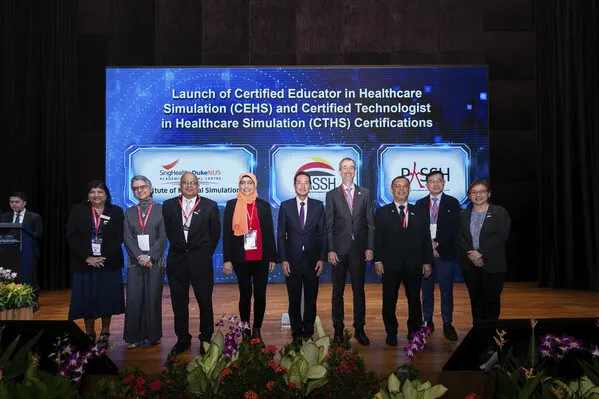
New Healthcare Simulation Certification Programmes Launch in Southeast Asia
A significant development in the field of medical education has been announced with the launch of two new certification programmes aimed at enhancing the skills of healthcare professionals across Southeast Asia. These initiatives are set to begin by the end of 2026, marking a pivotal step in advancing simulation-based learning within the region.
The two programmes, titled “Certified Educator in Healthcare Simulation” and “Certified Technologist in Healthcare Simulation,” are designed to provide comprehensive training for doctors, nurses, and technical specialists. The goal is to equip them with the necessary knowledge and expertise to effectively utilize simulation techniques in medical education.
These programmes were introduced during the S3 Conference in Singapore, an event that brings together experts and stakeholders in the healthcare simulation sector. The conference serves as a platform for sharing innovative practices and fostering collaboration among professionals from different countries.
Key Details About the Programmes
- Target Audience: The programmes are tailored for healthcare professionals, including doctors, nurses, and technical specialists.
- Focus Area: Emphasis is placed on simulation-based medical education, which involves the use of realistic scenarios to enhance learning and improve patient care.
- Participation Goals: In the first year, the programmes aim to train 50 participants, ensuring a focused and high-quality educational experience.
- Collaborative Effort: The development of these programmes involved close cooperation between several key organizations, including the SingHealth Duke-NUS Institute of Medical Simulation, the Pan Asia Simulation Society in Healthcare, and the Malaysian Society for Simulation in Healthcare.
Importance of Simulation-Based Learning
Simulation-based learning has gained increasing recognition for its ability to provide hands-on training in a controlled environment. This approach allows healthcare professionals to practice complex procedures, manage emergencies, and develop critical thinking skills without risking patient safety.
By integrating simulation into medical education, these programmes aim to bridge the gap between theoretical knowledge and practical application. Participants will gain valuable insights into real-world challenges and learn how to respond effectively in various clinical settings.
Future Prospects
With the launch of these certification programmes, there is a clear commitment to elevating the standards of healthcare education in Southeast Asia. The initiatives are expected to contribute to the development of a more skilled and competent workforce, ultimately leading to improved patient outcomes.
As the programmes move forward, they will likely attract interest from other countries in the region, potentially expanding their reach and impact. The collaborative nature of the project also sets a precedent for future partnerships and joint efforts in the field of medical education.
Conclusion
The introduction of these healthcare simulation certification programmes represents a major milestone in the evolution of medical training in Southeast Asia. By focusing on simulation-based learning, the programmes are poised to make a lasting impact on the quality of healthcare education and the professional development of healthcare practitioners.