
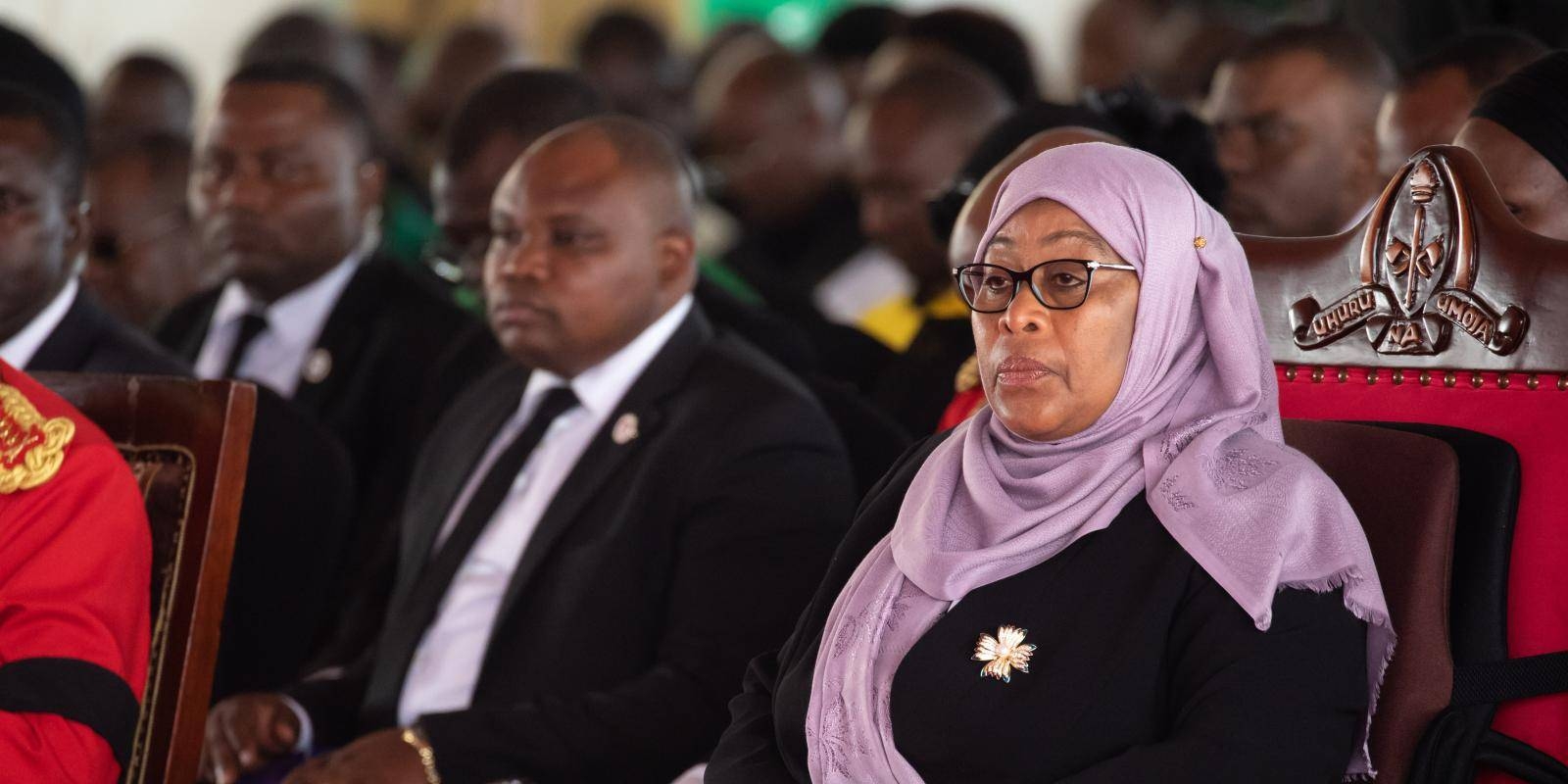
A Journey of Leadership and Controversy
President Samia Suluhu Hassan’s journey to the highest office in Tanzania has been marked by both challenges and significant milestones. Her assumption of the presidency in March 2021 was under sombre circumstances, following the sudden death of her predecessor, John Pombe Magufuli. This event thrust a relatively quiet individual into the nation’s highest office, setting the stage for a defining chapter in her own political career.
Early Life and Political Beginnings
Born on January 27, 1960, in Makunduchi, Zanzibar, Samia Suluhu Hassan grew up in a modest environment. Her father was a schoolteacher, and her mother was a homemaker. After completing secondary schooling in 1977, she began her career as a clerk in Tanzania’s Ministry of Planning and Development. She later earned a Diploma in Public Administration from the Institute of Development Management (now Mzumbe University) and a postgraduate diploma in economics from the University of Manchester.
Her early political career started in Zanzibar’s regional government around 2000, followed by a role as an MP for Makunduchi in the Mainland Tanzania parliament from 2010 to 2015. She served as Minister of State in the Vice-President’s Office in charge of Union Affairs during that time, positioning herself at the heart of a complex political terrain.
In 2015, she was selected as the running mate to John Magufuli on the ticket of the ruling party Chama Cha Mapinduzi (CCM), becoming Tanzania’s first female Vice-President. She was re-elected in 2020, setting the stage for her eventual ascension to the presidency.
The Turning Point
The turning point came on March 17, 2021, when Magufuli died unexpectedly. Two days later, on March 19, she was sworn in as the country’s first female President, the sixth President overall, inheriting a complex legacy. Stepping into office, Suluhu faced a country with mounting questions about the economy, governance, and the direction of reform.
She moved carefully but deliberately, signaling a break from certain hardline policies of Magufuli’s era while retaining the dominance of CCM in Tanzanian politics. Her leadership style indicated a blend of stability and opening, though underpinned by the system she inherited.
International Response and Domestic Challenges
International partners and investors responded positively, as Tanzania under her early guidance began presenting itself as a stable, emerging investment hub in East Africa. However, domestically, the balance between liberalisation and control remained delicate.
The October 2025 election marked a significant moment in her leadership. On October 29, 2025, Tanzania held general elections, and Samia Suluhu stood for a full term after finishing Magufuli’s tenure. Officially, she won with over 97 per cent of the vote, among the highest margins in the region. However, the celebrations were shadowed by serious concerns.
Major opposition parties were barred from meaningful participation, online platforms were shut down during sensitive phases, and violent protests erupted in cities like Dar es Salaam, with a heavy security presence reported. Chadema, the main opposition party, which was among those barred from running, rejected the results, branding the vote a “sham” and calling for new elections.
Leadership and National Unity
In her swearing-in on November 3, 2025, she stressed the need to move on from conflict and emphasized national unity. “Life must continue,” Suluhu said in her address. She also condemned the protests witnessed in the country as violent and destructive.
“Our responsibility is to build our today to be better than our yesterday. I beg that we continue protecting our values of unity and collaboration,” she said.
Significance of Her Leadership
Suluhu’s story matters because it spans both old and new political dynamics in Tanzania and the region. As the country’s first female president, she represents a symbolic break in traditional gender norms, signaling a shift in East Africa’s political landscape. She inherited a powerful ruling party and a strong state machinery, yet entered office with public hopes of reform, openness, and a gentler, more consultative leadership style.
The week’s election underscores how she has transitioned from inheriting power to firmly consolidating it. The commanding victory margin and a visibly weakened opposition point to a reshaped political terrain. At the same time, Tanzania under her leadership has positioned itself as a growing regional force, attracting investment, asserting its diplomatic voice, and strengthening economic and infrastructural linkages across the East African Community.
Navigating the Tightrope
Suluhu is often defined by her calm, measured approach, a stark contrast to the more outspoken and combative leaders who dominate regional politics. Yet the post-election moment has also revealed a leader unafraid to exercise authority: securing unwavering party structures, keeping state institutions aligned, and responding swiftly to any signs of unrest.
Still, the tightrope she walks is unmistakable. Her resounding win, coupled with the sidelining of key opposition factions, has triggered concerns over democratic space and legitimacy. Reports of curtailed freedoms and firm protest-control measures have sparked anxiety among civil society groups and international observers.
What Lies Ahead
The real test now begins. The question is whether she can translate her secure mandate into tangible gains for Tanzanians, including jobs, infrastructure, stronger public services, and meaningful economic opportunities for the country’s overwhelmingly young population. It also remains to be seen whether she will widen the political space after securing victory or maintain a tightened grip on the opposition and civic freedoms, a decision that will shape Tanzania’s democratic trajectory and global perception.