
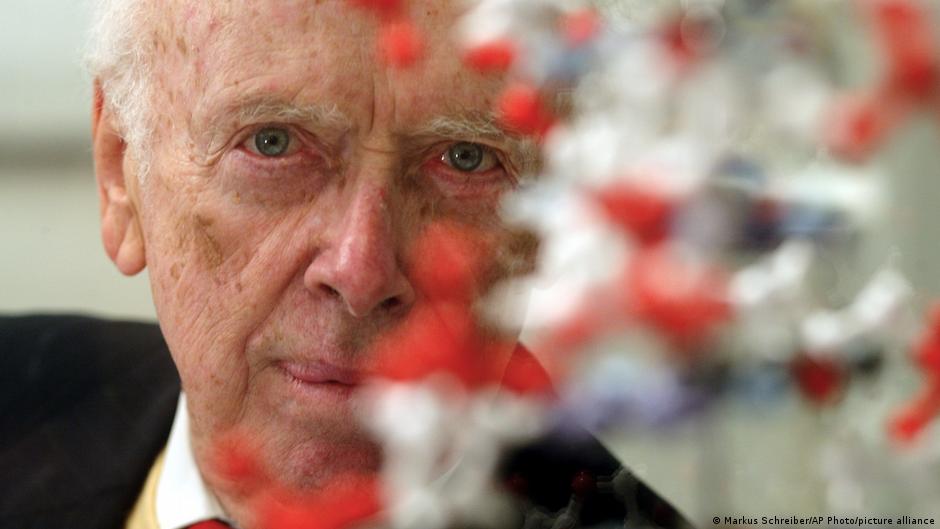
James Watson, a pioneering scientist who played a key role in unraveling the mystery of DNA’s double-helix structure, has passed away at the age of 97. His groundbreaking work with Francis Crick and Maurice Wilkins earned him the 1962 Nobel Prize in Physiology or Medicine, an honor that marked a turning point in the field of molecular biology.
Watson was born in Chicago and showed an early passion for science, which eventually led him to become one of the most influential figures in modern genetics. Alongside Crick, he developed the model of DNA’s structure, a discovery that laid the foundation for understanding how genetic information is stored and transmitted. This breakthrough not only revolutionized biology but also paved the way for advancements in medicine, biotechnology, and forensic science.
The discovery of the double-helix structure was a collaborative effort, with contributions from many scientists, including Rosalind Franklin, whose X-ray diffraction images were crucial to the development of the model. However, Watson and Crick were the first to publish their findings, which brought them widespread recognition. The Nobel Prize was awarded to Watson, Crick, and Wilkins, though Franklin, who had died four years earlier, was not included in the honor.
Despite his scientific achievements, Watson’s legacy has been complicated by controversial remarks he made later in life. He faced significant backlash for expressing views on race and intelligence, which many found offensive and scientifically unfounded. These comments led to his resignation from several academic positions and sparked ongoing debates about the intersection of science, ethics, and public discourse.
Throughout his career, Watson remained a prominent figure in the scientific community, authoring numerous books and speaking publicly on topics ranging from genetics to education. His work continues to influence research and policy, even as his personal conduct remains a subject of discussion.
Watson’s death marks the end of an era in scientific history. His contributions to the understanding of DNA have had a lasting impact on the world, shaping the way we approach medicine, technology, and our understanding of life itself. While his later years were overshadowed by controversy, his early work remains a cornerstone of modern biology.
As news of his passing spreads, tributes are pouring in from colleagues, students, and the broader scientific community. Many acknowledge the importance of his discoveries while also recognizing the need to critically examine the full scope of his legacy.
This is a developing story. Updates may follow as more information becomes available.