
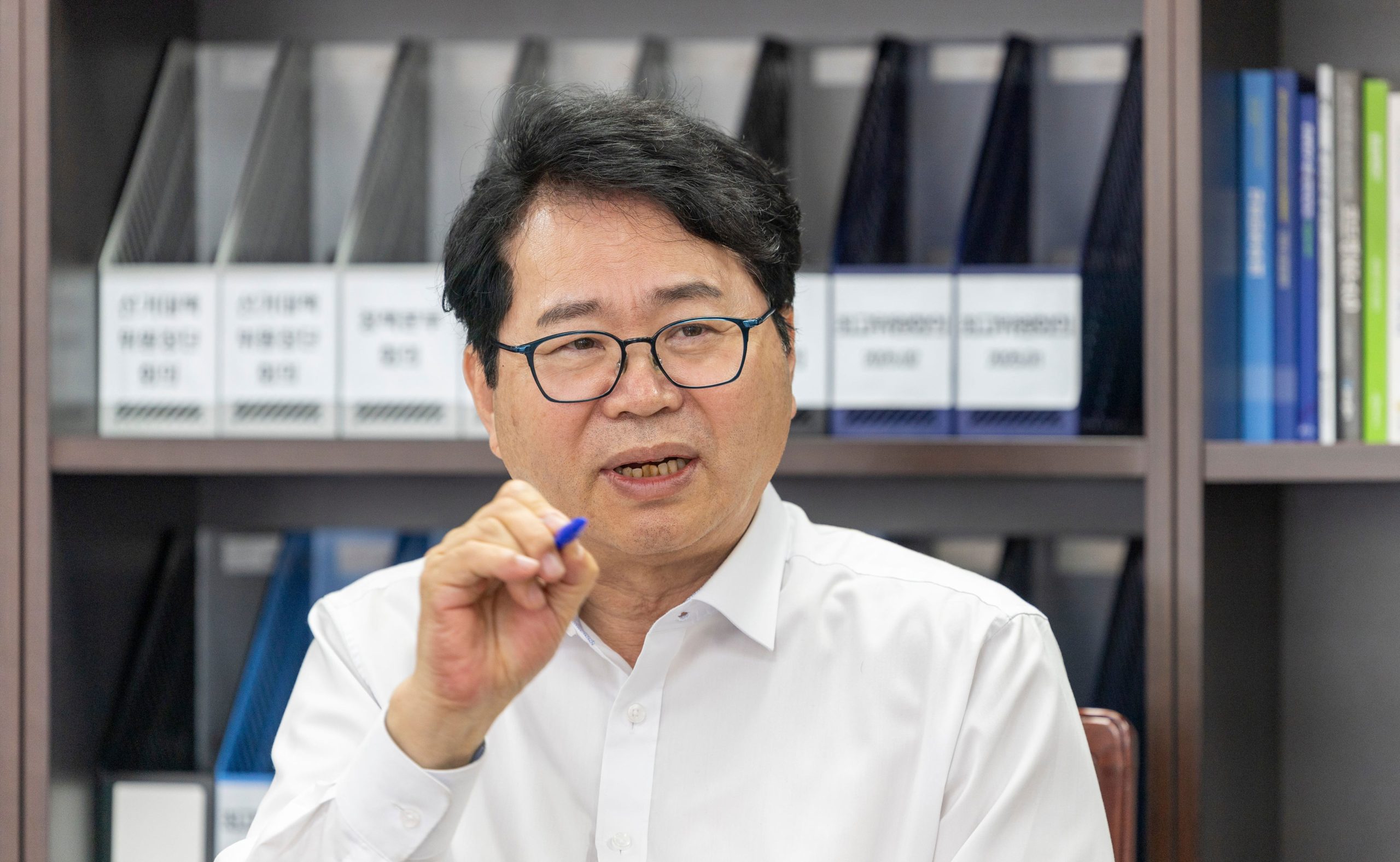
Leadership Transition in National Research Council
On the 7th, former National Planning Committee Chairman Lee Hanjoo was appointed as the new chairman of the National Research Council of Economics, Humanities and Social Sciences. This council is responsible for overseeing 26 government-funded research institutions across the economic, humanities, and social sciences sectors. The appointment marks a significant shift in leadership for the organization, which plays a crucial role in shaping academic and policy research in South Korea.
The Prime Minister’s Office confirmed that Prime Minister Kim Min-seok selected Lee for the position. His term will officially begin on the 10th and will last for three years, concluding on November 9, 2028. Lee’s appointment comes after a period of transition, as the previous chairman, Shin Dong-cheon, resigned in September after serving for one year and six months. Shin had been appointed in March of the previous year under the Yoon Suk-yeol administration.
Selection Process and Key Candidates
Following Shin’s resignation, the government initiated a selection process to find a new leader for the council. On September 24, a recommendation committee proposed three candidates, including Lee, to Prime Minister Kim. Among these, Lee was ultimately chosen. He is widely recognized as a key “policy mentor” for President Lee Jae-myung, indicating his deep influence within the political and academic spheres.
The Prime Minister’s Office highlighted Lee’s qualifications, emphasizing his expertise as a macroeconomist and policy expert. His research has focused on structural analysis of the Korean economy, sustainable growth, and welfare. Additionally, Lee brings extensive experience in state affairs and policy through his roles as chairman of the National Planning Committee and head of the Democratic Research Institute. His deep understanding of the Lee Jae-myung administration’s governance philosophy further strengthens his candidacy.
Background and Career Highlights
Born in 1956 in Seoul, Lee graduated from Kyungbok High School and later earned a degree in Plant Science from Seoul National University. He pursued advanced studies in economics, obtaining both a master’s and doctoral degree from the university’s graduate school. Before entering public service, he served as a professor at Kyungwon University and Gachon University.
Lee’s career took a significant turn in 1986 when he met President Lee Jae-myung during a civic group discussion in Seongnam. This encounter marked the beginning of a 40-year relationship that would shape his professional trajectory. Ahead of the 2022 presidential election, Lee played a pivotal role as the head of the policy headquarters for Lee Jae-myung’s campaign. He was later appointed head of the Democratic Research Institute during Lee’s tenure as Democratic Party leader.
In the same election, Lee led the policy headquarters for the Democratic Party’s election committee. After the Lee Jae-myung administration took office, he chaired the National Planning Committee, which functioned as the transition committee. He resumed his role as head of the Democratic Research Institute before announcing his intention to resign at the end of last month. His new appointment as chairman of the National Research Council of Economics, Humanities and Social Sciences reflects his continued influence and relevance in shaping national policy and academic research.