
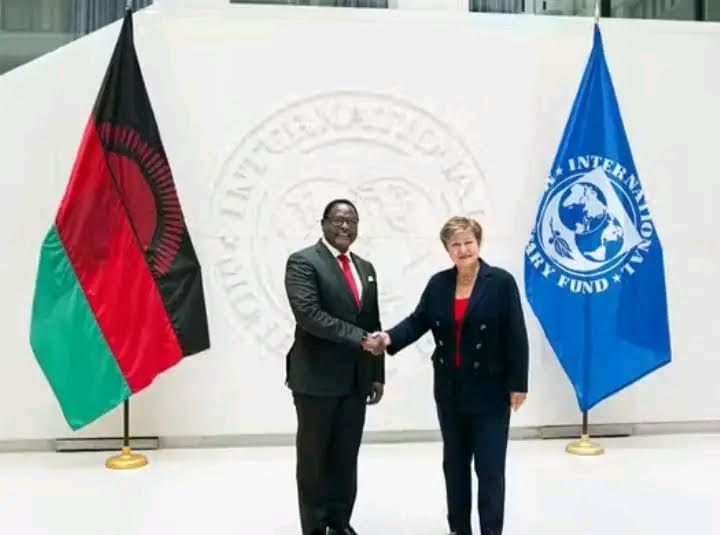
A New Era of Fiscal Control in Malawi
The Government’s newly announced Expenditure Control Measures are more than just administrative adjustments or routine fiscal housekeeping. They represent a clear political signal—loud, uncomfortable, and significant.
A nation that, only months ago, celebrated its “homegrown solutions” and a sovereign path to recovery is now implementing measures that closely resemble those found in an IMF austerity handbook. The suspension of recruitment, the freeze on vehicle procurement, restrictions on foreign travel, the shrinking of embassies, centralized approval of delegations, and tightened procurement through IFMIS are not signs of innovative governance. Instead, they reflect the familiar language of external financial conditionality—a model Malawi has experienced before and perhaps never fully escaped.
This pattern is too recognizable to ignore. Whenever the IMF steps in, the first targets are almost always the public workforce, non-essential procurement, government travel, and diplomatic expenditure. These areas are politically easy to cut because they affect the civil service and state operations—groups that do not hold the same political influence as private importers, procurement cartels, fuel middlemen, or forex smugglers.
Yet, if Malawi’s fiscal crisis were being addressed honestly, it would be precisely these powerful networks that should be under scrutiny. Instead, the government has opted to tighten the belt where it hurts the functionality of the state, not where it affects the entrenched beneficiaries of state capture.
The government claims that restrictions on external travel are intended to conserve foreign exchange. However, the real hemorrhage of forex does not come from conference rooms in Addis Ababa or Pretoria. It comes from gold leaving the country unaccounted for. It comes from tobacco sales where declared values never match real market earnings. It comes from gemstone exports routed discreetly through private handlers. It comes from overpriced fuel procurement where a small circle of politically protected importers walk away with foreign currency profits, while the state remains in permanent shortage. Austerity becomes an easy performance when the savings are extracted from those who cannot fight back.
Sovereignty at Risk
Economic policy is supposed to be a forum of national debate—contested, discussed, debated, and legislated with citizens in mind. Yet these measures were not debated in Parliament. They were not subjected to public discourse. They were issued as directives. A government confident in the domestic ownership of its decisions invites debate. A government implementing instructions does not. The shift is subtle but unmistakable: democratic choice is giving way to technocratic compliance.
To be clear, fiscal responsibility is not a crime. A country must live within its means. But what matters is whose logic defines the means and whose priorities determine the sacrifice. When cuts target the operational capacity of the state rather than the leakages that cripple the economy, then austerity becomes not a solution, but a quiet surrender.
A Question of National Identity
Which brings Malawi to a question of national identity. Are we making decisions for ourselves, or are we managing instructions drafted elsewhere? Is our government governing, or merely administering policy conditions tied to foreign financing? The tone, timing, structure, and intent of these measures suggest the latter. They do not reflect a confident state asserting sovereignty, but a state adjusting itself to qualify for approval.
Malawi therefore stands at a pivotal moment. We can continue down a path where economic governance is shaped by creditors rather than citizens, or we can confront the deeper structural failures that made us vulnerable to conditionality in the first place. Our challenge is not only to stabilize the economy, but to do so without auctioning away the very idea of self-determination.
Because if these decisions are no longer ours—then what else have we already given away?